 ultimate-guide
Applied Kinesiology for Fibromyalgia Relief: A Guide
Table of Contents
- What Is Applied Kinesiology for Fibromyalgia Relief?
- How Muscle Testing Identifies Imbalances Behind Fibromyalgia Symptoms
- Holistic Fibromyalgia Treatment Options That Complement Kinesiology
- Chiropractic Care for Chronic Pain: Where It Fits in Your Plan
- How to Restore Body Function Naturally Alongside Treatment
- What the Evidence Says: Clinical Limitations and Realistic Expectations
- Integrating Applied Kinesiology with Conventional Fibromyalgia Care
- Conclusion: Building a Sustainable Fibromyalgia Relief Strategy
- Frequently Asked Questions
Last Updated: September 7, 2026
What Is Applied Kinesiology for Fibromyalgia Relief?
Fibromyalgia is a complex condition marked by widespread pain, fatigue, and tenderness, and applied kinesiology for fibromyalgia relief takes a different path than standard symptom management. Rather than treating only the areas that hurt, this method uses muscle testing to evaluate how your nervous system, muscles, and organs communicate. Practitioners look for weaknesses or imbalances that may contribute to your overall symptom picture.
At Alternative Health & Healing Center, this muscle-based assessment aims to reveal patterns that standard exams may miss. The goal is not to diagnose fibromyalgia itself, but to identify physical stressors that amplify your pain and fatigue. This guide explains how the approach works, what it can realistically offer, and how to combine it with conventional care for a complete strategy.
Below, we break down the testing process, supporting therapies, and the evidence behind them so you can decide if this fits your needs.
How Muscle Testing Identifies Imbalances Behind Fibromyalgia Symptoms
Muscle testing in applied kinesiology is not a measure of raw strength. It is a functional assessment of how your nervous system coordinates muscle response under specific challenges. The practitioner applies gentle, consistent pressure to a muscle, commonly the deltoid or iliopsoas, while you resist. A muscle that "locks" and holds against pressure indicates a facilitated neural pathway. A muscle that gives way, even when you feel you are trying hard, suggests a temporary inhibition in that pathway.
This inhibition is the key signal. In applied kinesiology, the working model is that every muscle has a neurological relationship with an organ, gland, or meridian. When a muscle tests weak, the practitioner looks for what is disrupting that circuit. Common findings in fibromyalgia patients include:
- Trigger points in the trapezius or levator scapulae that refer pain into the head, neck, or shoulders
- Joint restrictions in the cervical or lumbar spine that alter proprioceptive input
- Lymphatic congestion that practitioners believe impairs tissue drainage and increases tenderness
- Nutritional stress such as low B12 or vitamin D that shows up as generalized muscle weakness during testing
The practitioner does not just test one muscle in isolation. They run a series of challenges to isolate the variable. For example, if your arm tests strong at baseline but weakens when you touch a specific acupuncture point or hold a suspected allergen, that response narrows the treatment target. This process is called "therapy localization" and is a core method in applied kinesiology.
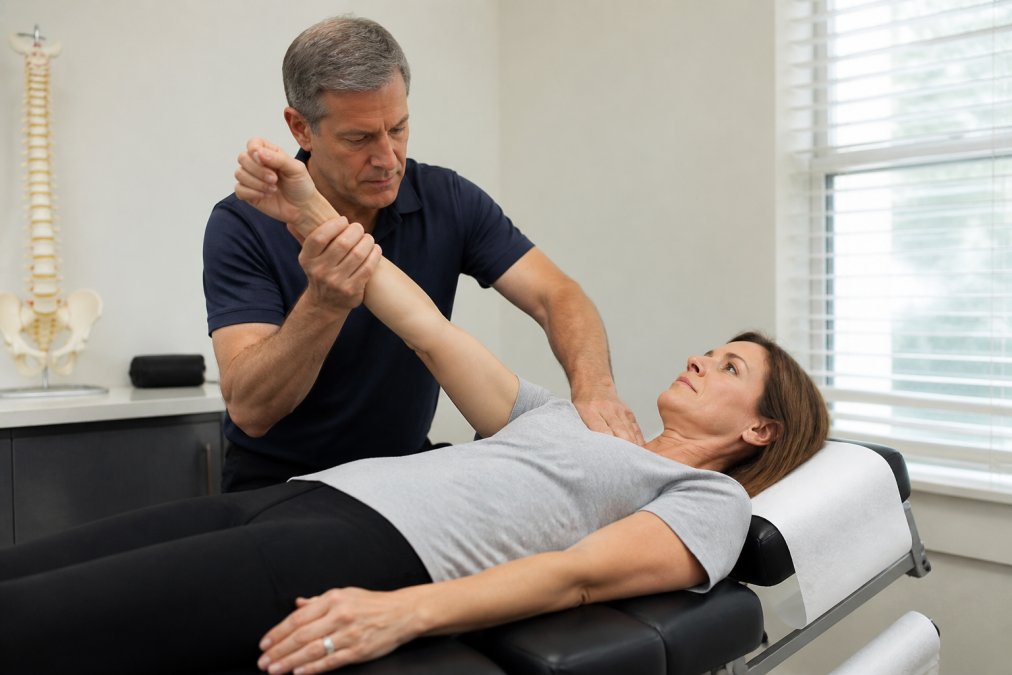
For fibromyalgia specifically, the clinical pattern often involves widespread muscle inhibition rather than a single weak link. This is why a full-body assessment matters. A practitioner may test 20 or more muscles to map out which regions are most compromised. The results guide where to focus manual therapy, which postural habits to correct, and which home exercises will reinforce the in-office work.
It is important to understand what this testing can and cannot do. Muscle testing does not diagnose fibromyalgia, measure inflammation levels, or replace blood work. What it offers is a real-time snapshot of neuromuscular function that can reveal asymmetries and stress patterns a standard neurological exam might miss. The value lies in how that information shapes a targeted, whole-body treatment plan rather than in the test itself.
Holistic Fibromyalgia Treatment Options That Complement Kinesiology
Applied kinesiology rarely works alone. Most effective holistic fibromyalgia treatment options combine several modalities to address the many facets of this condition. Gentle stretching helps improve flexibility and reduce muscle stiffness. Aquatic therapy allows movement without putting stress on painful joints, making it a valuable addition for those with widespread tenderness.
Other complementary approaches include myofascial release to ease tight connective tissue, trigger point therapy for localized pain, and stress reduction techniques that support nervous system regulation. Each of these works toward the shared goal of reducing pain and improving functional movement.
A typical plan might layer these therapies over several weeks, adjusting based on how your body responds. The emphasis stays on patient-centered care that respects your pain threshold and progresses at a sustainable pace.
Chiropractic Care for Chronic Pain: Where It Fits in Your Plan
Chiropractic care for chronic pain centers on correcting spinal misalignments and improving joint mobility, which can ease pressure on nerves and support better body mechanics. For fibromyalgia patients, chiropractic adjustments are usually performed gently to avoid aggravating sensitive tissues.
The value of chiropractic lies in its focus on the musculoskeletal system, a primary source of fibromyalgia discomfort. Addressing postural correction and spinal health can reduce muscle tension and improve your overall sense of physical well-being. Many patients find that regular adjustments complement their other treatments by keeping the body aligned and functioning efficiently.
When combined with applied kinesiology, chiropractic care helps ensure that the structural corrections hold, giving you a more stable foundation for recovery.
How to Restore Body Function Naturally Alongside Treatment
This section provides specific, low-risk movements you can do at home between kinesiology sessions. The goal is not to replicate what your practitioner does in the office. It is to reinforce the neuromuscular patterns they are working to establish.
Start with these four movements, each designed for fibromyalgia's unique sensitivity to overexertion:
1. Supine diaphragmatic breathing with pelvic tilt Lie on your back with knees bent and feet flat on the floor. Place one hand on your belly. Inhale slowly through your nose, letting your belly rise. As you exhale, gently tilt your pelvis upward, pressing your lower back into the floor. Hold for two seconds, then release. Repeat 8 to 10 times. This movement calms the nervous system and activates the deep core muscles without loading painful joints. natural remedies for fatigue.
2. Wall angel Stand with your back against a wall, feet about six inches from the baseboard. Press your lower back, upper back, and head lightly against the wall. Slide your arms up the wall into a "V" position, then slowly lower them to your sides. Keep the movement small and controlled. Stop if your shoulders or upper back begin to ache. This exercise improves postural awareness and opens the chest, addressing the forward-head posture common in chronic pain patients.
3. Seated hamstring release Sit on the edge of a sturdy chair. Extend one leg forward with your heel on the floor and toes pointing up. Keeping your spine tall, hinge forward slightly from your hips until you feel a gentle stretch behind the thigh. Hold for 15 to 20 seconds, breathing steadily. Switch legs. This targets the hamstring tension that pulls on the pelvis and contributes to lower back pain.
4. Pendulum arm swing Stand next to a counter or table for support. Let one arm hang completely relaxed. Gently swing it forward and back, then side to side, using momentum rather than muscle effort. Keep the range small, no more than a few inches in each direction. Perform for 30 to 60 seconds per arm. This movement mobilizes the shoulder joint without engaging the rotator cuff muscles that are often tender in fibromyalgia.
Pacing is the single most important rule. Fibromyalgia symptoms follow a boom-and-bust cycle: push too hard one day, and you pay for it with a flare the next. The Centers for Disease Control and Prevention recommends pacing activities to stay within your energy envelope rather than alternating between overexertion and collapse. Apply that principle here. On good days, do not add extra repetitions. On bad days, cut the routine in half or skip it entirely. Consistency over months matters more than intensity on any single day.
Track your response in a simple journal. Note the date, which movements you did, and how you felt 24 hours later. This record gives your kinesiology practitioner concrete data to adjust your home program. It also helps you identify which movements genuinely help and which ones trigger soreness.
These exercises are not a substitute for professional treatment. They are a bridge between your appointments that keeps your nervous system engaged in the recovery process. Over time, they build the kind of gentle, consistent input that helps retrain muscle patterns and reduce your reliance on passive therapies alone.
What the Evidence Says: Clinical Limitations and Realistic Expectations
An honest look at applied kinesiology requires acknowledging its evidence-based clinical limitations. While many patients report meaningful benefits, the technique remains controversial within mainstream medicine. The scientific community has not reached consensus on the validity of muscle testing as a diagnostic tool, and research results are mixed.
According to the National Center for Complementary and Integrative Health, many complementary approaches lack strong evidence for specific conditions, and patients should discuss their use with a healthcare provider. This does not mean the approach is without value, but it should not replace conventional diagnosis or treatment.
Realistic expectations are crucial. Applied kinesiology is best viewed as a supportive therapy that may help identify physical stressors and guide holistic treatment. It is not a cure for fibromyalgia, and results vary from person to person. A skilled practitioner will be transparent about what this work can and cannot do.
Integrating Applied Kinesiology with Conventional Fibromyalgia Care
The most effective fibromyalgia plans do not force a choice between conventional and holistic care. Instead, they integrate both. Your medical doctor might manage medication and overall health monitoring, while your kinesiology practitioner addresses musculoskeletal imbalances and stress reduction.
Open communication between providers is essential. Share your treatment plan with all practitioners involved so everyone works from the same information. This collaborative approach supports holistic wellness and reduces the risk of conflicting advice.
For many patients, a combined strategy offers the best of both worlds: the diagnostic clarity of conventional medicine and the hands-on, personalized attention of holistic care. The American College of Rheumatology emphasizes that fibromyalgia management often requires a multidisciplinary approach tailored to the individual.
Conclusion: Building a Sustainable Fibromyalgia Relief Strategy
Living with fibromyalgia means managing a condition that fluctuates, and no single therapy offers a complete answer. A sustainable strategy combines gentle bodywork, self-care habits, and conventional oversight. Applied kinesiology can play a valuable role in this mix by helping you understand your body's unique patterns and addressing imbalances that worsen your pain.
At Alternative Health & Healing Center, our nearly 40 years of clinical experience in Applied Kinesiology and integrative chiropractic care allow us to approach your condition with both skill and compassion. We combine advanced technology like the Piezo Wave 2 with proven manual therapies to support your journey toward improved physical wellness. Relief from complex, systemic pain is a goal, and it often takes patience and a personalized plan.
Request an appointment today to explore how our personalized, holistic approach can help you build a more comfortable, active life.
Frequently Asked Questions
Is applied kinesiology safe for someone with fibromyalgia?
Applied kinesiology is generally considered a gentle, non-invasive approach, making it suitable for many people with fibromyalgia. Muscle testing involves light pressure, not forceful manipulation. However, because fibromyalgia symptoms vary widely, a thorough evaluation with a qualified practitioner is the first step. Your practitioner should review your medical history and current medications before starting. If you experience unusual soreness or fatigue after a session, report it during your next visit so the approach can be adjusted.
How does applied kinesiology identify imbalances in fibromyalgia patients?
Applied kinesiology uses muscle testing to assess how your body responds to various stimuli. A practitioner applies gentle pressure to a muscle, typically in the arm or leg, and observes changes in strength. A weak response may point to stress in related organs, glands, or energy pathways. For fibromyalgia, this testing helps identify patterns of muscle weakness, nutritional deficiencies, or structural issues that may contribute to widespread pain. Results guide a personalized treatment plan rather than providing a diagnosis on their own.
Can muscle testing help manage chronic pain conditions like fibromyalgia?
Muscle testing can help identify physical and nutritional stressors that may worsen chronic pain, but it is not a standalone cure. For fibromyalgia relief, practitioners use muscle testing to pinpoint areas of dysfunction, then combine that information with chiropractic adjustments, gentle stretching, and lifestyle guidance. This integrated approach supports your body's natural healing processes. Success varies from person to person, so muscle testing works best as part of a broader, patient-centered chronic pain management strategy rather than a quick fix.
What is the best holistic approach for fibromyalgia pain relief?
There is no single best approach, but many people find relief through a combination of therapies. Applied kinesiology helps identify underlying imbalances, while chiropractic care addresses spinal alignment and joint mobility. Gentle stretching and aquatic therapy improve flexibility without overtaxing sensitive muscles. Stress reduction techniques and adequate sleep also play a major role. A holistic fibromyalgia treatment plan should be personalized, based on your specific symptoms, and coordinated with your primary care physician to ensure safe, comprehensive care.


