 ultimate-guide
Applied Kinesiology Treatment: What It Is & How It Works
Table of Contents
- What Is Applied Kinesiology Treatment?
- How Applied Kinesiology Treatment Differs from Conventional Diagnosis
- How Muscle Testing and Manual Muscle Testing Work
- Applied Kinesiology Techniques and Clinical Assessment
- Applied Kinesiology Benefits for Chronic Pain and Recovery
- Integration with Conventional Medicine and Evidence-Based Limitations
- Applied Kinesiology Treatment Cost and Accessibility
- Is Applied Kinesiology Treatment Right for You?
- Frequently Asked Questions
Applied Kinesiology Treatment: What It Is & How It Works
Last Updated: July 31, 2026
Applied kinesiology treatment is a diagnostic and therapeutic system that uses manual muscle testing to assess structural, chemical, and emotional imbalances in the body. Unlike standard medical diagnostics relying on imaging or blood work alone, it integrates hands-on assessment with a holistic view of how your body's systems interconnect. At Alternative Health & Healing Center in Naples, Florida, we've spent nearly 40 years refining this approach to help patients identify root causes of pain and dysfunction that conventional testing often misses.
What Is Applied Kinesiology Treatment?
Applied kinesiology treatment combines elements of chiropractic care, functional neurology, and somatic assessment. The core premise: muscles reflect the functional status of organs, glands, and body systems through neurological pathways. When a muscle tests weak during manual resistance testing, it signals a potential problem in the systems it's connected to.
This system emerged in the 1960s when Detroit chiropractor George Goodheart documented relationships between muscle weakness and organ dysfunction. What started as clinical observation evolved into a structured diagnostic methodology used by thousands of practitioners worldwide. Applied kinesiology treatment is non-invasive, no needles, radiation, or medications required during assessment.
The framework rests on three interconnected pillars: structural health (bones, joints, muscles, connective tissue), chemical balance (nutrition, organ function, metabolic processes), and emotional well-being (stress, trauma, mental patterns). These aren't separate systems; they're viewed as an integrated whole. A structural problem might have chemical roots, or chemical imbalance might manifest as emotional reactivity. Applied kinesiology treatment addresses this interconnection rather than treating symptoms in isolation.
How Applied Kinesiology Treatment Differs from Conventional Diagnosis
Conventional medical diagnosis relies on objective measurements: blood tests, imaging studies, vital signs. These tools excel at detecting structural damage and biochemical abnormalities but often miss functional problems where the body's systems aren't working optimally despite normal test results.
Applied kinesiology treatment assesses function rather than pathology. A patient might have normal MRI results for their neck but experience chronic pain and restricted movement. Applied kinesiology treatment identifies which muscles aren't firing properly, which spinal segments have lost mobility, and which nutritional deficiencies might be preventing healing. It can identify functional imbalances before they progress to tissue damage, offering preventive capacity that conventional imaging cannot.
Applied kinesiology treatment also integrates multiple systems. A chiropractor using only spinal manipulation might miss that headaches stem from food sensitivities. A nutritionist working in isolation might not address structural misalignment interfering with digestion. Applied kinesiology treatment connects these dots through systematic assessment.
How Muscle Testing and Manual Muscle Testing Work
Manual muscle testing forms the practical foundation of applied kinesiology treatment. The practitioner positions your body in a specific way, asks you to resist their applied force, and observes whether your muscle maintains that resistance. This isn't a strength test, a weak person can test strong; a strong person can test weak depending on their neurological state.
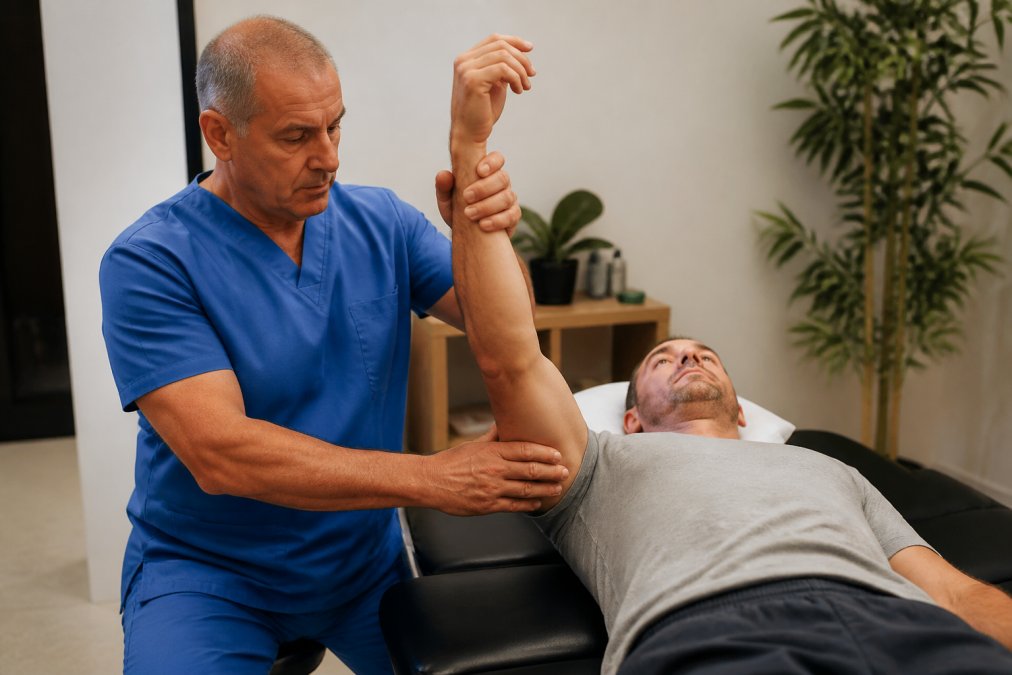
In applied kinesiology treatment, a muscle testing weak in isolation might indicate a problem elsewhere entirely. That weak shoulder muscle might indicate thyroid issues, liver dysfunction, or food intolerance. The muscle itself is fine; the neurological signal is disrupted. This is where biofeedback enters the picture.
Biofeedback in applied kinesiology treatment describes the body's neurological response to stimuli. When you touch your skin over a suspected organ problem or hold a substance you might be reacting to, your muscles test differently. The body gives immediate feedback through this neurological response, allowing practitioners to narrow down which systems need attention.
Proprioception underlies why muscle testing works. Your body's ability to sense where it is in space relies on thousands of sensory receptors in muscles, tendons, and joints constantly feeding information to your nervous system. Applied kinesiology treatment reads this feedback loop. When that loop is disrupted through injury, stress, nutritional deficiency, or emotional trauma, the muscle response changes.
Applied Kinesiology Techniques and Clinical Assessment
Practitioners use muscle testing to assess organ function, identify nutritional deficiencies, detect food sensitivities, evaluate spinal alignment, assess lymphatic drainage, and evaluate emotional blocks. For someone with chronic knee pain, applied kinesiology treatment might reveal that the vastus medialis tests weak because of liver dysfunction. For digestive issues, muscle testing might identify which spinal segments have lost mobility, restricting nerve flow to the stomach and intestines.
During a typical session, you'll wear comfortable clothing allowing movement. The practitioner will explain what they're testing and why. You'll resist their pressure with steady, moderate effort. The entire assessment usually takes 30-60 minutes. The practitioner begins by testing major muscle groups to establish a baseline, then conducts detective work by touching specific body points, asking you to hold substances, or having you think about particular stressors while retesting muscles. Each retest provides feedback about what's affecting your system.
The process is non-invasive and non-painful, with no injection, manipulation, or discomfort beyond testing pressure itself.
Applied Kinesiology Benefits for Chronic Pain and Recovery
Applied kinesiology treatment identifies why pain persists by addressing root causes rather than just symptoms. Patients often arrive after months or years of conventional treatment providing only temporary relief.
For athletes recovering from sports injuries, applied kinesiology treatment accelerates healing by identifying which muscles have lost neurological integrity, enabling practitioners to prescribe specific rehabilitation exercises that restore function faster than generic protocols.
Patients with fibromyalgia, autoimmune conditions, and complex systemic issues find applied kinesiology treatment particularly valuable. These conditions involve multiple body systems and rarely respond to single-system interventions. Applied kinesiology treatment's holistic assessment identifies which structural, chemical, and emotional factors drive the condition in each individual patient.
Post-surgical and post-trauma recovery benefits substantially from applied kinesiology treatment. Surgery creates scar tissue, neurological disruption, and altered movement patterns. Applied kinesiology treatment identifies exactly which systems have been affected and which need targeted intervention to restore full function.
The therapeutic interventions that follow assessment include spinal adjustments, soft tissue work, nutritional recommendations, acupuncture, and specific movement exercises, tailored to what muscle testing reveals.
Integration with Conventional Medicine and Evidence-Based Limitations
Peer-reviewed studies have documented that manual muscle testing can reliably identify specific muscle weaknesses and that certain therapeutic interventions improve muscle function. However, research specifically validating the diagnostic claims of applied kinesiology treatment, that muscle weakness indicates specific organ dysfunction, remains limited.
The challenge is that applied kinesiology treatment makes claims about organ function based on muscle response, requiring comparison against objective measures like blood work, imaging, or functional tests. Some small studies show correlations, but large-scale, rigorous trials are scarce. This gap between clinical experience and research evidence creates legitimate skepticism among conventional practitioners.
This doesn't mean applied kinesiology treatment is ineffective. Thousands of patients report significant improvement in pain, function, and overall health following treatment. The clinical outcomes are real even if the theoretical explanation remains incomplete.
Applied kinesiology treatment makes sense alongside other care if you've exhausted conventional options without resolution, are interested in preventive health, or are dealing with complex multi-system issues that conventional medicine struggles to address. Integration works best when both practitioners communicate. Your medical doctor doesn't need to endorse applied kinesiology treatment, but should know you're pursuing it.
Applied Kinesiology Treatment Cost and Accessibility
Pricing varies based on location, practitioner experience, and condition complexity. Initial consultations including comprehensive muscle testing typically take longer than follow-up visits. Some practitioners bundle assessment and initial treatment into one session; others separate them. Insurance coverage varies, some plans cover chiropractic care including applied kinesiology treatment, while others don't.
For current pricing at Alternative Health & Healing Center and insurance information, contact the clinic directly. They can provide specific session costs, package pricing, and insurance verification.
Accessibility has improved with growing practitioner availability. Most major metropolitan areas have chiropractors or healthcare providers trained in applied kinesiology treatment. Some practitioners offer virtual consultations for initial assessment, though hands-on muscle testing requires in-person visits.
Is Applied Kinesiology Treatment Right for You?
Applied kinesiology treatment makes sense if you're dealing with persistent pain or dysfunction that conventional treatment hasn't resolved, particularly if you're interested in understanding root causes rather than just managing symptoms.
You're a good candidate if you're willing to be an active participant in your healing, as treatment typically involves home exercises, dietary changes, or lifestyle modifications. The approach also suits people who think systemically about health, understanding that body systems interconnect and structural problems might have nutritional or emotional roots.
Consider applied kinesiology treatment if you've experienced trauma or significant stress, as unresolved psychological issues often manifest as physical symptoms. You might want to explore other approaches if you require immediate intervention for acute, serious conditions, applied kinesiology treatment works best for chronic issues and functional optimization.
Applied kinesiology treatment offers a distinctive diagnostic and therapeutic framework that many conventional practitioners overlook. At Alternative Health & Healing Center, our nearly 40 years of clinical experience with applied kinesiology treatment, combined with advanced technologies allows us to identify and address the root causes of your pain and dysfunction. If you're ready to understand why your symptoms persist and receive personalized treatment designed for your specific imbalances, request an appointment with our team today.
| Application | Best For | Typical Duration |
|---|---|---|
| Chronic pain assessment | Patients with long-standing pain unresponsive to conventional care | 45-60 minutes initial |
| Athletic injury recovery | Active individuals seeking accelerated functional restoration | 30-45 minutes per session |
| Systemic condition evaluation | Complex multi-system issues like fibromyalgia or autoimmune conditions | 60 minutes initial |
| Post-surgical rehabilitation | Restoring function and mobility after surgical intervention | 30-45 minutes per session |
| Preventive health screening | Identifying imbalances before they become serious problems | 45-60 minutes |
Frequently Asked Questions
What is applied kinesiology treatment and how does it work?
Applied kinesiology treatment is a diagnostic and therapeutic approach that uses manual muscle testing to assess structural, chemical, and emotional imbalances in the body. Practitioners apply gentle pressure to muscles while monitoring physiological responses, interpreting muscle strength patterns as indicators of nervous system function and body imbalances. It's based on the principle that muscles reflect overall health status through neurological feedback, allowing practitioners to identify areas needing intervention without invasive testing.
What conditions can applied kinesiology techniques help treat?
Applied kinesiology techniques may help address musculoskeletal pain, joint dysfunction, nerve-related discomfort, sports injuries, repetitive stress conditions, and systemic health concerns like fibromyalgia or autoimmune-related symptoms. However, it's used as a diagnostic and complementary tool rather than a standalone treatment. Practitioners use muscle testing to guide therapeutic interventions including adjustments, nutritional recommendations, and lifestyle modifications. Results vary by individual, and applied kinesiology treatment should complement, not replace, conventional medical care for serious conditions.
Is applied kinesiology treatment scientifically proven?
Applied kinesiology has limited peer-reviewed research supporting its diagnostic accuracy compared to conventional medical testing. While some studies suggest muscle testing can reflect neurological function and proprioception, the evidence base remains modest. The approach is classified as alternative medicine, and diagnostic claims lack the rigorous validation of standard medical tests like imaging or laboratory work. Many practitioners use it as a clinical assessment tool alongside conventional methods rather than as a replacement, and patients should understand its evidence-based limitations before relying on it as a primary diagnostic method.
How much does applied kinesiology treatment cost?
Applied kinesiology treatment pricing varies based on practitioner experience, location, session length, and whether additional therapeutic modalities are included. Costs depend on the complexity of your condition and the number of sessions needed. Most insurance plans do not cover applied kinesiology as a standalone service, though some may cover chiropractic or related services if billed appropriately. Contact your chosen provider directly for current pricing and ask about package options or payment plans, especially if you're managing costs on a fixed retirement income.


