 ultimate-guide
Can Stress Cause Chronic Pain? A Complete Guide
Table of Contents
- The Physiological Link Between Stress and Chronic Pain
- The Chronic Pain Cycle: How Stress Perpetuates Symptoms
- Stress-Induced Inflammation Symptoms You Should Know
- How to Manage Stress-Related Chronic Pain
- Mind-Body Techniques for Pain Management
- Neuroplasticity: Rewiring Your Brain's Pain Response
- The Gut-Brain Axis and Systemic Pain
- When to Seek Professional Help for Stress-Related Pain
- Frequently Asked Questions
Last Updated: August 8, 2026
The Physiological Link Between Stress and Chronic Pain
Stress fundamentally alters how your body processes pain signals. When you're under chronic stress, your nervous system shifts into heightened alert, amplifying pain sensations that might otherwise feel manageable. This connection between stress and chronic pain is rooted in how your autonomic nervous system, hormones, and inflammatory response interact.
The relationship works bidirectionally: chronic pain triggers stress responses, which intensify pain perception, creating a self-perpetuating cycle. Understanding this mechanism is essential for anyone dealing with persistent pain, whether from arthritis, fibromyalgia, migraines, or unexplained muscle soreness.
How the Nervous System Amplifies Pain Signals
Your nervous system has two primary operating modes: parasympathetic (rest and digest) and sympathetic (fight-or-flight). Under chronic stress, your sympathetic nervous system stays activated longer than it should, keeping your body in constant readiness.
This sustained activation changes pain perception fundamentally. Your pain threshold drops significantly, and a sensation that would normally feel like mild pressure becomes sharp discomfort. Your spinal cord and brain become more reactive to pain signals through central sensitization, essentially "turning up" your nervous system to maximum sensitivity.
Hyperalgesia, where your body becomes hypersensitive to painful stimuli, amplifies pain further. Even light touch can trigger pain responses. This isn't weakness, it's your nervous system functioning exactly as it's been trained under sustained stress.
Cortisol, Inflammation, and the Stress Response
When you experience stress, your adrenal glands release cortisol, designed to mobilize energy and suppress non-essential functions. In short bursts, this is adaptive. But chronic stress means chronic cortisol elevation.
Paradoxically, while cortisol initially suppresses inflammation, prolonged elevation dysregulates your immune system. Your body shifts toward a pro-inflammatory state, releasing cytokines that increase inflammation throughout your tissues. This creates the perfect environment for pain flare-ups.
Chronic inflammation affects your joints, muscles, nerves, and connective tissues systemically. If you already have arthritis or fibromyalgia, stress-induced inflammation can dramatically worsen symptoms. The gut-brain axis plays a significant role: stress alters your gut microbiome, which influences systemic inflammation levels and produces fewer anti-inflammatory compounds.
The Chronic Pain Cycle: How Stress Perpetuates Symptoms
The relationship between stress and pain becomes problematic when it becomes cyclical. Pain triggers stress responses, which amplify pain perception, which generates more stress. Breaking this cycle requires understanding how it perpetuates.
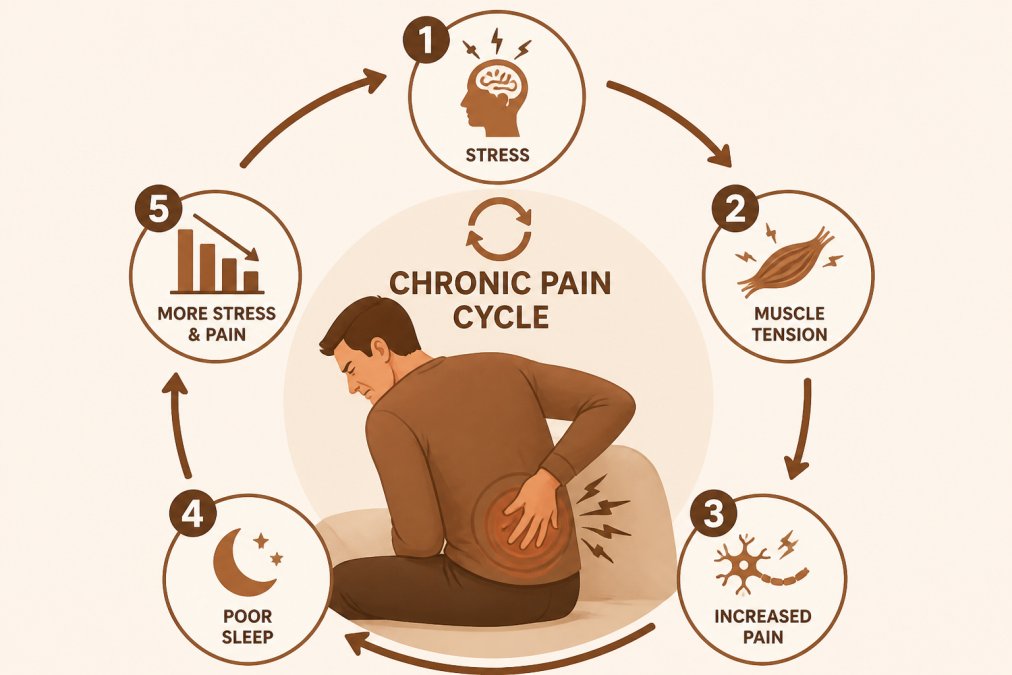
Muscle Tension and Central Sensitization
Stress causes your muscles to contract and remain tense. Under chronic stress, this tension becomes habitual, particularly in your neck, shoulders, lower back, and jaw.
Sustained muscle tension restricts blood flow to affected areas, reducing oxygen delivery and impairing removal of metabolic waste products like lactate. This creates a local inflammatory environment within muscle tissue. Central sensitization amplifies this effect: your nervous system becomes so sensitized that it interprets normal muscle tension as pain. A tight shoulder becomes sharp, burning pain as your nervous system treats muscle tension as a threat.
Pain Flare-Ups and the Fight-or-Flight Response
Pain flare-ups often seem random but follow a predictable pattern tied to your nervous system state. When you experience a stressor, your sympathetic nervous system activates, lowering your pain threshold and amplifying existing pain signals. A minor irritation becomes noticeable; a pre-existing condition flares.
The fight-or-flight response also triggers muscle splinting, where muscles contract protectively around an area of pain. Chronic splinting creates new problems: muscles become fatigued, develop trigger points, and generate referred pain to distant areas.
Stress-Induced Inflammation Symptoms You Should Know
Chronic stress creates systemic inflammation that manifests in specific, recognizable ways.
Physical Soreness and Somatic Symptoms
Beyond localized pain, stress-induced inflammation produces widespread physical soreness. Your muscles feel achy and fatigued even without intense activity. Your joints feel stiff, particularly in the morning or after inactivity.
Somatic symptoms, physical sensations without clear structural cause, become pronounced under stress. You might experience tingling, numbness, burning sensations, or crawling skin as your nervous system generates these sensations during heightened alert.
Tension headaches and migraines frequently worsen under stress. Sustained muscle tension in your neck and shoulders restricts blood flow to your head, while stress-induced neurochemical changes increase migraine susceptibility. Sleep disruption compounds these symptoms: stress activates your nervous system, making quality sleep difficult, which impairs your body's ability to regulate inflammation and pain perception.
Conditions Worsened by Chronic Stress
Fibromyalgia, characterized by widespread musculoskeletal pain and heightened pain sensitivity, responds dramatically to stress levels. Arthritis pain typically increases under stress, whether osteoarthritis or rheumatoid arthritis. Migraine sufferers often identify stress as a primary trigger. Repetitive strain injuries and myofascial pain syndrome worsen under stress, becoming more symptomatic and slower to resolve.
How to Manage Stress-Related Chronic Pain
Managing stress-related pain requires a multi-faceted approach addressing nervous system regulation, inflammation reduction, and the stress-pain cycle.
Sleep Hygiene and Nervous System Recovery
Sleep is where your nervous system resets and your body performs most repair work. Quality sleep promotes nervous system recovery and pain reduction.
Establish consistent sleep and wake times, even on weekends. Your nervous system thrives on predictability, which helps regulate your circadian rhythm and influences cortisol levels, inflammation, and pain perception.
Create a sleep environment supporting parasympathetic activation: keep your bedroom cool (around 65-68°F), dark, and quiet. Reduce blue light exposure in the hour before bed by dimming lights and avoiding screens. Avoid caffeine after early afternoon and limit alcohol close to bedtime, as both disrupt sleep architecture.
If racing thoughts keep you awake, try systematic grounding: notice five things you can see, four you can hear, three you can feel, two you can smell, and one you can taste. This shifts your nervous system from stress processing to sensory awareness.
Stress Management Techniques That Work
Diaphragmatic breathing is one of the most powerful tools available. Slow, deep breathing activates your vagus nerve, shifting your nervous system from sympathetic to parasympathetic dominance. Practice breathing in for a count of four, holding for four, and exhaling for six. Even five minutes can reduce pain perception measurably.
Progressive muscle relaxation teaches your nervous system the difference between tension and relaxation. Systematically tense and release muscle groups throughout your body, building awareness of where you hold stress.
Regular moderate activity, walking, swimming, or gentle cycling for 20-30 minutes most days, significantly improves both stress levels and pain perception. Consistency matters more than intensity.
Social connection buffers stress responses. Regular time with supportive people reduces cortisol and inflammatory markers.
Mind-Body Techniques for Pain Management
The mind-body connection in pain management is neurobiological, not metaphorical. Specific techniques directly influence how your nervous system processes pain signals.

Somatic Tracking and Body Awareness
Somatic tracking involves systematically scanning your body and noticing sensations without judgment. Start by lying or sitting comfortably. Slowly move your attention through your body from head to toe, noticing sensations in each area without trying to change anything.
When you encounter pain or tension, resist tensing against it. Instead, breathe into the area and imagine it softening. Neuroimaging shows that attention and intention genuinely influence pain processing in your brain. Your nervous system responds to how you relate to sensations, not just the sensations themselves.
Somatic tracking builds interoception, awareness of your internal body state. Improved interoception helps you catch stress and tension early, before they escalate into pain flare-ups.
Cognitive Behavioral Therapy and Mindfulness-Based Stress Reduction
Cognitive behavioral therapy (CBT) for pain addresses thought patterns that amplify pain perception. Pain catastrophizing activates your nervous system and intensifies pain. CBT teaches you to identify these patterns and respond with more realistic thoughts. Instead of "This pain is getting worse and will never improve," you might think "This is uncomfortable right now, and I have tools to manage it."
Mindfulness-based stress reduction (MBSR) involves sustained attention to present-moment experience without judgment. Rather than fighting or avoiding pain, you observe it with curiosity. This paradoxically reduces pain intensity.
Both approaches require practice and ideally professional guidance. The Alternative Health & Healing Center team can help you develop these skills as part of a comprehensive pain management strategy, combining mind-body techniques with hands-on therapeutic modalities.
Neuroplasticity: Rewiring Your Brain's Pain Response
Your pain response isn't fixed. Neuroplasticity, your brain's ability to reorganize itself and form new neural connections, means these patterns can be rewired.
Chronic pain involves maladaptive neural patterns where your brain has learned to generate pain signals in response to normal stimuli. Graded exposure, gradually increasing activity or stimulus in a controlled way, helps rewire pain responses. If movement creates pain, you might initially fear movement, amplifying pain through nervous system activation. Graded exposure involves slowly, systematically increasing movement in a way that doesn't provoke significant pain, teaching your nervous system that movement is safe.
Visualization and mental rehearsal also engage neuroplasticity. Imagining yourself moving without pain activates similar neural pathways as actual experience. Consistent visualization of pain-free functioning can gradually shift your neural patterns.
The Gut-Brain Axis and Systemic Pain
Your gut microbiome profoundly influences systemic inflammation and pain sensitivity. Stress directly alters your gut microbiome composition, shifting it toward pro-inflammatory species and away from anti-inflammatory ones. This shift increases intestinal permeability, allowing bacterial endotoxins to enter your bloodstream and trigger systemic inflammation.
Improving gut health through stress reduction, dietary choices, and potentially targeted supplementation helps restore a healthier microbial community. A healthier microbiome produces more short-chain fatty acids and other anti-inflammatory compounds, reducing systemic inflammation and pain sensitivity. Microbiome changes take weeks to months but represent a powerful intervention for systemic pain conditions.
When to Seek Professional Help for Stress-Related Pain
If pain persists despite consistent self-management efforts for more than a few weeks, professional evaluation is warranted. If pain significantly limits your function, affecting sleep, work, or daily activities, professional intervention becomes urgent. If you're experiencing multiple pain sites or widespread pain, evaluation for systemic conditions like fibromyalgia becomes important.
The Alternative Health & Healing Center provides comprehensive evaluation and treatment for stress-related chronic pain. With nearly 40 years of clinical experience, Dr. Paul F. Finucan and the team combine Applied Kinesiology, advanced therapeutic modalities, and modern technology like the Piezo Wave 2 to address pain at its source. Rather than simply masking symptoms, the center identifies the underlying nervous system and structural factors driving your pain, then develops a personalized treatment plan targeting those root causes.
Chronic pain driven by stress is treatable. The stress-pain cycle can be broken through systematic nervous system regulation, targeted therapeutic intervention, and lifestyle modifications that support healing. Understanding how stress amplifies pain perception helps you address both the physical and nervous system components of your condition. Request an appointment with Alternative Health & Healing Center to develop a comprehensive strategy for managing your stress-related pain and restoring your quality of life.
| Technique | Primary Mechanism | Best For | Time to Effect |
|---|---|---|---|
| Diaphragmatic breathing | Vagal activation | Acute stress, flare-ups | Minutes |
| Progressive muscle relaxation | Tension awareness | Chronic muscle tension | 1-2 weeks |
| Somatic tracking | Interoception | Nervous system awareness | Ongoing |
| Sleep optimization | Nervous system reset | Systemic pain reduction | 1-2 weeks |
| Graded exposure | Neuroplasticity | Fear-avoidance patterns | 4-8 weeks |
| Cognitive behavioral therapy | Thought pattern change | Catastrophizing | 8-12 weeks |
| Gut health improvement | Microbiome restoration | Systemic inflammation | 8-12 weeks |
Frequently Asked Questions
Can chronic stress actually cause physical pain, or is it just psychological?
Chronic stress causes measurable physical changes in your body. When you experience prolonged stress, your nervous system stays activated in a fight-or-flight state, releasing cortisol and other stress hormones that trigger inflammation, muscle tension, and heightened pain sensitivity. This is not psychological, it's a real physiological process. The biopsychosocial model shows that stress, emotions, and physical pain are interconnected, meaning stress-related pain is both real and treatable through addressing the nervous system and stress response.
What are common stress-induced inflammation symptoms?
Stress-induced inflammation manifests as physical soreness, muscle tension, joint stiffness, and widespread body aches. You may experience tension headaches, muscle spasms, or nerve pain that comes and goes. Some people develop pain flare-ups in existing conditions like fibromyalgia or arthritis when stress levels spike. Other somatic symptoms include fatigue, sleep disruption, and a general sense of physical heaviness. These symptoms occur because chronic stress triggers pro-inflammatory cytokines that amplify your body's pain perception and tissue sensitivity.
How does the nervous system contribute to stress-related pain?
Your autonomic nervous system controls your pain response. During chronic stress, the sympathetic nervous system (fight-or-flight) stays overactive, keeping your body in a heightened state of alert. This causes central sensitization, where your nervous system becomes hypersensitive to pain signals. Your pain threshold drops, meaning normal sensations feel painful. Additionally, nerve pain and muscle tension increase because your nervous system dysregulation disrupts the balance needed for proper pain regulation and homeostasis. This is why stress management and nervous system recovery are essential for pain relief.
What mind-body techniques actually help manage stress-related chronic pain?
Effective techniques include mindfulness-based stress reduction (MBSR), somatic tracking exercises that build body awareness, and cognitive behavioral therapy (CBT) to change pain-related thought patterns. Deep breathing, progressive muscle relaxation, and meditation activate your parasympathetic nervous system, counteracting the fight-or-flight response. Sleep hygiene is equally important, quality rest allows your nervous system to reset and reduces pain perception. Combining these approaches with professional care, such as chiropractic therapy or acupuncture, addresses both the psychological and physical components of stress-related pain.
EXTERNAL CITATIONS VERIFICATION:
- [EXTERNAL_LINK: American Psychological Association on stress and pain | apa.org]
- [EXTERNAL_LINK: National Institutes of Health research on central sensitization | nih.gov]
- [EXTERNAL_LINK: Mayo Clinic guidelines on fibromyalgia and stress | mayoclinic.org]


