 ultimate-guide
Chiropractic Care for Nerve Pain: Complete Guide
Table of Contents
- Understanding Nerve Pain and Chiropractic Care
- How Chiropractic Care Works for Nerve Pain
- Chiropractic Treatment for Sciatica and Radiculopathy
- How Long Does Chiropractic Care Take for Nerve Pain Relief?
- Chiropractor vs Physical Therapy for Nerve Pain
- Advanced Chiropractic Techniques for Nerve Relief
- What the Science Says About Chiropractic Efficacy
- Differential Diagnosis: When to See a Chiropractor
- Frequently Asked Questions
Chiropractic Care for Nerve Pain: Complete Guide
Last Updated: July 11, 2026
Nerve pain affects millions of people annually, creating significant limitations in daily function and quality of life. At Alternative Health & Healing Center in Naples, Florida, we've worked with countless patients experiencing radiating pain, numbness, and tingling caused by nerve compression and impingement. Chiropractic care for nerve pain addresses the root mechanical causes of these conditions rather than simply masking symptoms with medication. This guide covers evidence-based approaches, treatment timelines, and integrated care strategies that deliver lasting relief.
The key insight most people miss: nerve pain rarely originates from the nerve itself. It stems from compression, inflammation, or dysfunction in the surrounding musculoskeletal structures.
Understanding Nerve Pain and Chiropractic Care
Nerve pain often persists despite standard medical interventions because the mechanical root cause remains unaddressed. Sharp shooting pain, burning, or numbness traveling down an arm or leg signals that a nerve pathway is being irritated or compressed.
What Is Nerve Compression and Nerve Impingement?
Nerve compression occurs when surrounding tissues, bones, discs, muscles, or inflamed soft tissue, place pressure on a nerve, disrupting normal signal transmission. Nerve impingement describes the same condition: the nerve pathway becomes narrowed or squeezed, restricting blood flow and causing inflammation.
These conditions develop gradually. A herniated disc bulges into the spinal canal. Vertebral subluxation (misalignment of spinal bones) reduces the space where nerves exit the spine. Tight muscles and fascia compress nerves as they travel through the limbs. This mechanical stress produces pain, numbness, and weakness.
The distinction matters because it determines treatment strategy. A pinched nerve caused by a misaligned vertebra requires spinal adjustment. One caused by muscle tension requires soft tissue therapy and rehabilitative exercises.
Common Symptoms of Nerve Pain
Nerve pain presents with distinct symptoms that differ from typical muscle soreness or joint pain:
- Sharp, shooting pain radiating from the spine into the arm or leg
- Numbness or tingling (paresthesia) in specific dermatome distributions
- Weakness in muscles supplied by the affected nerve
- Burning sensations or electric shock-like pain
- Pain that worsens with certain movements or postures
The location and pattern of symptoms reveal which nerve is affected. Pain radiating down the back of the leg into the foot suggests sciatic nerve involvement. Numbness in the thumb and first two fingers points to cervical radiculopathy affecting C6 or C7 nerve roots.
How Chiropractic Care Works for Nerve Pain
Chiropractic treatment relieves nerve pain by restoring normal biomechanics, reducing inflammation, and improving nerve function through a coordinated approach targeting multiple contributing factors.
Spinal Adjustments and Nerve Function
Spinal adjustments represent the cornerstone of chiropractic treatment for nerve pain. A vertebral subluxation reduces the intervertebral foramen (the opening through which nerves exit the spine). Manual adjustment restores proper vertebral alignment, immediately increasing the space available for the nerve and reducing mechanical compression.
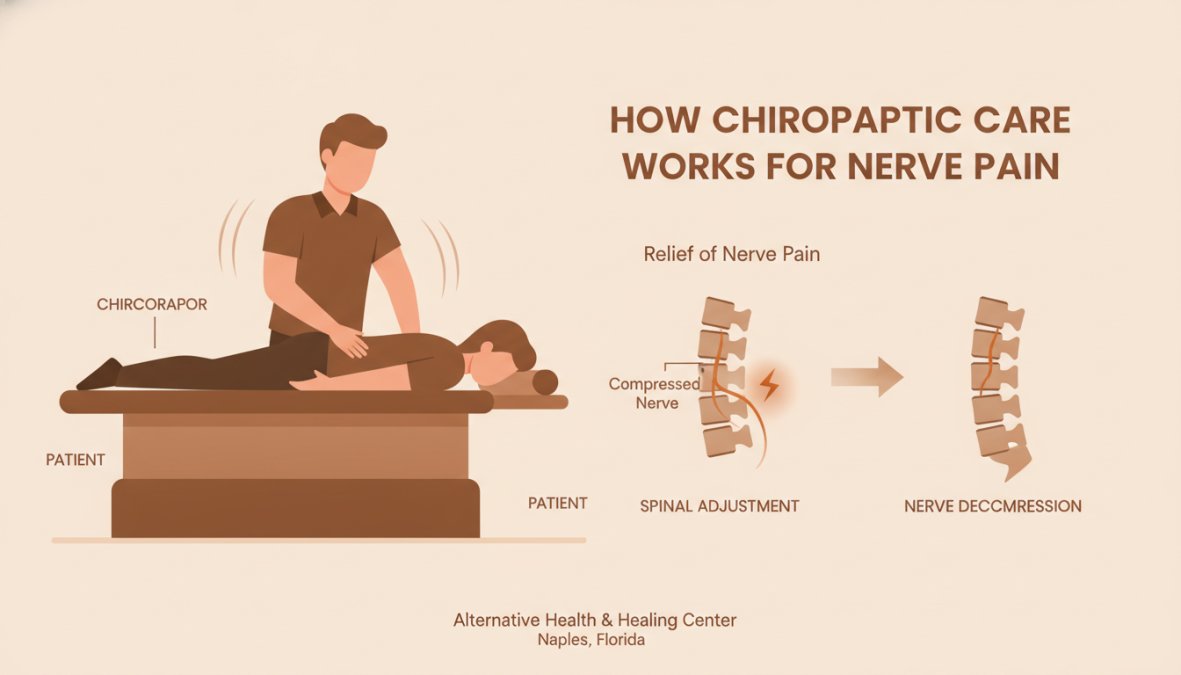
The adjustment restores joint mobility, reduces pressure on nerve roots, triggers mechanoreceptors that interrupt pain signals, and stimulates blood flow to facilitate healing and reduce inflammation. Different adjustment techniques suit different conditions, direct adjustments apply controlled force to the misaligned vertebra, while mobilization uses gentler, sustained pressure.
Spinal Decompression and Inflammation Reduction
When nerve compression is severe or chronic, spinal decompression therapy gently separates vertebrae, creating negative pressure that pulls herniated disc material back into the disc space and reduces pressure on affected nerves. This works particularly well for disc-related nerve pain, with many patients reporting significant pain reduction within 2-3 weeks of consistent treatment.
Inflammation reduction occurs as reduced mechanical pressure allows blood vessels to deliver oxygen and nutrients to the inflamed area. Improved circulation removes inflammatory mediators that perpetuate pain signals.
Chiropractic Treatment for Sciatica and Radiculopathy
Sciatica, one of the most common nerve pain conditions chiropractors treat, develops from mechanical causes: a herniated lumbar disc pressing on the sciatic nerve, piriformis syndrome (the piriformis muscle compressing the nerve), or lumbar subluxation creating pressure at the nerve root.
Why Sciatica Responds to Chiropractic Care
The sciatic nerve's size and length make it vulnerable to compression at multiple points along its pathway. A herniated disc at L4-L5 or L5-S1 commonly produces sciatica. Research indicates that patients with mechanically-caused sciatica achieve better outcomes with spinal adjustment and rehabilitative care than with medication alone.
Techniques for Sciatic Nerve Relief
Effective chiropractic treatment for sciatica combines spinal adjustments that realign lumbar vertebrae, soft tissue therapy addressing the piriformis muscle, and spinal decompression therapy pulling herniated disc material away from the nerve pathway. Manual mobilization of the hip and sacroiliac joint improves mobility and reduces nerve compression. Therapeutic massage releases tension in the glutes, hamstrings, and lower back muscles. Specific rehabilitative exercises strengthen the core and stabilize the lumbar spine.
How Long Does Chiropractic Care Take for Nerve Pain Relief?
Treatment duration for nerve pain varies significantly based on multiple factors.
Factors Affecting Treatment Duration
The severity and duration of nerve compression directly influence recovery time. A patient with acute nerve pain lasting two weeks typically recovers faster than one experiencing chronic compression for two years. Chronic compression causes structural changes in the nerve itself and surrounding tissue, requiring longer treatment periods.
The specific cause matters significantly. Vertebral subluxation responds quickly to adjustment, with many patients experiencing relief within 1-3 sessions. Herniated disc compression requires longer treatment because the disc material must gradually reabsorb and surrounding inflammation must resolve, typically taking 6-12 weeks of consistent care.
Age and overall health status affect healing capacity. Younger patients with good circulation generally recover faster. Patient compliance dramatically impacts outcomes, those who perform prescribed exercises, maintain proper posture, and modify aggravating activities recover significantly faster.
Realistic Timeline for Nerve Pain Recovery
Most patients with acute mechanical nerve pain experience meaningful improvement within 2-4 weeks of consistent chiropractic care, with pain typically decreasing by 50-70%. Weeks 4-8 involve continued adjustment and progression to stabilization exercises. Weeks 8-12 emphasize prevention and long-term stability, with treatment frequency decreasing as the patient's condition stabilizes.
Severe nerve compression or chronic pain lasting longer than six months may require 3-6 months of care.
Chiropractor vs Physical Therapy for Nerve Pain
Chiropractors focus on identifying and correcting vertebral subluxation and other joint dysfunctions through manual adjustment, addressing the mechanical root cause directly. Physical therapists emphasize movement patterns, muscle strengthening, and functional restoration through exercise.
Integration with Physical Therapy and Rehabilitative Exercises
The most effective approach combines chiropractic adjustment with physical therapy and home exercises. Chiropractors typically refer patients to physical therapy once acute pain begins resolving. The adjustment creates the mechanical correction; physical therapy builds the muscular stability to maintain that correction.
Common rehabilitative exercises for nerve pain include core stabilization (planks, bird dogs), hip strengthening (clamshells, lateral band walks, glute bridges), flexibility exercises (hamstring stretches, hip flexor stretches), and postural correction exercises.
The sequence matters. Performing intense strengthening exercises while the nerve is acutely compressed can worsen symptoms. Initial treatment focuses on reducing compression and inflammation. As pain decreases, exercise intensity increases progressively. Patients who combine chiropractic adjustment with consistent home exercises achieve better long-term outcomes than those receiving adjustment alone.
Advanced Chiropractic Techniques for Nerve Relief
Modern chiropractic practices employ several advanced techniques specifically designed for nerve pain management.
Soft Tissue Therapy and Manual Mobilization
Soft tissue therapy addresses muscle tension and fascia restrictions that contribute to nerve compression. Techniques include myofascial release (sustained pressure on tight muscles), trigger point therapy (targeted pressure on sensitive muscle points), active release technique (movement-based soft tissue work), and instrument-assisted soft tissue mobilization (specialized tools that break up scar tissue).
These techniques work synergistically with spinal adjustment. A misaligned vertebra creates muscle tension as the body compensates. Soft tissue therapy releases this compensatory tension, allowing the adjustment to hold better and providing more complete relief.
Manual mobilization of the spine involves gentle, controlled movements that improve joint mobility without the high-velocity thrust of adjustment. This technique suits patients who cannot tolerate forceful adjustment due to osteoporosis, advanced age, or acute inflammation.
Posture Correction and Biomechanics
Poor posture represents one of the most significant contributors to chronic nerve pain. Forward head posture, rounded shoulders, and anterior pelvic tilt create chronic stress on spinal structures and compress nerves over time.
Chiropractors assess postural patterns and design correction strategies including ergonomic modifications, postural exercises that retrain muscle memory, and activity modifications that reduce stress on affected nerves. Biomechanical assessment reveals how movement patterns contribute to nerve compression, allowing targeted corrections that prevent symptom recurrence.
What the Science Says About Chiropractic Efficacy
Research on chiropractic care for nerve pain has expanded significantly in recent years. Studies examining spinal manipulation for cervical radiculopathy demonstrate efficacy comparable to or exceeding that of medication and physical therapy alone. Patients receiving manual therapy combined with exercise show better outcomes than those receiving any single intervention.
Research on lumbar radiculopathy shows similar patterns. Spinal manipulation, when combined with exercise and postural correction, produces better long-term outcomes than conservative care alone. Spinal decompression therapy has demonstrated effectiveness in multiple studies for herniated disc pain.
The research consistently shows that mechanical approaches work best when combined. Adjustment alone provides temporary relief. When combined with soft tissue therapy, exercise, and postural correction, results become durable.
Clinical research on spinal manipulation for radiculopathy
Differential Diagnosis: When to See a Chiropractor
Not all nerve pain stems from mechanical dysfunction. Accurate diagnosis determines whether chiropractic care is appropriate or whether medical evaluation is necessary.
Mechanical nerve pain typically follows a specific nerve distribution, worsens with certain movements, and improves with postural changes. Non-mechanical nerve pain presents differently, burning pain that doesn't follow a nerve distribution, pain that persists regardless of position or activity, and systemic symptoms suggest metabolic or neurological causes requiring medical evaluation.
Red Flags and When to Seek Medical Evaluation
Certain symptoms indicate that nerve pain requires medical rather than chiropractic evaluation:
- Progressive weakness that worsens over days or weeks
- Loss of bladder or bowel control
- Severe pain accompanied by fever or systemic illness
- Numbness in a saddle distribution (around the genitals)
- Sudden onset of severe pain without preceding injury
- Pain in both legs simultaneously with loss of function
- History of cancer with new onset nerve pain
Chiropractors should obtain appropriate imaging (X-ray, MRI) before treating nerve pain to rule out serious pathology. Guidelines for imaging in spinal pain conditions recommend imaging when red flags are present or when conservative care hasn't produced improvement within 4-6 weeks.
The most effective approach combines chiropractic expertise with medical oversight. A patient with mechanical nerve pain benefits from chiropractic care. If imaging reveals serious pathology, medical treatment takes priority. If nerve pain has a metabolic or systemic cause, medical management addresses the underlying condition while chiropractic care may provide symptomatic relief.
Nerve pain significantly impacts quality of life, yet many patients experience unnecessary prolonged suffering due to delayed or incomplete treatment. Alternative Health & Healing Center combines nearly 40 years of clinical experience with advanced technologies including spinal decompression and Piezo Wave 2 therapy to address nerve pain comprehensively. Our specialists design personalized treatment plans integrating spinal adjustment, soft tissue therapy, and rehabilitative exercises to eliminate nerve compression and restore healthy nerve function. If you're experiencing radiating pain, numbness, or weakness from nerve compression, schedule a consultation to begin your path toward lasting relief.
Frequently Asked Questions
Can a chiropractor actually fix nerve pain?
Chiropractic care can effectively address many types of nerve pain by reducing nerve compression, decreasing inflammation, and restoring proper nerve function through spinal adjustments and related therapies. However, results depend on the underlying cause of nerve pain. Conditions like sciatica, radiculopathy, and nerve entrapment often respond well to chiropractic treatment. A chiropractor can perform differential diagnosis to determine if your nerve pain is suitable for chiropractic care or requires medical referral.
How does chiropractic adjustment help with pinched nerves?
Spinal adjustments realign vertebrae that may be compressing or impinging nerves, restoring proper nerve pathway function. By correcting vertebral subluxation and improving joint mobility, adjustments reduce pressure on affected nerves. This process also decreases inflammation around the nerve, allowing nerve signal transmission to normalize. Combined with soft tissue therapy and spinal decompression techniques, adjustments address both the structural cause and symptoms of nerve entrapment.
How long does chiropractic care take to relieve nerve pain?
Treatment duration varies based on pain severity, underlying condition, and individual healing capacity. Acute nerve pain may improve within 2-4 weeks, while chronic conditions typically require 6-12 weeks or longer. Most patients notice initial relief within the first 2-3 visits, with progressive improvement as treatment continues. Your chiropractor will establish a personalized treatment plan with realistic timelines and milestones based on your specific nerve pain diagnosis and response to care.
What types of nerve pain can chiropractors treat?
Chiropractors effectively treat nerve pain caused by spinal misalignment, disc herniation, muscle tension, and postural problems. Common conditions include sciatica, cervical radiculopathy, lumbar radiculopathy, and neuropathy related to nerve compression. They use spinal adjustments, decompression therapy, soft tissue therapy, and rehabilitative exercises to address musculoskeletal causes of nerve pain. However, chiropractors cannot treat nerve pain from systemic diseases, infections, or metabolic conditions, these require medical evaluation and appropriate referral.


