 ultimate-guide
Chiropractic Treatment for Nerve Pain Relief
Table of Contents
- What Is Nerve Pain and How Chiropractic Care Helps
- Signs of Nerve Damage vs Muscle Pain
- Chiropractic Adjustment for Pinched Nerve Relief
- Common Causes of Nerve Compression and Pain
- How Long Does Chiropractic Treatment Take for Nerve Pain
- Benefits of Non-Invasive Chiropractic Treatment
- Home Care, Dietary Support, and Red Flags for Emergency Care
- Why Choose a Comprehensive Chiropractic Approach
- Frequently Asked Questions
Last Updated: August 10, 2026
What Is Nerve Pain and How Chiropractic Care Helps
Nerve pain occurs when spinal misalignment compresses or irritates nerves, disrupting normal pain signaling. Unlike muscle soreness, which resolves with rest, nerve pain (radiculopathy) can persist for weeks or months without proper treatment. Chiropractic care addresses the root cause by realigning the spine, reducing inflammation, and restoring proper nerve function rather than masking symptoms with medication.
Understanding Nerve Compression and Radiculopathy
Nerve compression occurs when vertebrae shift out of alignment, placing pressure on nearby nerves. This subluxation disrupts the nerve's ability to transmit signals properly. Radiculopathy develops when compressed nerves send pain signals down the arm or leg, often accompanied by weakness or loss of sensation. Inflammation surrounding the compressed nerve intensifies the problem, creating a cycle where pain worsens movement, which increases inflammation further. Diagnostic imaging such as X-rays or MRI scans identifies the exact location of nerve compression, allowing targeted treatment protocols.
How Spinal Misalignment Triggers Nerve Pain
The vertebral column houses and protects the spinal cord, which branches into 31 pairs of spinal nerves. When even one vertebra shifts from its proper position, it can compromise the space where these nerves exit the spine, triggering inflammation, swelling, and pain signaling. Poor posture, repetitive stress, and previous injuries create conditions for misalignment. Restoring proper alignment removes pressure from affected nerves, allowing inflammation to decrease and normal nerve conduction to resume.
Signs of Nerve Damage vs Muscle Pain
Distinguishing between nerve pain and muscle soreness is essential for choosing the right treatment. Muscle pain typically feels localized, improves with rest, and resolves within days or weeks. Nerve pain radiates along specific pathways, persists despite rest, and often includes tingling or numbness.
Recognizing Nerve Pain Symptoms
Nerve pain presents with distinct characteristics. Radiating pain travels down an arm or leg following a specific nerve's anatomical pathway, starting at the spine and extending into the extremity. Numbness and tingling sensations (paresthesia) accompany many cases of nerve compression, described as a "pins and needles" feeling or loss of sensation in fingers, toes, or other areas supplied by the compressed nerve. Weakness in affected muscles often accompanies nerve pain, representing a functional loss that distinguishes nerve problems from muscle soreness. Nerve pain often feels sharp, burning, or electric, sensations that muscle pain rarely produces.
Distinguishing Muscle Soreness from Nerve Damage
Muscle pain responds predictably to rest and gentle movement, typically peaking 24-48 hours after strenuous exercise, then gradually improving. Nerve pain often worsens with certain movements or positions that increase compression. Location and distribution offer clear clues: muscle pain stays localized to the stressed area, while nerve pain radiates along the nerve's pathway. Gentle stretching often relieves muscle soreness, though nerve pain may worsen with certain stretches. Muscle soreness resolves within one to two weeks; nerve pain persisting beyond this timeframe, especially if accompanied by radiating symptoms, indicates nerve compression requiring professional evaluation.
Chiropractic Adjustment for Pinched Nerve Relief
Spinal adjustments represent the cornerstone of chiropractic treatment for nerve pain relief, directly addressing vertebral misalignment causing compression. A chiropractor applies precise, controlled force to restore normal positioning and relieve pressure on affected nerves.
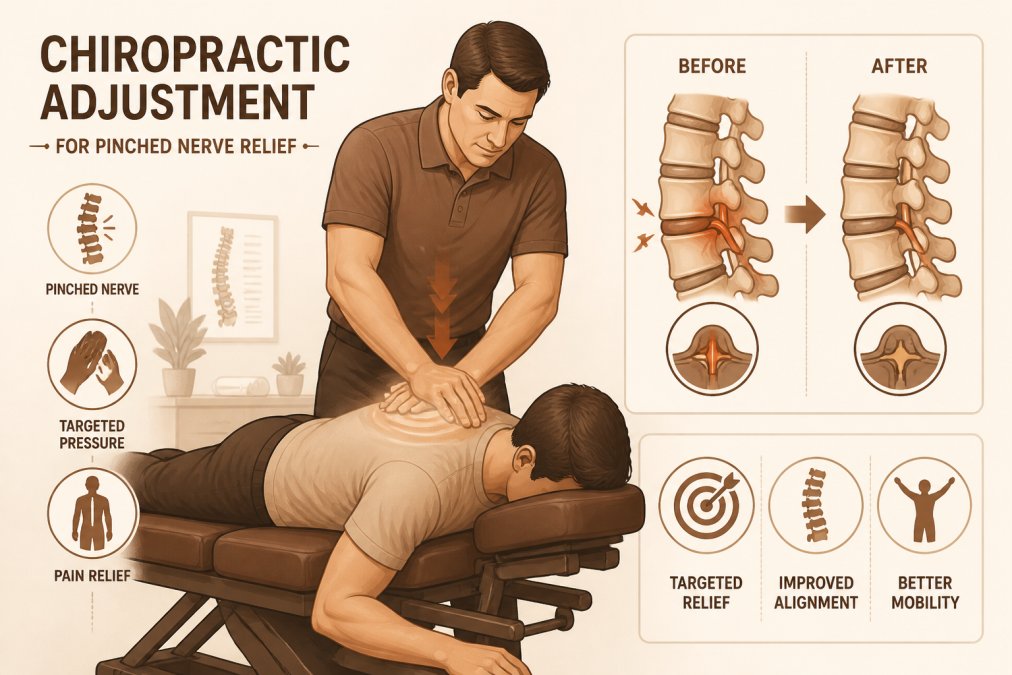
Spinal Decompression and Manual Manipulation Techniques
Spinal decompression therapy uses mechanical traction to gently pull vertebrae apart, creating space for compressed nerves to decompress. This technique proves especially effective for herniated discs pressing on nerve roots. Manual manipulation applies controlled force through the chiropractor's hands to restore vertebral alignment, improving spinal biomechanics and providing immediate relief as pressure on nerves decreases. Soft tissue therapy complements spinal adjustments by addressing muscle tension surrounding the affected area, allowing adjustments to hold better and reducing recurrence likelihood. Therapeutic exercises prescribed after adjustment stabilize the corrected alignment by strengthening stabilizer muscles that prevent regression.
Applied Kinesiology and Advanced Therapeutic Modalities
Applied Kinesiology evaluates muscle function to identify underlying structural and neurological problems, allowing more targeted treatment protocols. Alternative Health & Healing Center specializes in Applied Kinesiology combined with the Piezo Wave 2, which uses acoustic wave therapy to stimulate healing in affected tissues by increasing blood flow and reducing inflammation. Cold laser therapy, magnetic therapy, and acoustic wave treatment enhance the body's ability to repair nerve damage and reduce inflammation.
Common Causes of Nerve Compression and Pain
Understanding what causes nerve compression helps patients recognize risk factors and make lifestyle modifications to prevent recurrence.
Herniated Discs, Vertebral Misalignment, and Inflammation
Herniated discs represent one of the most common causes of nerve compression. When the intervertebral disc ruptures, the inner material protrudes into the spinal canal, pressing directly on nerve roots. Vertebral misalignment narrows the space where nerves exit the spine, while bone spurs that develop with age further reduce this space. Arthritis of the spine accelerates degenerative changes leading to nerve compression, though proper spinal alignment and regular chiropractic care can slow degeneration and prevent nerve pain from developing.
Repetitive Stress and Postural Dysfunction
Occupational activities and sports create repetitive stress on specific spinal regions. Desk workers develop forward head posture, placing excessive strain on cervical vertebrae and compressing nerves in the neck and upper back. Poor posture represents one of the most modifiable risk factors for nerve compression. Muscle imbalances develop from repetitive activities, pulling vertebrae out of alignment. Weak core muscles fail to stabilize the spine, allowing vertebrae to shift under load. Addressing these imbalances through targeted exercises and postural correction prevents nerve pain from recurring.
How Long Does Chiropractic Treatment Take for Nerve Pain
The duration of chiropractic treatment varies based on the severity of nerve compression, how long the condition has existed, and individual healing capacity. Most patients experience initial pain relief within the first few sessions, but complete nerve function restoration typically requires several weeks to months of consistent treatment.
Treatment Timeline and Recovery Expectations
Acute nerve compression from a recent injury often responds quickly to chiropractic care, with substantial improvement within 2-4 weeks of regular treatment. Chronic nerve pain persisting for months or years requires longer treatment periods, typically 8-12 weeks of consistent treatment before patients achieve significant, lasting relief. Initial intensive treatment typically involves 2-3 sessions per week for the first 4-6 weeks. As pain decreases and alignment improves, treatment frequency typically reduces to 1-2 sessions weekly, then transitions to maintenance care. Many patients benefit from monthly or quarterly adjustments that maintain spinal alignment and prevent recurrence.
Factors That Influence Healing Duration
Age affects healing speed, with younger patients typically recovering faster due to superior tissue healing capacity. The severity of nerve compression directly impacts treatment duration, mild compression may resolve in 4-6 weeks, while severe compression may require 12-16 weeks or longer. Patient compliance with home care and lifestyle modifications significantly influences outcomes. Pre-existing conditions like arthritis, osteoporosis, or previous spinal injuries complicate recovery, though these patients still benefit from chiropractic care.
Benefits of Non-Invasive Chiropractic Treatment
Non-invasive chiropractic care offers significant advantages over surgical intervention. Surgery carries inherent risks including infection, anesthesia complications, and potential nerve damage during the procedure.
Pain Relief Without Surgery
Chiropractic treatment achieves pain relief by addressing the mechanical cause of nerve compression rather than masking pain with medication. Patients avoid side effects associated with pain medications, including dependency, gastrointestinal issues, and cognitive impairment. The non-invasive approach allows patients to remain active during treatment, unlike post-surgical recovery which requires weeks of restricted activity. Chiropractic treatment typically costs a fraction of surgical expenses, making it accessible to more patients.
Restoring Nerve Function and Mobility
Beyond pain relief, chiropractic treatment restores the nervous system's ability to transmit signals properly. As vertebral alignment improves and inflammation decreases, nerve conduction velocity increases and sensation normalizes. Joint mobility improves as misaligned vertebrae return to proper positioning, reducing compensatory stress on surrounding structures. Once the spine is properly aligned and supporting muscles are strengthened, the likelihood of recurrent nerve compression decreases significantly.
Home Care, Dietary Support, and Red Flags for Emergency Care
Successful treatment extends beyond the chiropractic office. Home care protocols, dietary modifications, and awareness of warning signs create a comprehensive approach to nerve pain management and prevention.
Nerve Flossing Exercises and Self-Care Protocols
Nerve flossing involves gentle movements that slide nerves through their surrounding tissues, reducing adhesions and improving mobility. For cervical nerve pain, gentle neck movements create sliding motion in cervical nerves without excessive stretching. For lumbar nerve pain, sciatic nerve flossing involves lying on your back, bending one knee toward your chest while straightening the opposite leg, then reversing the motion. Performing these exercises 2-3 times daily for 10-15 repetitions helps maintain nerve mobility and prevents recurrence. Postural correction exercises strengthen muscles that support proper spinal alignment through core strengthening, shoulder blade stabilization, and hip flexor stretching. Ice application for 15 minutes several times daily reduces acute inflammation and pain, while heat therapy applied after the acute phase subsides relaxes tight muscles and improves blood flow.

Anti-Inflammatory Nutrition and Lifestyle Support
Dietary modifications support the body's ability to reduce inflammation and heal nerve damage. Foods rich in omega-3 fatty acids, berries, leafy greens, and colorful vegetables provide antioxidants that protect nerve tissue. Avoiding processed foods, refined carbohydrates, and excessive sugar accelerates healing by reducing inflammation. Adequate hydration supports disc health and reduces inflammation. Sleep quality profoundly affects healing, as the body releases growth hormone and increases blood flow to healing tissues during sleep. Stress management reduces the muscle tension that perpetuates spinal misalignment through meditation, deep breathing exercises, and regular physical activity.
Warning Signs That Require Immediate Medical Attention
Progressive weakness that worsens over hours or days suggests active nerve damage requiring immediate assessment. Loss of bowel or bladder control represents a medical emergency indicating cauda equina syndrome, contact emergency services immediately. Fever accompanying nerve pain suggests infection rather than simple nerve compression. Severe, unrelenting pain that doesn't improve with conservative treatment may indicate a condition beyond simple nerve compression; if pain persists despite appropriate chiropractic care for 8-12 weeks, additional diagnostic imaging or medical evaluation may be necessary. Numbness or weakness that progresses rapidly warrants urgent evaluation.
Why Choose a Comprehensive Chiropractic Approach
A comprehensive approach to nerve pain combines spinal adjustment, advanced therapeutic modalities, home care protocols, and lifestyle modifications. This integrated strategy addresses nerve pain from multiple angles, creating superior outcomes compared to single-intervention approaches. Alternative Health & Healing Center brings nearly 40 years of clinical experience to nerve pain treatment. Our team combines traditional chiropractic expertise with advanced techniques like Applied Kinesiology and modern technology including the Piezo Wave 2. Research from the American Chiropractic Association demonstrates that integrative chiropractic care produces better long-term outcomes than isolated interventions. Your nervous system controls every function in your body. When nerves are compressed and inflamed, this fundamental control system malfunctions. Restoring proper spinal alignment and nerve function creates benefits extending throughout your entire body, improving sleep, energy, mobility, and overall quality of life.
Nerve pain significantly impacts quality of life, limiting mobility and creating chronic discomfort. Rather than accepting nerve pain as inevitable or turning to surgery as your only option, consider how comprehensive chiropractic treatment addresses the root cause. At Alternative Health & Healing Center, we combine our nearly 40 years of experience with Applied Kinesiology and advanced technology like the Piezo Wave 2 to deliver personalized nerve pain relief. Our approach restores spinal alignment, reduces inflammation, and rehabilitates nerve function without surgery. Request an appointment today to discover how integrated chiropractic care can restore your mobility and eliminate nerve pain for good.
| Treatment Component | Purpose | Typical Frequency |
|---|---|---|
| Spinal adjustment | Restore vertebral alignment and relieve nerve compression | 2-3x weekly initially, then 1-2x weekly |
| Spinal decompression therapy | Create space for compressed nerves to decompress | 2-3x weekly for 4-6 weeks |
| Soft tissue therapy | Release muscle tension perpetuating misalignment | Each session or as needed |
| Applied Kinesiology assessment | Identify affected nerves and optimal treatment approach | Initial evaluation and periodic reassessment |
| Piezo Wave 2 therapy | Stimulate healing and reduce inflammation | 1-2x weekly as part of comprehensive protocol |
| Home nerve flossing exercises | Maintain nerve mobility between sessions | Daily, 2-3 times |
| Postural correction exercises | Strengthen stabilizer muscles | Daily |
| Maintenance care | Prevent recurrence and maintain alignment | Monthly or quarterly after initial treatment |
Frequently Asked Questions
Can a chiropractor actually help with nerve pain, or is that just marketing?
Yes. Chiropractors address nerve pain by correcting vertebral misalignment that compresses nerves and restricts nerve conduction. Spinal adjustments restore proper joint mobility and reduce inflammation around the nerve pathway. This approach works best for pain caused by subluxation or disc herniation; it is less effective for nerve damage from metabolic disease or severe injury. Results depend on the underlying cause and your commitment to treatment and home care.
What is the difference between muscle pain and nerve pain?
Muscle pain feels like soreness, tightness, or burning localized to the muscle itself and typically improves with rest and stretching. Nerve pain (radiculopathy) radiates along the nerve pathway, causes tingling or numbness, and may worsen with certain movements. Nerve pain often signals compression or impingement higher up the spine. A chiropractor can assess which you have through physical examination and, if needed, diagnostic imaging to confirm the source.
How long does chiropractic treatment for nerve pain typically take to show results?
Most patients notice some relief within 2-4 weeks of consistent treatment, though full recovery can take 8-12 weeks or longer depending on the severity of nerve compression, age, and how long the pain has been present. Acute cases respond faster than chronic conditions. Compliance with home exercises and lifestyle changes significantly accelerates healing. Your chiropractor will establish a personalized timeline during your initial consultation.
What should I do if my nerve pain suddenly gets worse or I develop numbness in my legs?
Seek immediate medical attention if you experience sudden severe pain, progressive numbness in the legs or feet, loss of bowel or bladder control, or weakness that worsens rapidly. These can signal cauda equina syndrome or other serious spinal conditions requiring emergency care. While chiropractic treatment is effective for many nerve pain cases, these red flags require imaging and medical evaluation to rule out surgical emergencies.
Is chiropractic care safe for someone with arthritis and a pinched nerve?
Yes, when performed by a qualified chiropractor who understands your full health history. Gentle spinal adjustments and decompression therapy can reduce inflammation and relieve nerve compression even in arthritic spines. Your chiropractor will avoid aggressive manipulation if your bones are fragile and may use softer techniques like spinal decompression or soft tissue therapy instead. Always disclose all conditions so your treatment plan accounts for arthritis and any other concerns.
What is the difference between chiropractic adjustment and spinal decompression for nerve pain?
Spinal adjustment involves manual manipulation to correct vertebral misalignment and restore joint mobility, reducing pressure on nerves. Spinal decompression uses traction or specialized equipment to gently stretch the spine and create space for compressed nerves. Both address nerve compression but work differently; decompression is gentler and often preferred for severe disc herniation or when adjustment alone hasn't provided relief. Many treatment plans combine both methods.


