 comparison
Integrative Chiropractic vs Physical Therapy: Complete Comparison
Table of Contents
- Integrative Chiropractic vs Physical Therapy: Key Differences
- What Integrative Chiropractic Care Involves
- What Physical Therapy Treatment Duration and Goals Look Like
- Chiropractic vs Physical Therapy for Back Pain: Evidence and Outcomes
- How to Choose Between Chiro and PT: A Decision Framework
- Benefits of Integrated Treatment: When to Combine Both Approaches
- Similarities Between Integrative Chiropractic and Physical Therapy
- Conclusion: Making Your Health Decision
- Frequently Asked Questions
Last Updated: July 13, 2026
Integrative Chiropractic vs Physical Therapy: Key Differences
Understanding the distinction between integrative chiropractic vs physical therapy is essential when evaluating treatment options for musculoskeletal pain and functional recovery. Both disciplines address pain management and restoration of healthy body functioning, but they approach the problem through fundamentally different lenses. The core tension comes down to philosophy: one focuses on structural alignment and nervous system function through manual adjustment, while the other emphasizes therapeutic exercise and biomechanical retraining. Modern integrative chiropractic has evolved beyond traditional spinal manipulation alone, incorporating soft tissue therapy, therapeutic modalities, and functional movement patterns that blur historical lines between these professions.
Core Philosophy and Approach
Integrative chiropractic care operates on the principle that vertebral subluxation and joint dysfunction impair nervous system function and create pain. Treatment centers on spinal adjustment and joint mobilization to restore proper alignment and neural communication. The "integrative" component means practitioners combine adjustments with complementary therapies, soft tissue work, therapeutic exercise, and advanced modalities to address the full picture of musculoskeletal dysfunction.
Physical therapy prioritizes functional movement and therapeutic exercise as the primary treatment pathway. Physical therapists assess biomechanics, identify movement dysfunction, and design rehabilitation programs to restore range of motion, strength, and postural correction. The PT approach is inherently exercise-based and focuses on patient-directed recovery rather than practitioner-applied manipulation.
Treatment Modalities and Techniques
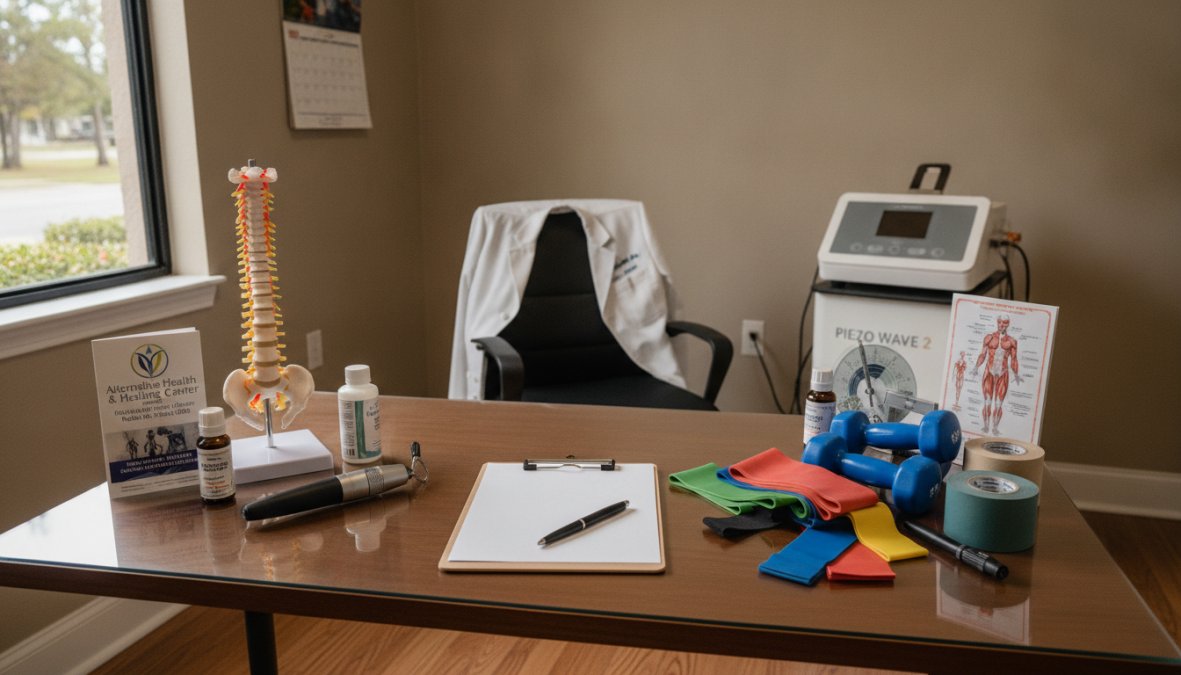
Integrative chiropractic practices employ a broader toolkit than spinal manipulation alone. Manual therapy includes joint mobilization, soft tissue therapy, and myofascial release. Complementary modalities like laser therapy, acoustic wave therapy, and spinal decompression enhance treatment outcomes. Advanced technology like the Piezo Wave 2 alongside Applied Kinesiology diagnoses and treats neuromuscular dysfunction comprehensively.
Physical therapy relies on therapeutic exercise as the cornerstone, supplemented by manual therapy techniques like joint mobilization and soft tissue mobilization. PTs prescribe specific exercises targeting strength, range of motion recovery, and postural correction. Home exercise programs form a critical component, with patients performing prescribed movements independently between sessions.
| Treatment Method | Integrative Chiropractic | Physical Therapy |
|---|---|---|
| Primary Focus | Spinal adjustment, joint alignment | Therapeutic exercise, functional movement |
| Manual Therapy | Joint mobilization, soft tissue work | Joint mobilization, soft tissue mobilization |
| Advanced Modalities | Laser, acoustic wave, decompression | Rarely used; exercise-focused |
| Patient Role | Receives treatment; follows home care | Actively performs exercises; drives recovery |
| Treatment Duration | Typically 20-30 minutes per session | Typically 45-60 minutes per session |
What Integrative Chiropractic Care Involves
Modern integrative chiropractic combines structural correction with therapeutic modalities and functional assessment to address acute injury, chronic pain, and preventative care.
Spinal Adjustment and Joint Mobilization
Spinal adjustment remains the signature technique in chiropractic care, though modern approaches vary widely in force and specificity. Some practitioners use high-velocity, low-amplitude thrusts, while others employ gentler mobilization techniques that move joints through their range of motion without forceful manipulation. Joint mobilization addresses not just the spine but also shoulders, hips, knees, and ankles.
The goal of adjustment is threefold: restore proper vertebral alignment, reduce nerve irritation, and restore joint function. When vertebrae misalign, they can compress nerves, restrict range of motion, and trigger compensatory patterns throughout the kinetic chain.
Complementary Therapies in Integrative Practice
Soft tissue therapy addresses myofascial pain syndrome, the chronic muscle tension and trigger points that perpetuate pain even after structural correction. Therapeutic modalities like cold laser therapy and acoustic wave therapy promote tissue healing and reduce inflammation.
Applied Kinesiology uses muscle testing to identify functional imbalances and guide treatment. Rather than relying solely on imaging, it assesses how muscles respond to movement and stress, revealing neuromuscular dysfunction that standard tests might miss.
What Physical Therapy Treatment Duration and Goals Look Like
Physical therapy follows a structured protocol focused on functional recovery and patient independence. Unlike chiropractic care, which may involve ongoing maintenance visits, PT aims toward discharge once the patient achieves functional goals.
Therapeutic Exercise and Rehabilitation
The physical therapy journey centers on therapeutic exercise. A PT evaluates movement patterns, identifies deficits in strength, flexibility, or coordination, and designs a progressive exercise program. Early phases focus on pain reduction and gentle range of motion. Middle phases emphasize strength and conditioning. Final phases target activity-specific movements to prepare for return to normal function.
Rehabilitation is systematic and measurable. PTs track range of motion, strength gains, functional capacity, and pain levels at each visit, adjusting exercise progression based on objective data. Home exercise programs are non-negotiable, with patients performing prescribed exercises 5-6 days per week independently.
Recovery Timeline and Progress Tracking
Physical therapy timelines vary by condition severity and patient compliance. Acute injuries typically resolve in 4-8 weeks. Surgical rehabilitation requires 12-16 weeks or longer. Chronic conditions may require 8-12 weeks of intensive therapy.
Progress tracking is quantified through range of motion measurements, strength testing, and standardized functional capacity tests. This objective data guides treatment modification and demonstrates progress to both patient and insurance company.
Chiropractic vs Physical Therapy for Back Pain: Evidence and Outcomes
Back pain is the single most common reason patients seek either chiropractic or physical therapy. Both approaches work for certain presentations, and outcomes depend heavily on accurate diagnosis and appropriate patient selection.
Clinical Effectiveness for Acute and Chronic Pain
Research indicates that spinal manipulation provides modest benefit for acute lower back pain, comparable to other treatments like exercise or usual care. For chronic back pain, manipulation shows temporary relief, but sustained benefit requires complementary approaches like exercise and postural correction.
Physical therapy demonstrates stronger evidence for long-term outcomes in chronic back pain. Therapeutic exercise addresses root causes like weak stabilizer muscles, poor movement patterns, and postural dysfunction, rather than just treating symptoms. Acute pain often responds well to manipulation and manual therapy, while chronic pain requires exercise and functional retraining.
Patient Outcomes and Functional Recovery
Functional recovery, the ability to return to work, sports, or daily activities, is the true measure of treatment success. Research shows that patients who combine manual therapy with therapeutic exercise achieve faster functional recovery and lower recurrence rates than those receiving either modality alone.
A patient with a rotator cuff strain benefits from initial soft tissue therapy and joint mobilization to reduce pain and inflammation. But sustained recovery requires progressive therapeutic exercise to restore strength, stability, and movement control.
How to Choose Between Chiro and PT: A Decision Framework
Selecting the right practitioner depends on your specific condition, pain timeline, and functional goals.
Matching Your Condition to the Right Practitioner
Choose chiropractic care if:
- Your pain is acute (less than 6 weeks) and localized to the spine or joints
- You have clear structural misalignment visible on imaging
- You want rapid pain relief before progressing to exercise
- You have chronic pain and want ongoing maintenance care
Choose physical therapy if:
- Your pain is chronic (over 12 weeks) and requires functional retraining
- Your condition involves weakness, poor movement patterns, or postural dysfunction
- You want a time-limited treatment plan with clear discharge goals
- You're recovering from surgery and need progressive rehabilitation
Consider both simultaneously if:
- You have chronic pain with both structural and functional components
- You're recovering from significant injury or surgery
- You want to maximize outcomes and minimize recurrence risk
Insurance, Cost-Effectiveness, and Coverage Considerations
Insurance coverage varies significantly between chiropractic and physical therapy. Most insurance plans cover physical therapy with a physician referral, often at a standard copay. Chiropractic coverage is more variable, with some plans covering a limited number of visits annually while others exclude chiropractic entirely.
Cost-effectiveness depends on your timeline and goals. If you need rapid pain relief for acute injury, chiropractic may cost less upfront. If you need sustained functional recovery, physical therapy often delivers better long-term value through a defined treatment course and discharge.
Benefits of Integrated Treatment: When to Combine Both Approaches
The emerging evidence strongly supports combining chiropractic and physical therapy rather than choosing one exclusively. Integrated care addresses both immediate pain and underlying dysfunction, accelerating recovery and reducing recurrence.
Complementary Strengths and Synergistic Care Plans
Chiropractic excels at rapid pain reduction and structural correction. Physical therapy excels at functional retraining and long-term stability. Together, they create a complete recovery pathway.
A patient with a herniated disc benefits from initial chiropractic care, spinal decompression therapy, soft tissue work, and gentle mobilization reduce nerve irritation and pain. Once pain is manageable, physical therapy begins with progressive core strengthening, postural correction, and movement retraining to prevent recurrence. The typical timeline involves 2-4 weeks of intensive chiropractic care, followed by 6-12 weeks of physical therapy, with ongoing chiropractic maintenance 1-2 times monthly if needed.
Contraindications and Safety Protocols for Combined Care
Not every patient benefits from combined care. Patients with severe osteoporosis, spinal cord compression, or active infection should avoid spinal manipulation. The key safety principle is communication between practitioners, coordinated treatment prevents contradictory approaches that could slow recovery.
Similarities Between Integrative Chiropractic and Physical Therapy
Despite their philosophical differences, modern chiropractic and physical therapy share significant common ground. Both disciplines address musculoskeletal dysfunction and pain, use manual therapy techniques, emphasize functional improvement over symptom suppression alone, require patient engagement and home care compliance, follow evidence-based protocols, screen for red flag conditions, and track objective progress measures.
The convergence reflects maturation in both fields. Modern integrative chiropractic incorporates exercise and functional assessment. Modern physical therapy increasingly includes manual therapy and joint mobilization. Both professions also emphasize preventative care and long-term wellness.
Conclusion: Making Your Health Decision
Choosing between integrative chiropractic vs physical therapy, or combining both, depends on your specific condition, timeline, and functional goals. Acute pain often benefits from chiropractic's rapid pain relief. Chronic dysfunction requires physical therapy's functional retraining. The best outcomes emerge from integrative care that addresses both immediate pain and underlying movement dysfunction.
At Alternative Health & Healing Center, we specialize in this integrated approach. Our clinical experience combined with advanced technology like the Piezo Wave 2 and expertise in Applied Kinesiology means we can deliver comprehensive musculoskeletal care without requiring referrals elsewhere. Whether you need acute pain management, post-surgical rehabilitation, or chronic pain resolution, our team personalizes treatment to your specific needs. Request an appointment today and experience how integrative chiropractic care restores healthy body functioning and lasting pain relief.
Frequently Asked Questions
What is the main difference between integrative chiropractic and physical therapy?
Integrative chiropractic care focuses on spinal adjustment, joint mobilization, and structural alignment to address musculoskeletal issues, often incorporating complementary therapies like soft tissue work and advanced modalities. Physical therapy emphasizes therapeutic exercise, neuromuscular retraining, and functional movement to restore range of motion and strength. While chiropractic targets vertebral subluxation and biomechanical alignment, PT focuses on rehabilitation and strength and conditioning for long-term functional recovery.
Can chiropractic and physical therapy be used together in an integrated treatment plan?
Yes, many patients benefit from integrative care combining both approaches. Chiropractic care can address acute structural misalignments and pain management, while physical therapy builds strength and prevents recurrence through therapeutic exercise and rehabilitation. This integrated health strategy works best when practitioners communicate openly about treatment goals and contraindications, ensuring complementary rather than conflicting interventions for optimal patient outcomes.
How long does physical therapy treatment duration typically last compared to chiropractic care?
Physical therapy treatment duration varies by condition but often spans 6-12 weeks or longer, with 2-3 sessions weekly focused on progressive therapeutic exercise and functional movement restoration. Chiropractic care may involve more frequent initial visits (2-3 weekly) that taper over time. Recovery time depends on injury severity, patient compliance, and treatment approach, acute injuries may resolve faster than chronic pain conditions requiring sustained rehabilitation and preventative care.
Which is better for chronic back pain: chiropractic or physical therapy?
For chronic back pain, evidence supports both approaches, though outcomes vary by individual. Chiropractic care addresses structural alignment and immediate pain management through spinal adjustment and manual therapy. Physical therapy targets long-term functional recovery through therapeutic exercise, biomechanics correction, and strength and conditioning. Many patients find integrated treatment, combining chiropractic care for pain relief with PT for functional rehabilitation, produces the best patient outcomes for chronic conditions.
How do I know if I need a chiropractor or physical therapist for my condition?
Choose based on your primary need: if you have acute structural misalignment, sharp pain, or need immediate pain management, start with chiropractic care focusing on spinal adjustment and joint mobilization. If you're recovering from injury, need strength building, or want to restore range of motion and functional movement, physical therapy is ideal. For complex musculoskeletal issues, an integrated approach works best. Consult with practitioners about your specific condition to determine the right fit for your health goals.