 ultimate-guide
Non-Surgical Treatment for Chronic Joint Pain: 7 Proven Options
Table of Contents
- Understanding Non-Surgical Treatment for Chronic Joint Pain
- Physical Therapy for Joint Pain: Building Strength and Mobility
- NSAIDs and Conservative Medication Management
- Joint Injections for Joint Pain: Corticosteroids and Hyaluronic Acid
- Regenerative Medicine for Joint Pain: PRP and Stem Cell Therapy
- Natural Remedies for Joint Pain: Acupuncture, Bracing, and Home Care
- Advanced Non-Surgical Options: Radiofrequency Ablation and Beyond
- Lifestyle Modifications and Weight Management for Long-Term Relief
- Frequently Asked Questions
Non-Surgical Treatment for Chronic Joint Pain: 7 Proven Options
Last Updated: July 25, 2026
Chronic joint pain affects millions of Americans, and many assume surgery is the only path forward. Non-surgical treatment for chronic joint pain has evolved dramatically, with evidence-based options now available that were unthinkable a decade ago. At Alternative Health & Healing Center, we've spent nearly 40 years helping patients discover that effective relief doesn't require going under the knife.
The real question isn't whether non-surgical approaches work, it's which approach matches your specific situation. Below, we'll show you exactly how seven proven treatment options work, what recovery timelines look like, and how to evaluate which combination makes sense for your pain, your lifestyle, and your goals.
Understanding Non-Surgical Treatment for Chronic Joint Pain
Non-surgical treatment for chronic joint pain refers to any intervention that addresses pain and dysfunction without surgery. This includes physical therapy, medication, injections, regenerative medicine, acupuncture, bracing, and advanced technologies like radiofrequency ablation. The goal is restoration of function, not just pain suppression.
Many patients discover that the body has remarkable capacity to heal when given the right stimulus. A common mistake is approaching these treatments as quick fixes. Instead, they work best as part of a coordinated strategy where each modality supports the others.
Research from the American Academy of Orthopaedic Surgeons consistently shows that conservative treatment resolves 80% of acute joint problems within weeks. For chronic conditions, the timeline is longer, but success rates remain compelling when patients commit to a structured plan.
Physical Therapy for Joint Pain: Building Strength and Mobility
Physical therapy is the foundation of non-surgical treatment for chronic joint pain. Therapeutic exercise reduces inflammation by increasing blood flow, strengthening stabilizing muscles, and restoring proper movement patterns. This requires active participation, but the payoff is substantial.
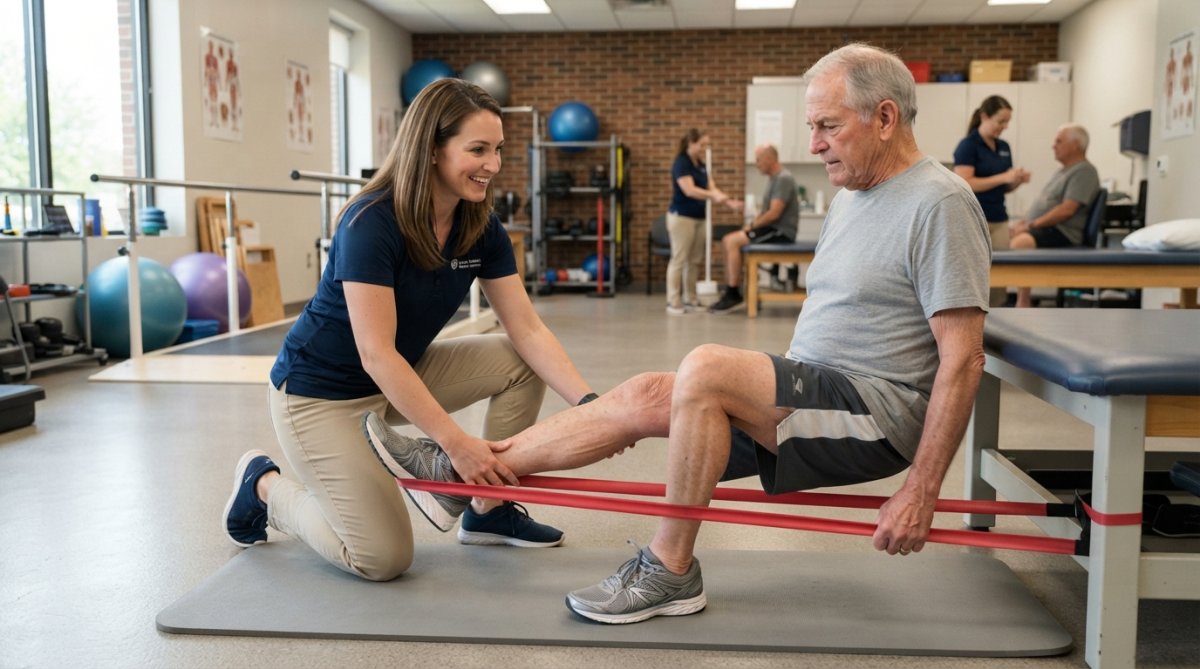
When muscles contract during physical therapy, they pump fluid through the joint space, reducing swelling and improving nutrient delivery to cartilage. Weak muscles force other tissues to compensate, creating pain cycles. Targeted strengthening breaks those cycles.
Most patients notice improvement within 2-3 weeks of regular therapy. Significant functional gains typically emerge by 8-12 weeks. The critical factor is frequency, three sessions per week outperforms one session per week by a measurable margin. Spacing sessions too far apart disrupts the adaptation process.
A skilled physical therapist designs exercises that target your specific movement limitations. For someone with knee pain, this might mean climbing stairs without discomfort. For shoulder issues, it could be overhead reaching or sleeping through the night.
NSAIDs and Conservative Medication Management
Nonsteroidal anti-inflammatory drugs address the inflammation component of chronic joint pain. Common options include ibuprofen, naproxen, and prescription-strength medications like meloxicam. They work by blocking prostaglandins, the chemical messengers that trigger inflammation.
NSAIDs are most effective when combined with physical therapy, not as standalone solutions. Using them to mask pain while avoiding movement worsens outcomes by allowing deconditioning to progress. The ideal approach is using NSAIDs strategically to reduce pain enough that you can participate in therapy and movement.
Prescription-strength doses (1500-2000mg daily in divided doses) produce measurable anti-inflammatory effects. However, long-term NSAID use carries risks including gastrointestinal irritation, kidney function changes, and cardiovascular concerns. This is why NSAIDs work best as a bridge to other treatments, not a permanent solution.
Natural alternatives like turmeric and ginger contain compounds with anti-inflammatory properties, though the evidence is weaker than pharmaceutical NSAIDs. They're worth trying if you tolerate NSAIDs poorly, but don't expect the same magnitude of effect.
Joint Injections for Joint Pain: Corticosteroids and Hyaluronic Acid
Joint injections represent a middle ground between conservative care and surgery. Two primary types exist: corticosteroid injections and hyaluronic acid injections.
Corticosteroid injections suppress the immune response directly at the injection site. A single injection delivers medication concentration far higher than oral NSAIDs could achieve systemically, producing rapid inflammation reduction within 24-48 hours. Pain relief typically follows within days.
Corticosteroid relief usually lasts 3-6 months. Multiple injections in the same joint within a year can weaken cartilage and bone, so doctors limit frequency to no more than three injections per joint annually. This makes corticosteroids ideal for bridging to physical therapy or managing acute flare-ups.
Hyaluronic acid is a naturally occurring substance in joint fluid that lubricates cartilage and provides shock absorption. Injecting it replenishes what degenerative joint disease depletes. Unlike corticosteroids, hyaluronic acid works gradually and has fewer restrictions on repeat injections.
A typical hyaluronic acid series involves 3-5 injections spaced one week apart. Pain improvement builds over weeks, peaking around 4-6 weeks post-injection. Duration lasts 6-12 months. Results feel subtly different from corticosteroids, patients often describe smoother movement rather than sharp pain reduction.
Regenerative Medicine for Joint Pain: PRP and Stem Cell Therapy
Regenerative medicine represents the frontier of non-surgical treatment for chronic joint pain. These approaches stimulate tissue repair rather than just suppressing inflammation. Two primary options dominate: platelet-rich plasma (PRP) and stem cell therapy.
Platelet-rich plasma (PRP) harnesses your body's own healing factors. Blood is drawn, centrifuged to concentrate platelets, then injected into the damaged joint. Platelets release growth factors that trigger repair processes in cartilage and surrounding tissues.
Growth factors in PRP stimulate fibroblast activity, increase collagen production, and reduce inflammatory markers. A single PRP injection costs significantly more than corticosteroids but lasts longer, typically 9-12 months. Some patients experience sustained improvement even after initial effects fade, suggesting true tissue remodeling occurred.
PRP works best for early-to-moderate degenerative changes. Advanced cartilage loss responds poorly because insufficient tissue remains to repair. Studies show PRP produces clinically meaningful improvement in 60-70% of patients with knee osteoarthritis, with better results when combined with physical therapy.
Rather than immediate pain reduction, PRP produces gradual improvement over 4-8 weeks as repair processes activate. Patience is required, as patients expecting instant relief often feel disappointed initially, then pleasantly surprised when sustained improvement emerges.
Natural Remedies for Joint Pain: Acupuncture, Bracing, and Home Care
This category encompasses approaches that work through different mechanisms: acupuncture modulates pain signaling, bracing provides mechanical support, and home-based routines maintain gains from other treatments.
Acupuncture reduces chronic joint pain by stimulating nerves and releasing endogenous opioids, your body's natural pain-relieving chemicals. Fine needles inserted at specific points trigger responses in the central nervous system that dampen pain perception.
Evidence supports acupuncture for certain joint conditions, particularly knee osteoarthritis, typically producing 20-30% pain reduction. Acupuncture shines when combined with other treatments. A patient receiving physical therapy plus acupuncture often progresses faster than either treatment alone.
Chiropractic care works through joint manipulation and soft tissue therapy. Manipulation can improve joint mobility and reduce muscle guarding. Spinal manipulation for certain neck conditions has solid evidence, while chiropractic for peripheral joints is less researched but many patients report benefit, especially when combined with exercise.
Braces and orthotics provide external support that reduces stress on damaged joints. A knee brace offloads pressure from the painful compartment. An ankle brace stabilizes a chronically unstable joint. Bracing works best for specific, localized problems rather than widespread pain.
Home-based maintenance is what separates temporary relief from lasting improvement. This includes daily stretching, strengthening exercises, ice or heat application, and activity modification. A simple routine of 10 minutes stretching and 10 minutes strengthening compounds dramatically. After three months of consistency, many patients reduce pain medication by half and improve function measurably.
Advanced Non-Surgical Options: Radiofrequency Ablation and Beyond
Radiofrequency ablation (RFA) represents advanced non-surgical treatment for chronic joint pain when conservative approaches plateau. This technique uses heat generated by radiofrequency energy to ablate the nerves transmitting pain signals from a joint.
RFA works best for knee, hip, and shoulder pain where the nerves supplying the joint are accessible. A needle electrode is guided to the nerve under ultrasound or fluoroscopy, then radiofrequency current heats it to 60-90 degrees Celsius, destroying the nerve's ability to transmit pain. The procedure takes 15-30 minutes and requires only local anesthesia.
Pain relief from RFA typically lasts 6-12 months. The advantage over injections is that RFA doesn't depend on inflammation reduction; it directly interrupts pain signaling. This makes it effective even in advanced degenerative conditions where inflammation is minimal. Recovery is fast, with most patients resuming normal activity within days.
Other emerging options include laser therapy, magnetic field therapy, and acoustic wave therapy. The evidence varies significantly. Always ask for specific published studies when considering emerging treatments.
Lifestyle Modifications and Weight Management for Long-Term Relief
Weight management is the most impactful lifestyle factor. Every pound of body weight increases stress on weight-bearing joints by three to four times that amount during walking. A 10-pound weight loss reduces knee pain by approximately 20-30% in many patients.
Weight management isn't about aesthetics; it's biomechanics. Excess weight creates abnormal loading patterns, accelerates cartilage degeneration, and increases inflammatory markers systemically. Modest weight loss produces measurable pain reduction within weeks.
Activity modification means matching your movements to your current capacity. Swimming and cycling load joints less than running and jumping. Walking on flat surfaces is easier than hills. Pacing matters; three 10-minute walks distributed through the day stresses joints less than one 30-minute walk.
Sleep quality affects pain perception and healing. Poor sleep increases pain sensitivity and inflammatory markers. Prioritizing 7-9 hours of quality sleep is medicine, not luxury. Nutrition influences inflammation systemically, omega-3 rich foods reduce inflammatory markers while ultra-processed foods increase them.
| Lifestyle Factor | Impact on Pain | Implementation Difficulty |
|---|---|---|
| Weight loss (10 lbs) | 20-30% pain reduction | Moderate, requires dietary consistency |
| Activity modification | 30-40% improvement | Low, mostly about choosing different exercises |
| Sleep optimization (7-9 hours) | 15-25% pain reduction | Moderate, requires schedule changes |
| Omega-3 foods | 10-20% inflammation reduction | Low, simple food swaps |
| Stress reduction | 10-15% pain reduction | Moderate, requires daily practice |
Patients who combine professional treatment with lifestyle modifications progress 40-50% faster than those relying on treatment alone. The synergy is real. Physical therapy works better when you're sleeping well and at a healthier weight. Injections last longer when you're active and managing inflammation through diet.
Chronic joint pain doesn't have to mean surgery. The non-surgical treatment options available in 2026 are more effective and more varied than ever. Whether your path involves physical therapy, regenerative medicine, advanced technologies, or a combination approach, the key is starting with a clear diagnosis and a coordinated plan. Alternative Health & Healing Center combines nearly 40 years of clinical experience with modern technology to create personalized non-surgical treatment protocols. Rather than guessing which approach suits your situation, consult with practitioners who understand the full landscape of options. The right treatment, started now, can mean years of improved function and reduced pain ahead.
Frequently Asked Questions
What is the most effective non-surgical treatment for chronic joint pain?
The most effective approach depends on your specific condition, pain severity, and underlying cause. Physical therapy combined with conservative treatment often provides strong results for degenerative joint disease and arthritis. For faster inflammation reduction, joint injections (corticosteroids or hyaluronic acid) may be recommended. Regenerative medicine options like PRP show promising evidence for cartilage support and joint restoration. The best strategy typically combines multiple modalities, such as physical therapy, NSAIDs for pain management, and lifestyle modifications, tailored to your individual needs.
How long does it take to see results from non-surgical joint pain treatment?
Recovery timelines vary by treatment type. Physical therapy typically shows noticeable improvement in mobility within 4-8 weeks of consistent therapeutic exercise. NSAIDs and anti-inflammatory medications may provide pain relief within days. Joint injections often deliver relief within 1-2 weeks, though full effects develop over several weeks. Regenerative medicine treatments like PRP may require 3-6 months for cartilage restoration and functional recovery. Success depends on consistency with treatment protocols and adherence to home-based maintenance routines.
Can regenerative medicine for joint pain actually help avoid surgery?
Regenerative medicine options like platelet-rich plasma (PRP) and stem cell therapy show evidence-based potential for joint restoration and pain relief, potentially delaying or avoiding the need for surgery. These treatments work by promoting cartilage healing and reducing inflammation at the musculoskeletal level. Success rates vary based on the severity of degenerative joint disease and the specific joint involved. Many patients experience significant functional recovery and pain reduction, though results are not guaranteed. Consulting with an orthopedic specialist can help determine whether regenerative medicine is appropriate for your condition and whether it might help you avoid surgical intervention.
What should I look for in a provider offering non-surgical treatment for chronic joint pain?
Seek providers with extensive experience in conservative treatment and demonstrable expertise in the specific modalities you need, whether physical therapy, joint injections, acupuncture, or advanced technologies. Look for practitioners who take a comprehensive, integrative approach rather than relying on a single treatment method. Ask about their track record with cases similar to yours, their use of evidence-based protocols, and their willingness to monitor your progress and adjust treatment plans. Providers should also address the psychological impact of chronic pain and help you develop sustainable home-based maintenance routines for long-term pain management.


