 Ultimate guide
How Regenerative Medicine Helps Joint Pain Recovery
Last Updated: November 4, 2026
Quick Summary
Regenerative medicine aims to support the body's own repair processes in painful joints, rather than only masking symptoms. Options such as platelet-rich plasma, stem cell therapy and acoustic wave therapy are usually considered alongside established care, and results vary.
- Regenerative treatments are generally considered alongside physical therapy, medication and activity changes, not instead of them.
- Platelet-rich plasma is made from a small sample of your own blood.
- Regenerative treatments are not a cure for arthritis; many people see partial improvement.
- Response timelines vary, and some changes may take several weeks to months to appear.
- Ask for the total expected cost of the full plan and a written estimate before scheduling.
Table of Contents
- What Regenerative Medicine Is and Where It Fits in Joint Care
- How Regenerative Medicine Works in Joints Affected by Pain
- Types of Regenerative Therapy and Conditions They Address
- Regenerative Therapy for Knees: What Research and Patients Report
- Regenerative Medicine for Knee Arthritis: Realistic Expectations
- How Long It Takes for Regenerative Therapy to Work
- Risks, Contraindications, Costs and Insurance Questions to Ask Before You Start
- Booking Your Consultation to See If Regenerative Care Fits Your Joints
- Frequently Asked Questions
Joint pain that lingers for months can wear down your mobility, your sleep and your confidence. Many adults over 45 in Naples and across the country start looking into alternatives once standard options stop delivering, and regenerative medicine is one of the approaches they ask about most. At Alternative Health & Healing Center, we explain what regenerative medicine is, how it is used for joint pain, and what questions to settle before you commit to treatment.
What Regenerative Medicine Is and Where It Fits in Joint Care
Regenerative medicine is a field of care that aims to support the body's own repair processes rather than only masking symptoms. Stem cell therapy and platelet-rich plasma are two of the best-known regenerative approaches in the broader field.
In joint care, regenerative treatments are usually considered alongside, not instead of, established options such as physical therapy, medication and activity changes. A qualified clinician decides whether any approach fits your specific condition. National Institute of Arthritis and Musculoskeletal and Skin Diseases overview of joint pain treatment
How Regenerative Medicine Works in Joints Affected by Pain
Joints contain cartilage, synovial fluid and surrounding soft tissue, and each can be affected by inflammation and degeneration. Regenerative treatments are generally designed to influence that environment, with the aim of reducing inflammation and supporting tissue repair.
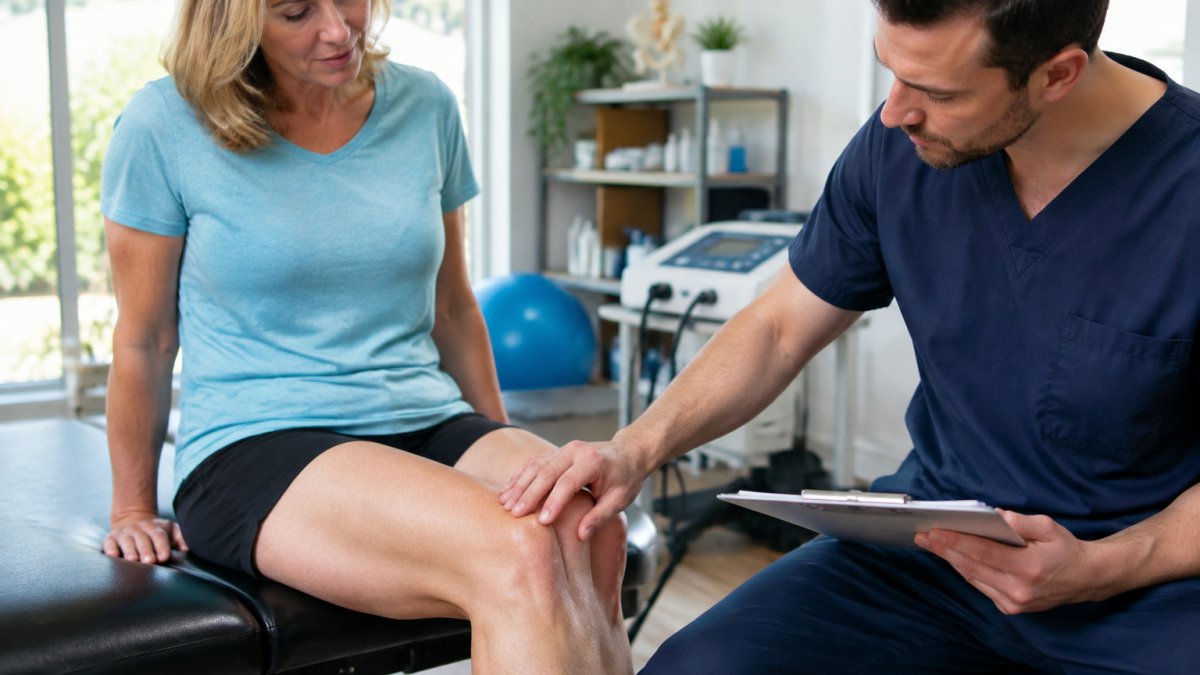
The role of growth factors and natural healing
Growth factors are proteins that help signal cells to repair and rebuild tissue. Platelet-rich plasma is prepared from a patient's own blood and is valued for its concentration of these signaling proteins. Researchers continue to study how much clinical benefit these preparations provide and for which conditions. National Center for Biotechnology Information review of platelet-rich plasma in musculoskeletal care
Types of Regenerative Therapy and Conditions They Address
Regenerative options differ in how they are prepared and delivered. The main categories include:
- Platelet-rich plasma (PRP): Made from a small sample of your own blood, then injected into the treatment area.
- Stem cell therapy: Uses cells, often drawn from bone marrow or adipose (fat) tissue, to support tissue repair.
- Acoustic wave therapy: Uses sound waves to stimulate tissue. It is non-invasive and is often grouped with regenerative-focused care.
Each option is typically considered for specific conditions, such as knee osteoarthritis, tendon irritation or some cartilage injuries. Whether any of them suits you depends on your diagnosis, imaging results and overall health.
The main regenerative options differ in how they are prepared and what they are typically considered for.
| Option | Preparation | Typically considered for |
|---|---|---|
| Platelet-rich plasma (PRP) | Made from a small sample of your own blood | Joint and soft-tissue conditions, per clinician |
| Stem cell therapy | Cells drawn from bone marrow or adipose tissue | Tissue repair support |
| Acoustic wave therapy | Sound waves applied externally | Knee osteoarthritis, tendon irritation, cartilage injuries |
Regenerative Therapy for Knees: What Research and Patients Report
Knees are one of the most common areas where people explore regenerative care, particularly for osteoarthritis. Outcomes vary and are not guaranteed.
Acoustic wave therapy is one option discussed for knee pain, usually as part of a broader care plan. Mayo Clinic overview of knee osteoarthritis treatment options
Regenerative Medicine for Knee Arthritis: Realistic Expectations
Regenerative treatments are not a cure for arthritis. Many people experience partial improvement in pain or function, while others notice little change. A realistic expectation is that these therapies may ease symptoms and support daily activity, and that results differ from person to person. Because responses vary, considering how PRP injections for tissue repair may fit into an individual’s approach to managing joint pain can help keep expectations grounded.
Watch out: a treatment that once helped a friend may not suit your knee. A clinician needs to assess your joint before recommending anything.
How Long It Takes for Regenerative Therapy to Work
Timelines differ by treatment type, by joint, and by how much tissue damage is present. The most useful way to plan is to think in phases rather than in a single "recovery date."
Typical timelines by treatment type
- Platelet-rich plasma (PRP): Response timelines vary, and changes may take several weeks to months to appear.
- Stem cell-related procedures: Response timelines vary and are typically longer than for some other approaches.
- Acoustic wave therapy: Sessions may be delivered as a series over several weeks, depending on the care plan.
Ask your provider for a specific expected timeline for your joint and scheduled check-ins to measure progress.
The post-procedure phase most articles skip
What you do in the first days and weeks after treatment matters as much as the treatment itself. A typical protocol looks like this:
- Days 1-3: Relative rest of the treated joint, avoid anti-inflammatory medications unless your clinician approves them (some protocols ask you to avoid NSAIDs briefly because they may blunt the intended response), and use ice for soreness.
- Days 3-14: Gentle range-of-motion and light activity as tolerated; avoid heavy loading, deep squats, or high-impact exercise on the treated joint.
- Weeks 2-6: Gradual return to strengthening, often guided by a physical therapist. This is where a structured rehab plan separates patients who improve from those who plateau.
- Weeks 6-12: Progressive loading and return to desired activities, with reassessment of pain and function.
Ask your practice what aftercare guidance it provides, and whether a physical therapy referral is part of your plan.
How progress is measured
Ask your provider how progress will be measured and what you should do if improvement does not occur as expected.
Risks, Contraindications, Costs and Insurance Questions to Ask Before You Start
Regenerative joint treatments are generally considered low-risk when performed by a qualified clinician, but "low-risk" is not "no-risk." A balanced look at who should avoid these therapies, what can go wrong, and what you will actually pay is the part most clinic websites skip, and it is the part that determines whether treatment is a good decision for you.
Common and uncommon risks
Some patients experience temporary soreness, swelling or warmth at the injection site. Less common but more serious risks include infection, bleeding, nerve irritation, and a flare of inflammation that can last longer than expected. With PRP and other autologous (your-own-tissue) preparations, the risk of an allergic reaction is low because the material comes from your body, but sterility during preparation and injection still matters. Acoustic wave therapy can cause bruising, discomfort during the session, and short-term soreness afterward.
Who should not get regenerative joint therapy
Contraindications vary by treatment type, but a responsible practice will screen for at least the following before recommending anything:
- Active infection in or near the joint, or a systemic infection
- Blood-clotting disorders or current use of anticoagulants that cannot be safely paused
- Active cancer or a history of cancer in the treatment area (clinician-dependent)
- Pregnancy or breastfeeding (most practitioners defer treatment)
- Severe joint destruction where the cartilage is essentially gone, regenerative approaches are unlikely to help and surgery may be the more honest recommendation
- Uncontrolled diabetes or immunosuppression, which can impair healing
- Allergy to any component of the preparation or numbing agent used
Disclose your full medication list, including over-the-counter blood thinners, supplements and any recent steroid injections. Steroid injections in the same joint within the prior few weeks can affect how some regenerative treatments perform, so timing matters.
What regenerative joint treatment actually costs
Coverage for regenerative therapies varies by plan, and prices are not standardized across providers. Pricing depends on the joint treated, the number of injections, imaging guidance, and follow-up visits. Contact the practice for current prices or a quote. Always ask for the total expected cost of the full plan, not the per-injection price, including any follow-up imaging or physical therapy.
How to navigate insurance and payment
- Ask for the CPT and ICD-10 codes the practice will bill under, then call your insurer with those codes to confirm whether any portion is covered.
- Check your deductible and out-of-network benefits if the practice does not contract with your plan.
- Ask about HSA and FSA eligibility, many plans allow these funds to be used for qualified medical expenses, but confirm with your plan administrator.
- Request a written good-faith estimate before scheduling; this is a reasonable ask and a fair way to compare practices.
- Ask what happens if the first injection does not help, whether a second is included, discounted, or billed separately.
Confirm pricing and insurance details directly with the practice and your insurer before you commit.
Booking Your Consultation to See If Regenerative Care Fits Your Joints
A consultation is the right first step to learn whether regenerative care fits your situation. Bring your imaging results, medication list and a clear description of your pain, including what activities it limits. You can prepare by reviewing a list of questions to ask a pain management specialist. American Academy of Pain Medicine resources for patients
Our team at Alternative Health & Healing Center can review whether acoustic wave or other non-invasive options make sense for your joints. To learn more, see our overview of regenerative medicine and stem cell therapy, or request an appointment to talk through your options with a qualified provider.
Frequently Asked Questions
Does regenerative joint therapy work?
Results vary by person, the joint involved, and the severity of the condition. Some patients report reduced pain and better function, while research on regenerative injections such as platelet-rich plasma is still developing and mixed for many joints. Benefits are generally described as gradual rather than immediate. Ask a qualified provider which evidence applies to your specific joint and what outcomes are realistic for your situation before committing to a treatment plan.
How long does it take for regenerative therapy to work?
Many patients notice changes over several weeks to a few months, because tissue repair and symptom improvement tend to build gradually rather than all at once. Timelines depend on the condition, the treatment type, your age, overall health, and how consistently you follow rehabilitation guidance. A provider can estimate a likely timeline after reviewing your history and imaging, and can tell you what progress should look like along the way.
What are the potential risks and disadvantages of regenerative medicine?
Possible risks include soreness or swelling at the injection site, temporary increase in pain, infection, and in some cases an inadequate response. Treatments may not suit people with certain blood disorders, active infections, some cancers, or specific medications. Regenerative care is also not a guaranteed fix, and it can require multiple sessions and ongoing rehabilitation. Discuss your full medical history with a qualified professional before starting.
Is regenerative medicine covered by insurance in Florida?
Coverage varies by insurance plan, provider, and treatment type, and many regenerative procedures are considered elective or experimental by insurers, so they are often not covered. Florida insurance rules apply to state-regulated plans, while employer and Medicare plans follow their own terms. Ask your insurer in writing what is covered and request an estimate of your out-of-pocket costs before scheduling any treatment.