 listicle
5 Best Non-Surgical Treatments for Chronic Hip Pain
Table of Contents
- 5 Best Non-Surgical Treatments for Chronic Hip Pain
- 1. Physical Therapy for Hip Pain
- How Long Does Physical Therapy Take for Hip Pain
- 2. Injection Therapies: Cortisone and Hyaluronic Acid
- 3. Orthobiologics: PRP and Stem Cell Therapy
- 4. Lifestyle Changes for Hip Arthritis and Daily Pain Management
- 5. Assistive Devices, Bracing, and Topical Relief
- Comparison of Treatment Options
- Why Alternative Health & Healing Center Stands Out
- Conclusion
- Frequently Asked Questions
Last Updated: August 15, 2026
5 Best Non-Surgical Treatments for Chronic Hip Pain
Chronic hip pain affects millions of people, and you don't need surgery to find relief. Between physical therapy, injection therapies, and regenerative medicine, proven pathways exist to restore mobility without going under the knife. At Alternative Health & Healing Center, we've spent nearly 40 years helping patients navigate these options and find the approach that works for their situation.
Quick Picks:
- Best Overall Approach: Physical therapy combined with lifestyle modifications, addresses the root cause and builds long-term resilience
- Fastest Pain Relief: Injection therapies (cortisone or hyaluronic acid), work within days to weeks
- Best for Advanced Degeneration: Orthobiologics (PRP or stem cell therapy), stimulate tissue repair at the cellular level
1. Physical Therapy for Hip Pain
Physical therapy is the foundation of non-surgical hip pain treatment. A skilled physical therapist assesses your movement patterns, identifies muscle imbalances, and builds a progressive strengthening program that restores hip stability and range of motion.
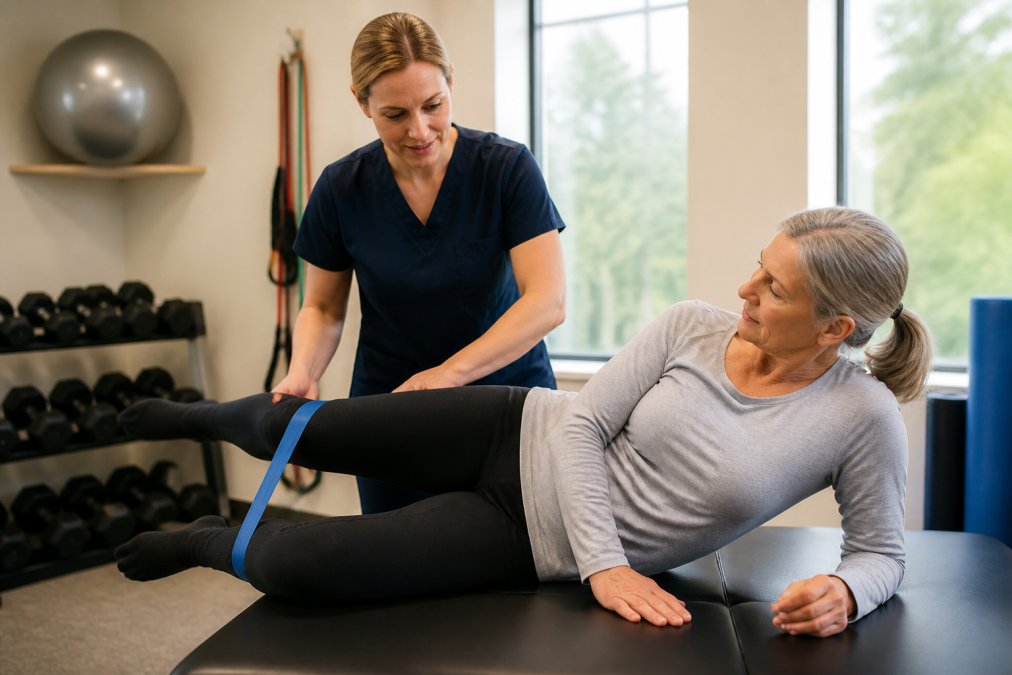
The goal is to reduce inflammation, improve joint mobility, and strengthen the muscles supporting your hip joint, primarily the gluteal muscles, hip flexors, and core stabilizers. When these muscles are weak or imbalanced, they pull the hip joint out of proper alignment, increasing pressure on cartilage and soft tissue. Physical therapy corrects this by retraining your movement patterns.
Physical therapy isn't one-size-fits-all. A therapist treating hip bursitis uses different progressions than someone treating osteoarthritis or labral strain. Your therapist will also evaluate your posture, gait, and daily movement patterns. If you sit for eight hours, your hip flexors tighten, pulling your pelvis out of alignment. If you're favoring one leg, you're creating muscle imbalances that perpetuate the problem. Physical therapy fixes these patterns.
How Long Does Physical Therapy Take for Hip Pain
Most people see meaningful improvement within 4-6 weeks of consistent physical therapy. Weeks 1-2 focus on pain reduction and basic mobility. Weeks 3-4 introduce strengthening exercises. Weeks 5-8 build functional capacity and activity-specific movements.
Frequency matters. Two sessions per week with daily home exercises produces faster results than once-weekly sessions. Many therapists recommend starting with 2-3 sessions weekly for 4-6 weeks, then reducing to 1 session weekly as you progress.
2. Injection Therapies: Cortisone and Hyaluronic Acid
Injection therapies offer targeted relief when physical therapy alone isn't reducing inflammation fast enough. Cortisone and hyaluronic acid injections work through different mechanisms but both reduce pain and improve function.
Cortisone injections deliver a potent anti-inflammatory directly into the hip joint. Most people feel significant relief within 3-7 days. The injection reduces inflammation, which decreases pain and allows you to move more freely. This improved mobility makes physical therapy more effective. However, relief typically lasts 6-12 weeks, and cortisone doesn't repair underlying tissue damage. It works best when combined with physical therapy.
Hyaluronic acid injections restore joint lubrication. Hyaluronic acid is a component of healthy joint fluid that reduces friction. In osteoarthritis, joint fluid degrades. Hyaluronic acid injections restore this protection. Relief develops more slowly than cortisone, typically 2-4 weeks, but lasts longer, often 6-12 months.
If you have acute inflammation from bursitis or tendinitis, cortisone works faster. If you have osteoarthritis with joint degeneration, hyaluronic acid may provide more lasting benefit. Both injections are guided by ultrasound or fluoroscopy to ensure accurate placement.
3. Orthobiologics: PRP and Stem Cell Therapy
Orthobiologics represent the frontier of non-surgical hip pain treatment. Unlike cortisone, which suppresses inflammation, orthobiologics, platelet-rich plasma (PRP) and stem cell therapy, stimulate your body's natural healing response to repair damaged tissue.
Platelet-rich plasma therapy concentrates growth factors from your own blood and injects them into the damaged area. Your platelets contain proteins that trigger controlled inflammation, signaling your body to repair damaged cartilage, tendons, and ligaments. The process takes 4-8 weeks to show improvement, but the goal is tissue regeneration. PRP is most effective for tendon and ligament injuries, hip bursitis, and mild to moderate osteoarthritis. PRP injections typically cost $500-$2,000 per session, with 2-3 injections spaced 4-6 weeks apart.
Stem cell therapy goes further. Stem cells can differentiate into cartilage, bone, and other tissues, making them theoretically capable of regenerating damaged joint structures. Cells are harvested from bone marrow or fat tissue, processed, and injected into the hip joint. Stem cell therapy is more expensive, typically $4,000-$14,000 per joint, and results are more variable than PRP. For someone with severe osteoarthritis who wants to avoid hip replacement, stem cell therapy might be worth exploring.
Stem cell therapy is best for patients with advanced osteoarthritis who have exhausted other options and want to delay or avoid hip replacement surgery.
Both require patience. You won't feel immediate relief like cortisone, but if tissue repair occurs, the benefit lasts longer.
4. Lifestyle Changes for Hip Arthritis and Daily Pain Management
Lifestyle changes are the most underrated treatment for chronic hip pain. They cost nothing, have no side effects, and address root causes that perpetuate pain.

Weight management directly reduces stress on your hip joint. Every pound of excess weight increases loading on your hip during walking. Reducing weight through nutrition and low-impact activity reduces pain and slows degeneration.
Activity modification means choosing low-impact exercises that don't aggravate your hip. Walking, swimming, water aerobics, and cycling are gentler than running or high-impact sports. Movement is essential for hip health; choose movement that strengthens without inflaming.
Ergonomic adjustments prevent daily movements from perpetuating pain. If you sit for eight hours, your hip flexors shorten. Adjusting your desk height, using lumbar support, and taking regular standing breaks reduce this. If you sleep on the affected side, switching to your back or opposite side reduces nighttime inflammation.
Stress management through meditation or breathing exercises interrupts the pain-stress-inflammation cycle. Nutrition also plays a role. Anti-inflammatory foods like fatty fish, berries, leafy greens, and nuts reduce systemic inflammation.
5. Assistive Devices, Bracing, and Topical Relief
Assistive devices and topical relief provide meaningful support during acute pain or between treatments. A cane or crutch reduces load on your affected hip, allowing movement while healing occurs. A hip brace provides external support and proprioceptive feedback that improves stability. Topical pain relief gels offer localized relief without systemic medication.
Assistive devices are temporary supports that allow you to stay active while addressing the underlying problem. Using a cane for 2-4 weeks during acute inflammation doesn't mean you'll need it forever.
Topical NSAIDs like Voltaren deliver anti-inflammatory medication directly to the joint through the skin. Menthol-based products like Biofreeze provide cooling relief by disrupting pain signals. Patches like Tiger Balm combine multiple ingredients for sustained relief over several hours.
TENS units use electrical stimulation to block pain signals and stimulate endorphin release. The TENS 7000 2nd Edition is an FDA-cleared device that allows customization. Some people find significant relief; others notice minimal benefit.
Orthotics and bracing address biomechanical issues. Custom orthotics correct foot mechanics that misalign your hip. A lumbar support brace stabilizes your spine, which indirectly reduces hip strain. Resistance bands like TheraBand are essential for progressive strengthening.
Comparison of Treatment Options
| Treatment | Timeline to Relief | Duration of Benefit | Cost | Best For |
|---|---|---|---|---|
| Physical Therapy | 4-6 weeks | Long-term if maintained | Varies by provider | Root cause treatment, building strength |
| Cortisone Injection | 3-7 days | 6-12 weeks | $200-$500 per injection | Acute inflammation, temporary relief |
| Hyaluronic Acid | 2-4 weeks | 6-12 months | $300-$800 per injection | Osteoarthritis, joint lubrication |
| PRP Therapy | 4-8 weeks | 6-12 months | $500-$2,000 per session | Tendon injuries, mild osteoarthritis |
| Stem Cell Therapy | 8-12 weeks | 1-3+ years | $4,000-$14,000 | Advanced osteoarthritis, surgery avoidance |
| Lifestyle Changes | 2-4 weeks | Indefinite | Minimal | Weight reduction, inflammation control |
| Assistive Devices | Immediate | As needed | $50-$200 | Acute flare-ups, temporary support |
| Topical Relief | 15 minutes to 3 days | 2-8 hours | $8-$15 | Quick temporary relief, mild pain |
Why Alternative Health & Healing Center Stands Out
The challenge with chronic hip pain is finding a provider who understands how to combine treatment options into a coherent plan. At Alternative Health & Healing Center, we specialize in integrative approaches that address your hip pain from multiple angles simultaneously.
Our team uses Applied Kinesiology to assess not just your hip, but how your entire body compensates for pain. We also use advanced technology like the Piezo Wave 2 to accelerate tissue healing. This acoustic wave therapy stimulates blood flow and cellular repair in damaged tendons and cartilage. Combined with physical therapy and targeted exercise, it can support results.
With nearly 40 years of clinical practice, we've seen thousands of hip pain cases. We know which treatments work for which conditions and how to sequence them for maximum benefit.
Conclusion
Chronic hip pain doesn't require surgery. Physical therapy, injection therapies, orthobiologics, lifestyle changes, and assistive devices offer proven pathways to relief and restored mobility. The best approach combines treatments based on your specific condition, timeline, and goals.
If you're struggling with chronic hip pain and want a comprehensive evaluation, request an appointment with Alternative Health & Healing Center. Our team will assess your condition, explain your options, and design a personalized treatment plan that addresses the root cause of your pain, not just the symptoms.
Frequently Asked Questions
What is the best non-surgical treatment for chronic hip pain?
The best non-surgical treatment depends on your specific condition and pain source. Physical therapy is often the first-line approach for improving range of motion and reducing inflammation. Injection therapies like cortisone or hyaluronic acid work well for osteoarthritis, while orthobiologics such as PRP target tissue repair. Many patients benefit from combining treatments, for example, pairing physical therapy with lifestyle modifications and assistive devices. A qualified healthcare provider can assess your individual situation and recommend the most effective approach for your needs.
How long does physical therapy take for hip pain relief?
Most patients begin noticing improvements within 4 to 6 weeks of consistent physical therapy, though some experience relief sooner. A typical course runs 8 to 12 weeks, with sessions occurring 2 to 3 times per week. Full functional recovery and pain reduction may take 3 to 6 months, depending on the severity of your condition and your commitment to exercises. Consistency matters more than speed, regular home exercises between sessions accelerate progress and improve long-term outcomes.
Can chronic hip pain be cured without surgery?
Many cases of chronic hip pain respond well to non-surgical treatments, especially when the underlying cause is inflammation, muscle weakness, or early-stage arthritis. Physical therapy, injections, lifestyle modifications, and orthobiologics can significantly reduce pain and restore function. However, some conditions like advanced osteoarthritis or severe structural damage may eventually require surgical intervention. The goal of non-surgical treatment is often to delay surgery, manage pain effectively, and improve quality of life rather than achieve a complete cure.
What lifestyle changes help with chronic hip arthritis pain?
Key lifestyle modifications include low-impact exercise like swimming or walking, weight management to reduce joint stress, proper ergonomics at home and work, and activity pacing to avoid flare-ups. Strengthening hip and core muscles through targeted exercises improves stability and reduces pain. Anti-inflammatory nutrition, adequate sleep, and stress management also support healing. Avoiding high-impact activities and using assistive devices when needed protects the joint while you pursue treatment. These changes work best alongside professional therapies like physical therapy or injections.