 listicle
7 Alternatives to Surgery for Knee Pain That Work
Table of Contents
- Understanding Your Alternatives to Surgery for Knee Pain
- 1. Physical Therapy and Rehabilitation for Knee Pain
- 2. Injections for Knee Pain: Corticosteroids and Hyaluronic Acid
- 3. Regenerative Medicine for Knee Pain: PRP and Stem Cells
- 4. Natural Remedies and At-Home Pain Management
- 5. Knee Bracing and Orthotics for Joint Support
- 6. Cost, Insurance, and Recovery: Comparing Your Options
- 7. Mental Health and Chronic Pain Management
- External Sources
- Frequently Asked Questions
7 Alternatives to Surgery for Knee Pain That Work
Last Updated: July 20, 2026
Understanding Your Alternatives to Surgery for Knee Pain
Knee pain affects millions of people each year, yet surgery isn't the only solution. At Alternative Health & Healing Center, we've spent nearly 40 years helping patients discover non-surgical alternatives that work, without the recovery time, risks, or cost of invasive procedures.
Physical therapy, targeted injections, regenerative medicine, and lifestyle modifications can address knee pain at its source. Some patients achieve complete relief; others gain enough improvement to return to activities they thought were lost. The key is finding the right combination for your specific situation.
Below are seven proven alternatives to surgery for knee pain, including recovery timelines, realistic costs, and what to expect from each approach.
1. Physical Therapy and Rehabilitation for Knee Pain
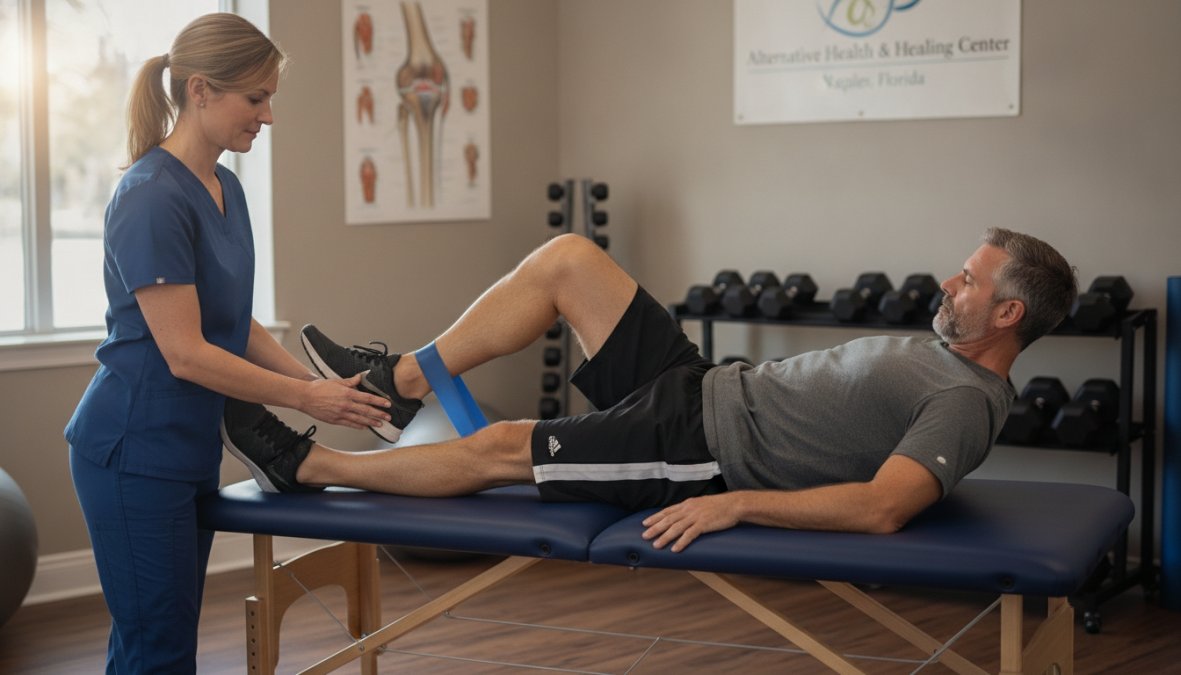
Physical therapy is often the first line of defense against knee pain. A skilled therapist addresses the underlying weakness, imbalance, or movement dysfunction causing the pain, not just the symptom itself.
How Physical Therapy Works
Physical therapy for knee pain restores strength, flexibility, and proper movement patterns. Your therapist assesses your gait, muscle activation, and joint mechanics, then designs a progressive program that typically includes:
- Strengthening exercises for the quadriceps, hamstrings, and hip stabilizers
- Stretching and mobility work to restore range of motion
- Balance and proprioception training to prevent re-injury
- Low-impact cardiovascular conditioning
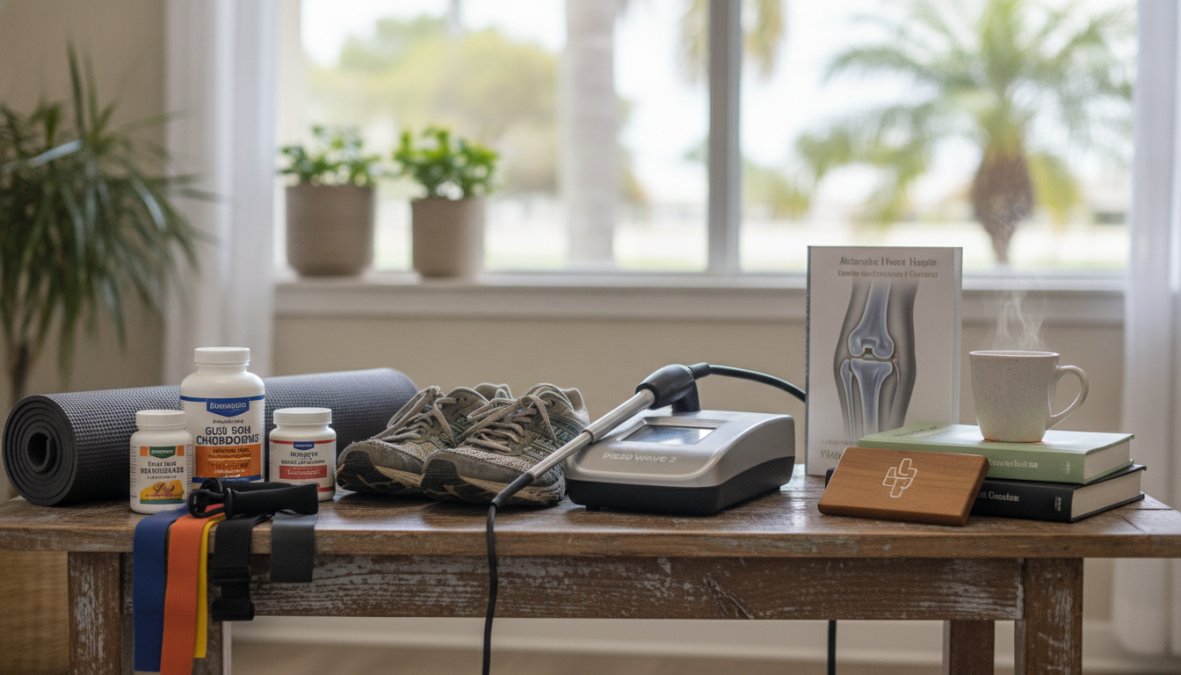
Many practices now incorporate advanced technology, like the Piezo Wave 2 that Alternative Health & Healing Center uses, to accelerate tissue repair and reduce pain without medication.
Recovery Timeline and Expectations
Most patients see noticeable improvement within 4-6 weeks of consistent physical therapy. Sessions typically happen 2-3 times per week for 6-12 weeks, depending on severity. Full recovery usually takes 12-16 weeks, though some patients continue improving for 6 months.
| Phase | Timeline | Focus | Typical Frequency |
|---|---|---|---|
| Initial Assessment & Pain Reduction | Weeks 1-2 | Reduce inflammation, gentle mobility | 2-3x per week |
| Strengthening & Stability | Weeks 3-8 | Build muscle, improve proprioception | 2x per week |
| Functional Training | Weeks 9-12 | Return to activity, sport-specific work | 1-2x per week |
| Maintenance & Prevention | Ongoing | Home exercises, periodic check-ins | 1x per month or as-needed |
Adherence to home exercises between sessions is critical, patients who do their homework see 50% better outcomes than those who don't.
2. Injections for Knee Pain: Corticosteroids and Hyaluronic Acid
When physical therapy alone isn't enough, injections offer direct pain and inflammation relief in the joint. Two main types are corticosteroid injections and viscosupplementation.
Corticosteroid Injections
Corticosteroid injections deliver a potent anti-inflammatory agent directly into the knee joint. Many patients feel relief within 24-48 hours, with effects lasting 3-6 months. They're highly effective for acute flare-ups or when you need immediate pain relief to participate in physical therapy.
The limitation: repeated use can weaken cartilage and connective tissue over time. Most orthopedic surgeons recommend limiting corticosteroid injections to 3-4 per year, with at least 3 months between injections. Use them as a bridge to get moving again, not as a permanent solution.
Viscosupplementation (Hyaluronic Acid)
Hyaluronic acid injections restore the lubricating properties of synovial fluid, the natural "oil" that keeps your knee joint moving smoothly. This approach is particularly effective for osteoarthritis, where cartilage deterioration has reduced the joint's natural cushioning.
A typical series involves 3-5 injections spaced 1 week apart. Relief builds gradually over 2-4 weeks and typically lasts 6-9 months. Unlike corticosteroids, hyaluronic acid injections can be repeated as often as needed without tissue damage concerns.
3. Regenerative Medicine for Knee Pain: PRP and Stem Cells
Regenerative medicine aims to repair damaged tissue and restore joint function from the inside out, rather than just masking pain. Two main options are platelet-rich plasma (PRP) and stem cell therapy.
Platelet-Rich Plasma (PRP) Therapy
PRP therapy harnesses your body's own healing factors. A blood sample is processed to concentrate platelets and growth factors, then injected into the damaged tissue. These growth factors trigger an inflammatory response that stimulates healing.
PRP works best for partial tears, early-stage arthritis, and tendon injuries. The procedure takes about 30 minutes, and you can typically resume light activity within a few days. Most patients receive 2-3 injections spaced 4-6 weeks apart, with results appearing after 8-12 weeks and continued improvement up to 6 months.
PRP is minimally invasive and uses your own cells, eliminating rejection risk. However, insurance rarely covers it, and results vary based on preparation quality and physician skill.
Stem Cell Therapy
Stem cell therapy offers greater potential for tissue regeneration. Stem cells can differentiate into cartilage, bone, or other tissue types. Most clinics use stem cells derived from your own bone marrow or adipose tissue, harvested and injected in the same procedure.
Stem cell therapy shows promise for advanced arthritis, meniscus tears, and ligament damage. The procedure is more involved than PRP and requires longer recovery, but the potential for tissue regeneration is significantly greater. Results often continue improving for 12-18 months after injection.
Like PRP, stem cell therapy is not covered by insurance and represents a substantial out-of-pocket investment.
4. Natural Remedies and At-Home Pain Management
Several at-home approaches can significantly reduce knee pain and support recovery, whether used alongside professional treatment or as a standalone strategy.
Topical NSAIDs and Supplements
Topical nonsteroidal anti-inflammatory drugs (NSAIDs) like Voltaren Arthritis Pain Gel deliver localized pain relief without the systemic side effects of oral medications. They work best for mild to moderate pain and can be used long-term without tissue damage concerns.
Oral supplements like glucosamine and chondroitin have mixed evidence but work best in early-stage osteoarthritis. Give them at least 8-12 weeks before assessing effectiveness.
TENS Units and Home Therapy Equipment
Transcutaneous electrical nerve stimulation (TENS) units deliver mild electrical pulses through electrodes on the skin to interrupt pain signals. Devices like the Beurer EM29 are affordable, portable, and drug-free. Results vary, but they're low-risk and can be used alongside other treatments.
A home physical therapy kit with resistance bands, stretch straps, and ice packs enables you to perform therapeutic exercises and manage swelling between professional sessions.
5. Knee Bracing and Orthotics for Joint Support
The right knee brace can reduce pain, improve stability, and allow you to stay active while healing.
Compression sleeves provide mild support and warmth, reducing swelling and improving proprioception. They're affordable and comfortable for all-day wear but offer limited support for severe instability.
Functional braces like the Bauerfeind GenuTrain provide substantial support through compression and an integrated pad. They're particularly effective for osteoarthritis, meniscus injuries, and patellofemoral pain.
Unloader braces shift weight away from the damaged side of the knee and are most effective for unicompartmental osteoarthritis, potentially delaying surgery for months or years.
6. Cost, Insurance, and Recovery: Comparing Your Options
Understanding the financial and time commitment upfront helps you make a realistic decision.
Insurance Coverage and Out-of-Pocket Costs
Physical therapy is typically covered by insurance, though out-of-pocket costs depend on your plan's copay and deductible. Most plans cover 12-30 sessions per year.
Corticosteroid and hyaluronic acid injections are usually covered by insurance when performed by an orthopedic surgeon, though prior authorization may be required.
Regenerative medicine (PRP and stem cell therapy) is rarely covered by insurance. PRP typically costs several hundred to a few thousand dollars per injection. Stem cell therapy ranges from several thousand to over ten thousand dollars per treatment.
Topical NSAIDs, supplements, and TENS units are inexpensive out-of-pocket purchases. Knee braces range from under $100 for basic compression sleeves to $200+ for medical-grade options.
At Alternative Health & Healing Center, we work with patients to identify treatment options that fit both their clinical needs and budget. Our integrated approach combines chiropractic care, Applied Kinesiology, and advanced technology like Piezo Wave 2 to offer a cost-effective alternative to expensive surgeries.
Recovery Timelines for Non-Surgical Treatments
| Treatment | Initial Relief | Full Recovery | Return to Activity |
|---|---|---|---|
| Physical Therapy | 2-4 weeks | 12-16 weeks | 6-8 weeks for light activity |
| Corticosteroid Injections | 24-48 hours | Ongoing (3-6 month duration) | Immediate |
| Hyaluronic Acid Injections | 2-4 weeks | 6-9 months | 1-2 weeks for full activity |
| PRP Therapy | 4-8 weeks | 12-24 weeks | 8-12 weeks for full activity |
| Stem Cell Therapy | 6-12 weeks | 12-18 months | 12+ weeks for full activity |
| Knee Bracing | Immediate | Ongoing | Immediate with brace |
| TENS Units | 15-30 minutes per session | Ongoing | Immediate |
Timeline varies based on your age, overall health, adherence to rehabilitation, and condition severity. Younger patients and those who commit to physical therapy consistently tend to see faster recovery.
7. Mental Health and Chronic Pain Management
Chronic knee pain takes an emotional toll. Anxiety about re-injury, frustration with limitations, and depression from reduced activity are common and actually slow healing.
Patients who address the psychological aspects of chronic pain alongside physical treatment see better outcomes. This might include working with a therapist experienced in chronic pain, practicing mindfulness or meditation, or joining a support group.
Pain catastrophizing, assuming the worst about your pain and its implications, is particularly damaging. Cognitive behavioral therapy (CBT) has strong evidence for reducing both pain perception and disability in knee osteoarthritis.
Sleep quality also matters. Chronic pain disrupts sleep, and poor sleep worsens pain perception and slows healing. Addressing sleep hygiene, consistent sleep schedules, a cool dark bedroom, and limiting screen time before bed is essential.
Social connection and activity maintenance, even at reduced levels, protect against depression and support faster recovery.
Knee pain doesn't have to mean surgery. Whether you start with physical therapy, explore injections, or invest in regenerative medicine, there's a path forward that preserves your joint and restores function. Alternative Health & Healing Center combines nearly 40 years of clinical experience with advanced technologies like Piezo Wave 2 to address knee pain through an integrative approach that treats the root cause. Our specialists in Applied Kinesiology and therapeutic modalities work with you to design a personalized treatment plan. Request an appointment today to explore which alternatives to surgery for knee pain are right for you.
External Sources
This guide draws on clinical evidence from leading orthopedic institutions and physical medicine specialists. For additional research on knee pain management, consult:
- American Academy of Orthopaedic Surgeons clinical practice guidelines on osteoarthritis
- NIH National Center for Complementary and Integrative Health research on regenerative medicine
- Cochrane systematic review on exercise for knee osteoarthritis
Frequently Asked Questions
What are the best non-surgical alternatives to surgery for knee pain?
The most effective alternatives include physical therapy, corticosteroid or hyaluronic acid injections, regenerative medicine (PRP and stem cell therapy), knee bracing, and at-home pain management tools like TENS units. The best choice depends on your specific condition, pain severity, and lifestyle. Physical therapy combined with lifestyle modification works well for mild to moderate osteoarthritis, while regenerative medicine may benefit those seeking to repair underlying cartilage damage without surgery.
How long does it take to see results from non-surgical knee pain treatments?
Recovery timelines vary significantly. Physical therapy typically shows improvement within 4-8 weeks of consistent treatment. Corticosteroid injections provide relief within days but last 3-6 months. Hyaluronic acid injections require multiple sessions over weeks and may take 4-6 weeks for full effect. Regenerative medicine treatments like PRP and stem cell therapy can take 2-6 months to show maximum benefit as tissue healing progresses. At-home remedies like TENS units and topical NSAIDs offer immediate but temporary relief.
Are injections for knee pain covered by insurance?
Coverage varies by insurance plan and treatment type. Corticosteroid injections are typically covered by most insurance plans including Medicare. Hyaluronic acid injections are often covered for knee osteoarthritis, though may require prior authorization. Regenerative medicine treatments like PRP and stem cell therapy are rarely covered by insurance and usually require out-of-pocket payment ranging from $500-$15,000+ depending on the treatment protocol. Contact your insurance provider for specific coverage details.
Can physical therapy really help me avoid knee surgery?
Yes, physical therapy can effectively delay or prevent the need for surgery in many cases, particularly for mild to moderate knee osteoarthritis and soft tissue injuries. Research shows that structured rehabilitation focusing on strengthening, flexibility, and low-impact exercise can significantly reduce pain and improve joint function. However, success depends on consistent participation and the severity of your condition. Advanced arthritis or complete ligament tears may eventually require surgery despite physical therapy efforts.
What's the difference between home-based and clinic-based treatments for knee pain?
Clinic-based treatments like injections, professional physical therapy, and regenerative medicine offer expert supervision, precise administration, and personalized assessment. Home-based options like TENS units, topical NSAIDs, knee braces, and self-directed exercises provide convenience and cost savings but require self-discipline and proper technique. Many patients benefit from combining both approaches: professional treatment for diagnosis and injections, paired with consistent home exercises and pain management tools for sustained improvement.