 blog
What Tools Do Applied Kinesiology Practitioners Use?
Last Updated: October 26, 2026
Quick Summary
Applied kinesiology tools fall into five practical categories: a treatment table, manual testing capability, diagnostic adjuncts, consumable supplies, and record-keeping. Essential applied kinesiology tools include an adjustable chiropractic table, trained hands with a grading scale, gloves and face paper, and SOAP-note templates, while dynamometers and thermography units are optional additions.
- A bare-bones essential setup commonly lands in the $1,000-$3,500 range before training and licensing.
- Handheld dynamometers measure pounds of force but complement rather than replace manual muscle testing.
- Budget $75-$250 per month for consumables like gloves, paper, linens, and sanitizer.
- Dynamometers and force gauges typically need annual calibration checks costing $100-$400 per instrument.
- Sequence spending with table and consumables first, then dynamometers, then thermography once volume justifies it.
Table of Contents
- Applied Kinesiology Equipment: What a Working Practice Actually Needs
- Core Equipment Categories at a Glance
- Muscle Testing Tools: The Instruments Behind Manual Muscle Testing
- Applied Kinesiology Diagnostic Tool Options and Selection Criteria
- Applied Kinesiology Supplies: Consumables, Test Kits, and Accessories
- Startup and Ongoing Equipment Budgets for Practitioners
- Hygiene, Maintenance, and Safe Handling of AK Tools
- Evidence Boundaries and Responsible Communication With Patients
- Equipping Your Practice: Next Steps for AK Integration
- Frequently Asked Questions
Applied Kinesiology Equipment: What a Working Practice Actually Needs
Applied kinesiology tools and equipment for practitioners fall into a small number of practical categories: a treatment table, manual testing capability, consumable supplies, and record-keeping, and the applied kinesiology tools you choose should map to those categories. At Alternative Health & Healing Center, we specialize in Applied Kinesiology and bring nearly 40 years of clinical experience.
Below, we discuss applied kinesiology equipment categories and evidence boundaries.
Core Equipment Categories at a Glance
Applied kinesiology equipment can be discussed in several categories. The table below is the short version of this entire article.
| Category | Typical Items | Priority | Ongoing Cost |
|---|---|---|---|
| Treatment table | Adjustable chiropractic table, headrest, face paper | Essential | Low |
| Manual testing | Trained hands, grading scale, optional dynamometer | Essential | Low |
| Diagnostic adjuncts | Thermography unit, grip meter, test kits | Optional | Moderate |
| Consumables | Gloves, sanitizer, face paper, linens | Essential | Recurring |
| Documentation | SOAP notes, outcome tracking forms, imaging access | Essential | Low to moderate |
Muscle Testing Tools: The Instruments Behind Manual Muscle Testing
Manual muscle testing is associated with applied kinesiology.
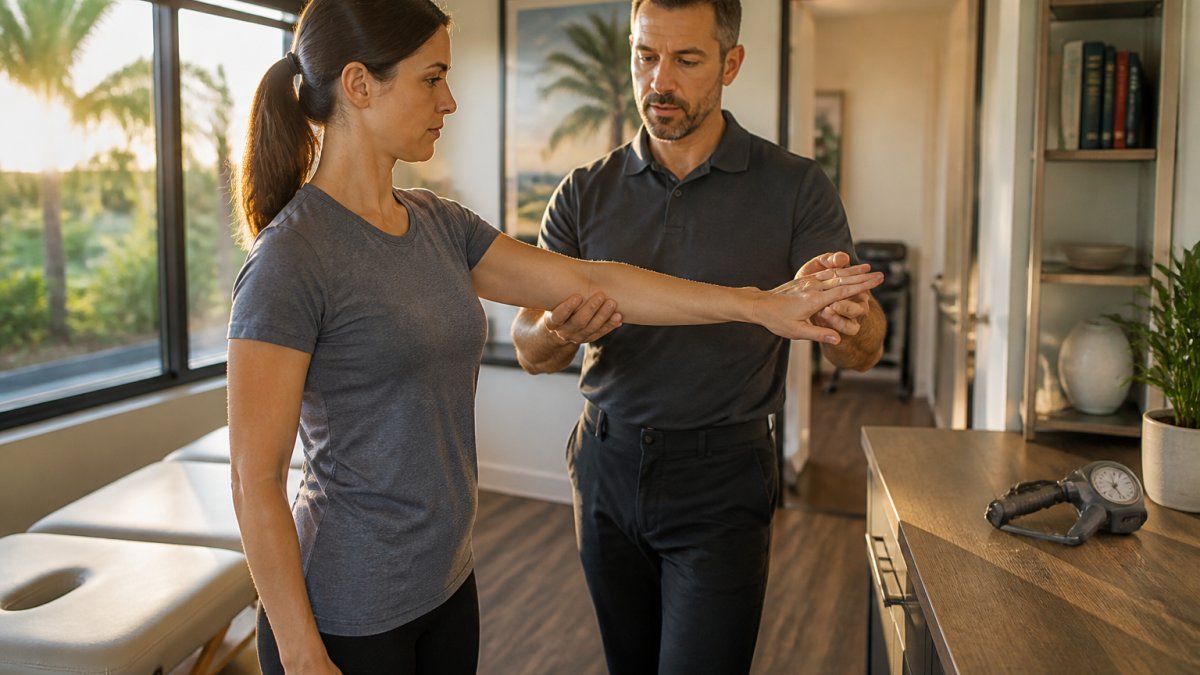
Manual vs. Instrumented Muscle Testing
Handheld dynamometers and force gauges add objectivity to muscle testing. They measure pounds or kilograms of force applied, which gives you a number rather than a subjective rating. The trade-off is that a device measures strength, not the subtle change in muscle response that applied kinesiology practitioners look for. Many practices run both: manual testing for the assessment protocol, instrumented testing for baseline and progress tracking. For a deeper walkthrough of applying these techniques in practice, see our guide on improving posture with applied kinesiology.
Applied Kinesiology Diagnostic Tool Options and Selection Criteria
Most applied kinesiology diagnostic tools fall into four functional buckets: structural measurement, chemical and nutritional screening, meridian and organ-stress assessment, and documentation. The categories matter because each one answers a different clinical question, and buying across categories before you have defined your protocol is how practices end up with a cabinet of unused devices.
Structural and Musculoskeletal Adjuncts
- Handheld dynamometer or force gauge. Measures pounds of force in a standardized test position. Intended use: baseline strength and progress tracking, not the subtle muscle-response change AK practitioners assess by hand. Limitation: it quantifies strength, not the change in response to a stimulus, so it complements rather than replaces manual testing.
- Grip dynamometer. A quick, repeatable screen for grip strength and asymmetry. Useful for intake and re-evaluation; not a stand-alone diagnostic.
- Inclinometer or goniometer. Range-of-motion measurement that pairs naturally with structural AK findings and gives you a number for the chart.
- Posture and leg-length assessment tools. Block or shim sets and a plumb-line or posture grid support the structural leg-length and pelvic assessment common in AK workflows.
Chemical and Nutritional Screening Adjuncts
- Salivary and urinary test kits sourced from accredited laboratories. Intended use: biochemical screening that informs nutritional recommendations. Limitation: results depend entirely on lab accreditation and collection technique; an unaccredited kit produces a result you cannot defend in the chart.
- Nutritional reference materials and reagent kits used in some AK protocols. These support the chemical assessment framework; they are not validated diagnostic instruments and should be described to patients as screening aids.
- pH and hydration test strips. Low-cost, low-risk adjuncts for basic chemical screening; interpret alongside, not instead of, standard lab work.
Meridian and Organ-Stress Assessment Tools
- Thermography units (often paired with a two-probe or infrared scanner) used in some AK and chiropractic practices to map temperature asymmetry along the spine. Intended use: a structural/autonomic screen. Limitation: it measures skin temperature, not organ function, and should never be presented as a diagnostic test for disease.
- Meridian and acupoint locators. Handheld point finders used within the meridian framework. These are protocol aids, not measuring instruments, and their output depends on practitioner technique.
- Vials and test kits used in some AK stimulus protocols. These are practitioner tools within a specific technique, not validated diagnostics; keep patient-facing language careful.
Documentation and Workflow Tools
- SOAP-note templates and outcome-tracking forms built around your AK assessment sequence.
- Tablet or practice-management software with a muscle-testing grading field so results are searchable over time.
- Imaging and lab access through a referral network, so findings that exceed the scope of AK assessment route to standard medical workup.
Selection Criteria, Applied Tool by Tool
A useful discipline: for each tool, write one sentence describing what it measures, one sentence on its limitation, and one sentence on how a result changes your treatment approach. If the third sentence is hard to write, the tool is a purchase, not an asset.
Applied Kinesiology Supplies: Consumables, Test Kits, and Accessories
Watch out: test kits from unaccredited suppliers create two problems at once, unreliable results and a documentation trail you cannot defend. Buy only from laboratories that publish their accreditation.
Startup and Ongoing Equipment Budgets for Practitioners
A working AK practice can be equipped across a wide range, and the useful exercise is not finding a single number but building a three-tier budget: essential, professional, and advanced. Prices below are typical U.S. market ranges as of 2026 and should be treated as planning figures to benchmark quotes against, not as published price lists.
Tier 1: Essential Startup
What a new practitioner needs to see patients safely and legally:
- Adjustable treatment table with face rest: roughly $600-$2,500 depending on brand and features. A basic stationary table sits at the low end; a drop-table or electric-hydraulic table sits at the high end.
- Face paper, linens, and table covers: $50-$150 to start, then recurring.
- Nitrile gloves, sanitizer, and disinfecting wipes: $75-$200 to start, then recurring monthly.
- Goniometer and inclinometer: $30-$150 combined.
- Grip dynamometer: $150-$400.
- SOAP-note templates or basic practice-management software: $0-$100 per month.
A bare-bones essential setup commonly lands in the $1,000-$3,500 range before training and licensing.
Tier 2: Professional Setup
Adds the instruments that make tracking and documentation stronger:
- Handheld dynamometer or force gauge: $400-$1,500.
- Thermography unit: $1,500-$6,000 depending on probe count and software.
- Posture grid, block set, and leg-length assessment tools: $100-$400.
- Accredited salivary or urinary test kits: priced per kit, typically $50-$300 each depending on panel; order as needed rather than stocking deeply.
- Nutritional reference library and reagent kits: $200-$800.
A professional-tier build commonly lands in the $4,000-$10,000 range on top of Tier 1.
Tier 3: Advanced and Specialized
- Higher-end thermography or multi-probe scanning systems: $6,000-$15,000+.
- Specialized AK stimulus kits and vials: varies widely; buy only what your protocol actually uses.
- Dedicated documentation software with outcome tracking: $100-$300 per month.
Ongoing and Replacement Costs
Budget three recurring lines:
- Consumables (monthly): gloves, paper, linens, sanitizer, commonly $75-$250 per month depending on patient volume.
- Calibration and service (annual): dynamometers and force gauges typically need annual checks; budget $100-$400 per instrument. Thermography units may need annual service in the $200-$600 range.
- Software renewals (annual): $1,200-$3,600 for practice-management and documentation platforms.
- Replacement cycle: tables and durable instruments commonly last 7-10 years with care; consumables and test kits turn over continuously.
How to Sequence the Spend
A practical order most practitioners follow: table and consumables first, then a dynamometer and goniometer for objective tracking, then thermography or specialized kits only after the assessment protocol is stable and patient volume justifies the cost. The essential tier is cheap; the advanced tier is where budgets go wrong. For real-world pricing context on integrative care to benchmark your planning against, our integrative chiropractic care cost guide walks through the categories patients and practitioners actually encounter. Treat any figure as a starting point for a quote, not a budget.
Hygiene, Maintenance, and Safe Handling of AK Tools
Hand hygiene deserves its own line. The CDC hand hygiene guidance for healthcare settings remains the standard reference for when to wash versus when to use alcohol-based sanitizer, and it applies to every manual muscle testing session.
Evidence Boundaries and Responsible Communication With Patients
Practitioners who communicate well say what they are doing and what it can and cannot tell them. "This test helps me see how your muscles respond to a stimulus" is honest. "This test diagnoses your condition" is not. If you want to see how clinics present muscle testing services to the public, a look at how muscle testing clinics in Naples describe their offerings shows the range, from careful to overstated. The National Center for Complementary and Integrative Health overview of complementary approaches is a useful plain-language reference to share with patients who ask what the evidence says.
Equipping Your Practice: Next Steps for AK Integration
At Alternative Health & Healing Center, our approach combines Applied Kinesiology with nearly 40 years of clinical experience and advanced technology including the Piezo Wave 2. If you are a patient looking for care for musculoskeletal and nerve pain, request an appointment. Practitioners can also find a certified Applied Kinesiology practitioner to verify credentials or locate one.
Frequently Asked Questions
What tools do applied kinesiology practitioners use?
Alternative Health & Healing Center specializes in Applied Kinesiology and uses advanced technology including the Piezo Wave 2.
How should practitioners choose applied kinesiology equipment?
The business facts provided do not specify equipment-selection criteria or a particular equipment inventory.
Are applied kinesiology tools scientifically validated?
The supplied business facts do not provide research findings about the scientific validation of applied kinesiology tools.
What is the difference between applied kinesiology and kinesiology?
The supplied business facts identify Applied Kinesiology as a specialization but do not provide a comparison between applied kinesiology and kinesiology.