 blog
Essential Oils for Muscle Tension and Back Pain
Last Updated: November 24, 2026
Quick Summary
Essential oils for muscle tension and back pain are plant extracts used in massage oils, roll-ons, and compresses to ease tight muscles and everyday aches, but they do not cure back problems. They may help you feel more comfortable while you work on the cause, and lasting relief usually needs a broader plan.
- Peppermint oil contains menthol, which triggers a cooling sensation that may help tight areas feel looser.
- A 2% dilution uses about 12 drops of essential oil per 1 ounce of carrier oil.
- The article's everyday blend combines 6 drops peppermint, 4 drops lavender, and 2 drops eucalyptus in 1 ounce carrier oil.
- Children under 6 should not use essential oils topically without a pediatrician's guidance.
- Seek medical care for numbness, weakness, or loss of bladder or bowel control.
Table of Contents
- Essential Oils for Muscle Tension and Back Pain: What the Evidence Shows
- A Structured Comparison of Essential Oils for Back Pain
- Essential Oils for Muscle Pain and Inflammation: What Each One Does
- How to Dilute Essential Oils for Muscle Pain
- A Muscle Pain Relief Essential Oil Blend Recipe
- Safety, Interactions, and When Back Pain Needs Medical Care
- Adding Essential Oils to a Whole-Person Back Pain Plan
- Frequently Asked Questions
Essential Oils for Muscle Tension and Back Pain: What the Evidence Shows
People often reach for a bottle of peppermint oil when their shoulders lock up, and it may help a little.
Here is what the evidence actually supports. Most research on essential oils is small or early-stage, and results vary by oil and by condition.
Below, we rank the most commonly used oils, show you exactly how to dilute them, and share a blend recipe you can make at home.
A Structured Comparison of Essential Oils for Back Pain
No single oil wins for every person. The best choice depends on whether your pain feels hot and tight, dull and achy, or tied to stress and poor sleep.
| Oil | Main Sensation | Best for | Typical Use |
|---|---|---|---|
| Peppermint | Cooling | Fresh muscle tension, sore shoulders | 1-2 drops in 1 tsp carrier oil |
| Lavender | Calming | Tension linked to stress, poor sleep | Massage or bath |
| Eucalyptus | Cooling, clearing | Stiff, heavy muscles | Massage blend |
| Rosemary | Warming | Cold, stiff muscles before activity | Massage blend |
| Ginger | Warming | Deep, dull aches | Small amount in carrier oil |
| Chamomile | Soothing | Sensitive skin, restlessness | Gentle massage |
| Helichrysum | Soothing | Bruised or overworked areas | Diluted spot use |
Peppermint and Menthol's Cooling Effect
Peppermint oil contains menthol, which triggers a cooling sensation on the skin. That cool feeling can distract from muscle aches and may help tight areas feel looser. Keep it away from the eyes and broken skin. It is strong, so dilute it well.
Lavender, Eucalyptus, Rosemary, and Ginger
Lavender oil is linked to relaxation, which matters when muscle tension comes from stress and poor sleep. Eucalyptus oil feels cooling and can make sore muscles feel lighter. Rosemary oil has a warming effect that some people use before movement. Ginger oil brings warmth and a mild tingling that suits dull, achy backs. Each one works best when matched to how your pain feels.
Essential Oils for Muscle Pain and Inflammation: What Each One Does
Essential oils for muscle pain and inflammation are used for comfort, not as anti-inflammatory drugs. No oil replaces medical care for swelling or joint pain.
- Peppermint (menthol): Cooling relief for sore muscles and tension headaches. Human trials support menthol-based topical products for acute muscle soreness and tension-type headache; evidence for chronic back pain specifically is limited. Best for fresh, tight areas after desk work or activity.
- Lavender: Calming, may support sleep and reduce the stress that worsens pain. Human studies are mostly small and focus on relaxation, anxiety, and sleep rather than back pain itself; traditional use for muscle tension is common. Best when tightness is tied to stress or poor sleep.
- Eucalyptus: Soothing for stiff, heavy muscles. Laboratory findings show cooling and sensory effects; human trials for back pain are sparse. Often combined with peppermint in massage blends.
- Rosemary: Warming, often used to support circulation before activity. Evidence is largely traditional and laboratory-based; human trials for muscle comfort are limited. Best as a pre-movement warm-up oil.
- Ginger: Warming and comforting for deep aches. Small human studies suggest topical ginger may help with muscle soreness; evidence for back pain specifically is early-stage. Use in small, well-diluted amounts.
- Chamomile: Gentle and soothing, good for sensitive skin. Human evidence is mostly for relaxation and sleep; traditional use for muscle comfort is common. A reasonable choice when skin is reactive.
- Helichrysum: Used for bruised or overworked tissue. Evidence is primarily traditional and laboratory-based; human trials are very limited. Reserve for spot use on small areas.
- Clary sage: Relaxing, sometimes used for muscle spasms. Evidence is mostly traditional and aromatherapy-focused; human trials for muscle spasm are limited. Often used in diffuser blends rather than direct massage.
- Tea tree: More of a skin oil; use with care and never swallow it. Evidence is strongest for skin conditions, not muscle pain. Not a first choice for back tension.
A common mistake is expecting one oil to fix a structural problem. If a joint is irritated or a nerve is compressed, no bottle will correct that. Oils calm the surface. The cause still needs attention.
How to Dilute Essential Oils for Muscle Pain
Knowing how to dilute essential oils for muscle pain is the most important safety step. Undiluted oils can burn, sting, or cause skin irritation, especially on sensitive skin. Always mix them with a carrier oil first.
Carrier oils to use: jojoba, sweet almond, fractionated coconut, or olive oil. These spread the essential oil over the skin and slow absorption.
Basic dilution guide for adults:
- 1% dilution: about 6 drops per 1 ounce of carrier oil, for sensitive skin
- 2% dilution: about 12 drops per 1 ounce, a common everyday strength
- 3% dilution: about 18 drops per 1 ounce, for short-term use on small areas
Step-by-Step Dilution and Application
- Wash your hands and set out a small glass bowl or bottle.
- Measure 1 ounce of carrier oil.
- Add your chosen essential oil drops, starting at the low end.
- Stir gently to mix.
- Test a small patch on your inner arm and wait a few hours.
- Apply to the sore area with light pressure.
- Massage in slow circles for a few minutes.
- Store the blend in a dark glass bottle, away from heat.
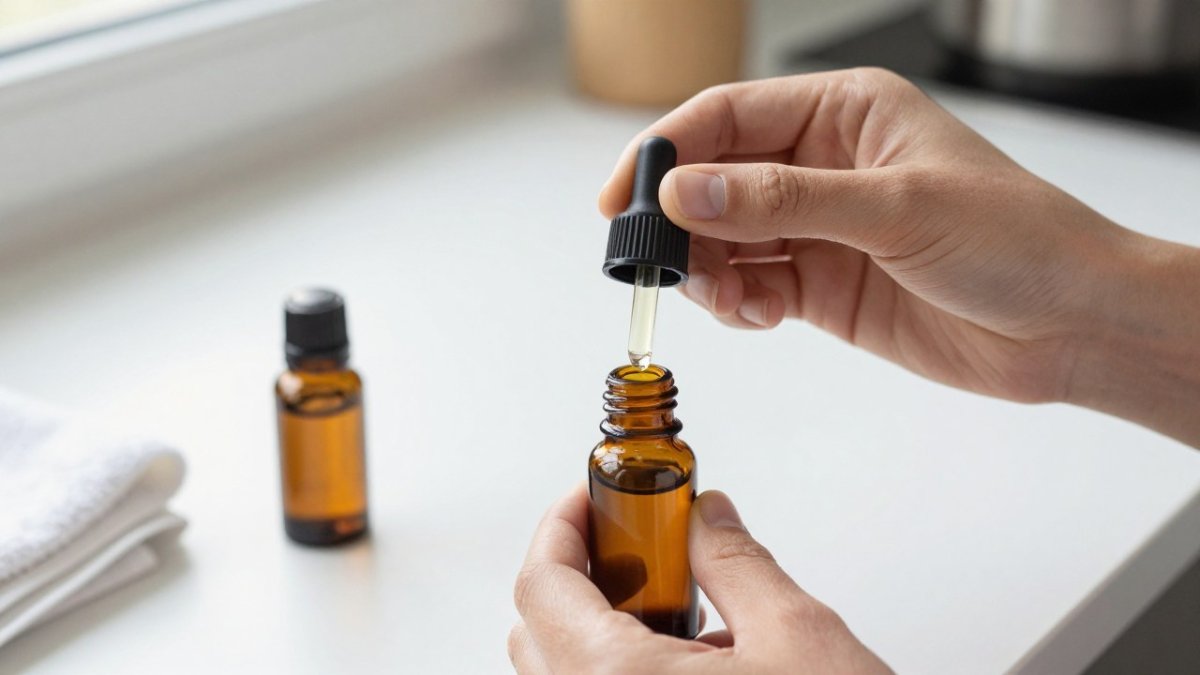
Watch out: Never apply essential oils to broken skin, and never add them to a hot bath without mixing them into bath salts or a carrier first.
A Muscle Pain Relief Essential Oil Blend Recipe
This muscle pain relief essential oil blend recipe is simple and easy to adjust. It makes a 2% blend for everyday use on tight shoulders and back muscles.
What you need:
- 1 ounce carrier oil such as jojoba or sweet almond
- 6 drops peppermint oil
- 4 drops lavender oil
- 2 drops eucalyptus oil
- A small dark glass bottle
How to make it:
- Pour the carrier oil into the bottle.
- Add the essential oils drop by drop.
- Cap and roll the bottle gently to mix.
- Label it with the date and the oils used.
- Use within a few months.
Apply a small amount to the sore area and massage gently. If you enjoy making your own home remedies, our guide on how to make homemade knee pain salve walks through a similar 7-step recipe you can prepare at home.
Safety, Interactions, and When Back Pain Needs Medical Care
Essential oils are used on the skin for short periods, but they carry risks and are not risk-free. Some people react with redness, itching, or swelling. Citrus oils can make skin more sensitive to sunlight (pubmed.ncbi.nlm.nih.gov).
Age-appropriate dilution for topical use:
- Adults: 1% (about 6 drops per 1 ounce of carrier oil) for sensitive skin, 2% (about 12 drops per ounce) for everyday use, 3% (about 18 drops per ounce) for short-term use on small areas only.
- Children 6-12: 0.5%-1% (about 3-6 drops per ounce), patch-test first, and avoid peppermint and eucalyptus near the face.
- Children under 6: Do not use essential oils topically without a pediatrician's guidance; inhalation and ingestion risks are higher.
- Older adults: Start at 1% because skin thins with age and irritation risk rises.
- Pregnancy and breastfeeding: Avoid clary sage, rosemary, and peppermint in large amounts; consult a clinician before any topical use. Some oils are traditionally avoided in pregnancy, and evidence is limited.
Interactions and conditions to watch:
- Asthma: Strong scents, especially eucalyptus and peppermint, can trigger symptoms in some people. Use in a well-ventilated space or skip inhalation.
- Blood thinners: Some oils, including clove and ginger, may affect bleeding risk in theory; ask your doctor before regular use.
- Allergies: Patch-test every new oil on the inner arm and wait a few hours. Nut-based carrier oils (sweet almond) are not appropriate for people with tree-nut allergies; jojoba or fractionated coconut are safer defaults.
- Sensitive skin or eczema: Use 1% dilution or less and avoid clove, tea tree, and citrus oils on irritated areas.
- Medications: Some oils can interact with medications, and a clinician can tell you what is safe for you. Bring a list of your oils to your appointment if you use them regularly.
Seek medical care promptly if you notice:
- Numbness, weakness, or loss of bladder or bowel control
- Pain after a fall or injury
- Fever, unexplained weight loss, or pain that wakes you at night
- Pain that spreads down a leg or arm
- New back pain with a history of cancer, osteoporosis, or long-term steroid use
These signs can point to something that needs proper assessment. If you want to avoid medication and explore other routes, our overview of drug-free alternatives to pain medication ranks several options. For back pain that may need more than home care, our guide explains how spinal decompression therapy works as a non-invasive option.
Watch out: Never apply essential oils to broken skin, and never add them to a hot bath without mixing them into bath salts or a carrier first.
Adding Essential Oils to a Whole-Person Back Pain Plan
Oils work best as one part of a larger plan. A whole-person approach combines gentle movement, good sleep, stress management, and hands-on care.
Alternative Health & Healing Center in Naples, Florida, offers chiropractic care with Applied Kinesiology and therapies such as the Piezo Wave 2 for musculoskeletal and nerve pain. For patients whose muscle tension persists despite home remedies, a professional consultation can help identify the underlying causes. You can read more about acupuncture for muscle tension if you want to explore that route.
If you would like to compare methods side by side, our ranked guide to the best backache relief methods puts ice therapy, NSAIDs, acupuncture, and advanced therapies in one place.
Muscle tension and back pain rarely resolve on their own when the underlying cause goes unaddressed.
Frequently Asked Questions
What essential oil is best for muscle tension?
Peppermint is a commonly used option for muscle tension, largely because of its menthol content, which creates a cooling sensation that can distract from tight, aching tissue. Lavender is a reasonable second choice when tension comes with stress or poor sleep, since its aroma supports relaxation. Eucalyptus and rosemary are often blended with peppermint for a broader warming and cooling effect. No single oil works for everyone, and results vary, so test one diluted oil at a time on a small area before applying it more widely.
Can essential oils help with back pain?
Essential oils for back pain can ease everyday discomfort when used as a diluted massage oil or in a warm bath, but they are a comfort measure, not a treatment for the underlying cause. If your back pain is severe, comes with numbness, weakness, or loss of bladder control, or follows a fall, skip the oils and get assessed by a qualified professional first.
How do you dilute essential oils for muscle pain?
Dilution strength depends on the oil, your skin sensitivity, and your health history. Measure the carrier oil first, add the drops, and mix in a glass roller bottle or small jar. Patch test a small area before wider use, and ask a qualified professional which dilution suits you.
What is the strongest essential oil for pain?
Strength is not the right measure here. Peppermint carries the most menthol and produces the strongest cooling sensation, while clove bud and other warming oils can feel intense but also irritate skin at higher concentrations. A stronger sensation does not mean better relief, and undiluted oils should never go on skin. Choose based on the type of discomfort and your skin sensitivity, keep dilutions conservative, and ask a clinician before using oils alongside prescription pain medication or on broken skin.