 listicle
Chiropractic Care for Tennis Elbow in Naples: A Complete Guide
Table of Contents
- What Is Tennis Elbow and Why Chiropractic Care for Tennis Elbow Matters
- Symptoms of Tennis Elbow You Shouldn't Ignore
- How Chiropractic Adjustments and Soft Tissue Therapy Treat Tennis Elbow
- Elbow Pain Relief Exercises and Stretches for Recovery
- Tennis Elbow Recovery Time and Lateral Epicondylitis Treatment in Naples
- Benefits of Conservative Treatment and Drug-Free Pain Relief
- Post-Treatment Maintenance and Ergonomic Workspace Assessment
- Frequently Asked Questions
Last Updated: July 14, 2026
What Is Tennis Elbow and Why Chiropractic Care for Tennis Elbow Matters
Tennis elbow, medically known as lateral epicondylitis, is a painful condition affecting the outer elbow where forearm muscles attach to bone. Repetitive gripping, twisting, or arm extension movements create tiny tears in the tendons. Despite its name, carpenters, painters, and office workers face equally high risk. At Alternative Health & Healing Center in Naples, chiropractic care for tennis elbow has proven effective, with early intervention preventing long-term complications.
Pain typically radiates from the outer elbow down the forearm, ranging from mild discomfort to severe activity limitation. Many people ignore early symptoms, allowing untreated lateral epicondylitis to worsen over months or years. Chiropractic care offers a drug-free, non-invasive path to recovery that addresses the root cause rather than masking pain.
Understanding Lateral Epicondylitis
Lateral epicondylitis occurs when the extensor carpi radialis brevis tendon, which attaches to the lateral epicondyle on the outside of your elbow, becomes inflamed or develops micro-tears. When forearm muscles work overtime without adequate recovery, the tendon attachment breaks down. The condition differs from medial epicondylitis (golfer's elbow), which affects the inner elbow. Lateral epicondylitis is more common, accounting for roughly 1-3% of the general population at any given time.
Common Causes and Risk Factors
Repetitive strain is the primary culprit. Activities requiring forceful gripping, using power tools, playing racquet sports, typing, or assembly line work create cumulative stress on the tendon. Poor ergonomics amplify risk significantly. People between 40-60 years old face the highest incidence, though younger athletes and manual laborers can develop the condition at any age. Weakness in forearm muscles, tight wrist extensors, and biomechanical imbalances force the elbow to compensate, accelerating tendon breakdown.
Symptoms of Tennis Elbow You Shouldn't Ignore
Pain on the outside of the elbow is the hallmark symptom, often starting as a dull ache after activities and progressing to constant discomfort. Pain typically worsens when gripping objects, shaking hands, lifting, or extending the wrist against resistance. Weakness in grip strength often accompanies the pain, making everyday tasks difficult. Stiffness in the elbow, particularly in the morning, is common.
The condition typically develops gradually. Early symptoms appear only after specific activities, but without treatment, pain becomes more frequent and intense. Early intervention with chiropractic care prevents progression and accelerates healing.
How Chiropractic Adjustments and Soft Tissue Therapy Treat Tennis Elbow
Chiropractic treatment focuses on restoring normal joint mechanics, reducing inflammation, and healing the damaged tendon. Unlike approaches that mask pain with medication, chiropractic care addresses the biomechanical dysfunction causing the problem. Treatment typically combines joint manipulation, soft tissue mobilization, therapeutic exercises, and ergonomic modification.
The first step involves assessing your elbow joint, cervical spine, and shoulder mechanics. Misalignment in the neck or shoulder often contributes to elbow pain by altering nerve function and muscle coordination. Chiropractors identify these patterns and correct them through targeted adjustments.
Joint Manipulation and Range of Motion Restoration
Chiropractic adjustments to the elbow joint improve mobility and reduce nerve irritation. The radial head, a small bone in your forearm near the elbow, frequently becomes restricted in patients with lateral epicondylitis. Gentle mobilization restores normal movement patterns and reduces compensatory strain on the tendon.
Cervical spine adjustments often accompany elbow treatment because neck misalignment disrupts nerve signals to the forearm muscles. Correcting cervical dysfunction reduces secondary stress on the elbow. Range of motion exercises follow adjustments to maintain and improve mobility, with most patients regaining significant function within 2-3 weeks of consistent care.
Myofascial Release and Trigger Point Therapy
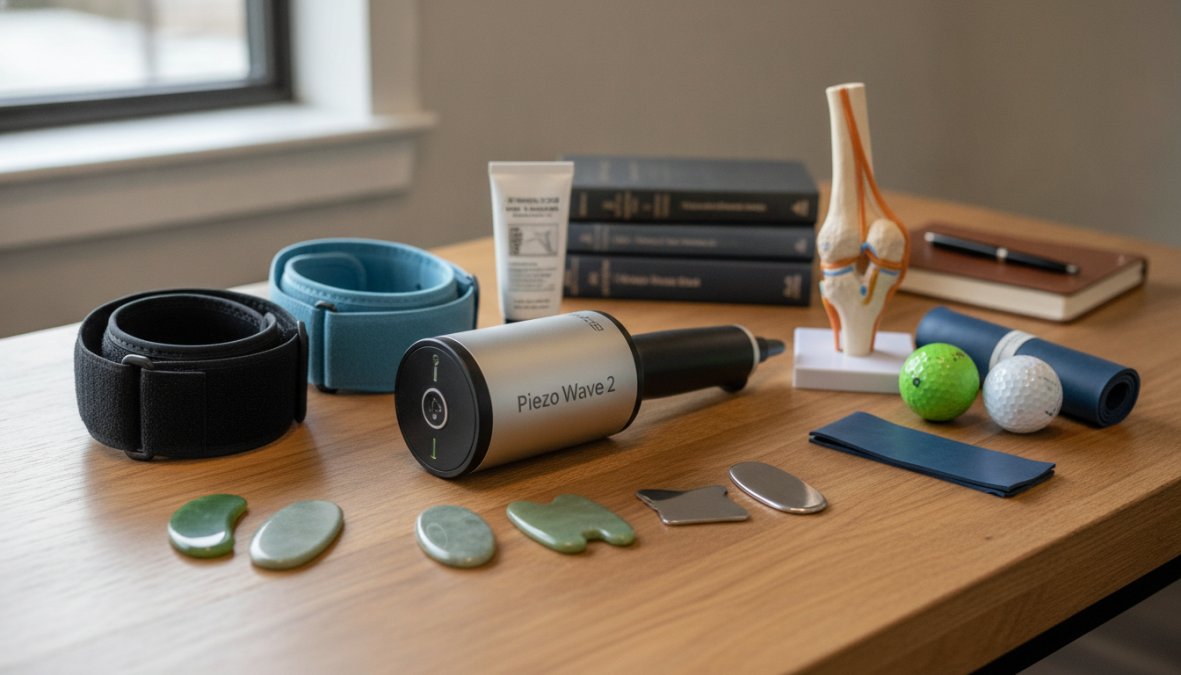
Myofascial release targets tight, restricted muscles surrounding the injured tendon. The extensor carpi radialis brevis and other forearm extensors develop trigger points, hypersensitive knots that refer pain down the arm. Releasing these through manual pressure, instrument-assisted techniques like the Graston Technique, or dry needling reduces pain and restores muscle function.
Soft tissue therapy addresses inflammation and scar tissue formation, breaking up adhesions and restoring normal tissue mobility to accelerate recovery and prevent re-injury.
Advanced Modalities: Ultrasound and Piezo Wave Technology
Ultrasound therapy uses sound waves to stimulate blood flow and reduce inflammation in the damaged tendon. Piezo Wave 2 technology uses acoustic wave therapy to stimulate the body's natural healing response. This technology has shown remarkable results for chronic tendon injuries that haven't responded to standard physical therapy by triggering angiogenesis, the formation of new blood vessels that deliver healing nutrients to damaged tissue. Treatment sessions are brief, non-invasive, and require no recovery time.
Elbow Pain Relief Exercises and Stretches for Recovery
Therapeutic exercises form the cornerstone of home-based recovery. Consistency matters more than intensity; performing exercises correctly 3-4 times weekly produces better results than occasional intense sessions.
Eccentric Strengthening with Resistance Tools
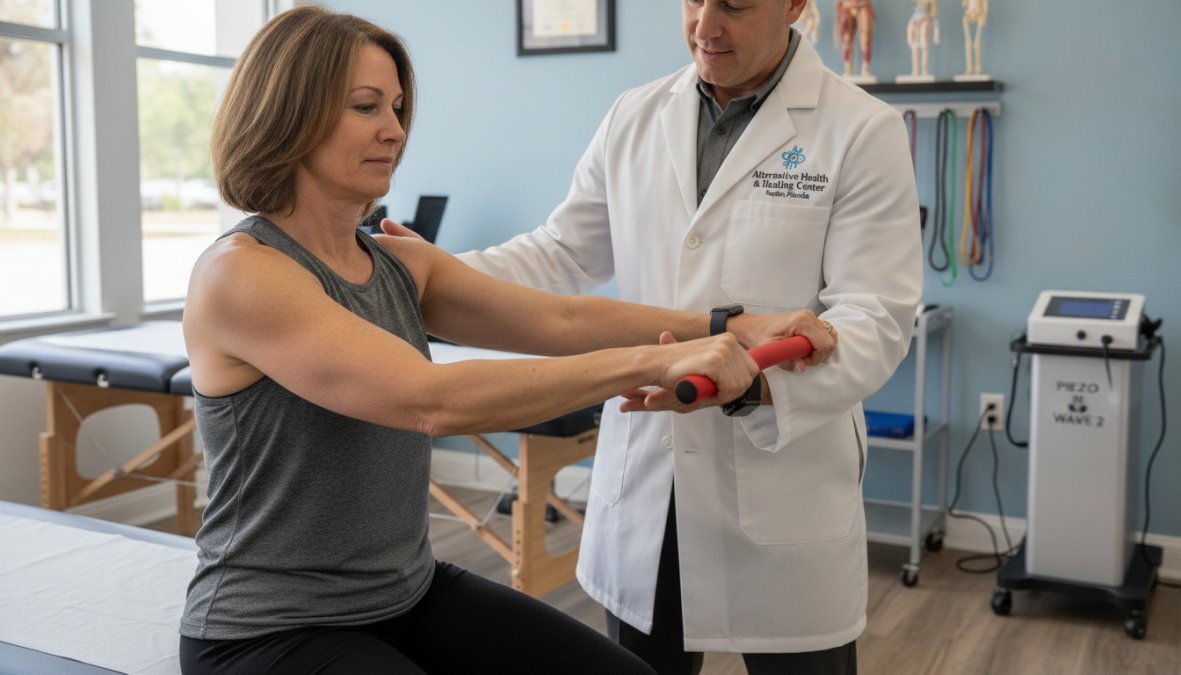
Eccentric exercises, where muscles lengthen under tension, have proven particularly effective for lateral epicondylitis. The "Tyler Twist" exercise involves holding a TheraBand FlexBar horizontally, twisting it with wrist rotation, and slowly lowering it against resistance. This movement specifically targets the wrist extensors while building strength through the lengthening phase.
| Exercise | Duration | Frequency | Target | Progression |
|---|---|---|---|---|
| Tyler Twist with FlexBar | 15-20 reps | 3x weekly | Wrist extensors | Increase resistance color |
| Wrist extension over table edge | 15 reps | 3x weekly | Forearm extensors | Add light weight (1-3 lbs) |
| Supination/pronation with dumbbell | 15 reps each | 3x weekly | Forearm rotators | Increase weight gradually |
| Grip strengthening with therapy putty | 2-3 minutes | Daily | Hand and forearm | Increase putty resistance |
Start with bodyweight or minimal resistance, focusing on proper form. The eccentric phase, lowering the weight slowly over 3-4 seconds, is where healing occurs. Avoid sharp pain during exercises; mild discomfort is acceptable.
Stretching and Flexibility Work
Static stretching improves flexibility and reduces muscle tension. The wrist flexor stretch, holding your arm straight with palm facing down and gently pressing the back of your hand downward, should be held for 30 seconds, repeated 3 times on each side. Perform this stretch 2-3 times daily, especially before activities that stress the elbow.
The pronation/supination stretch involves extending your arm and slowly rotating your forearm to turn your palm up and down, holding each position for 15-20 seconds. Shoulder and neck stretches prevent compensatory tension that worsens elbow pain.
Tennis Elbow Recovery Time and Lateral Epicondylitis Treatment in Naples
Recovery timeline depends on injury severity, how long symptoms existed before treatment began, and adherence to the treatment plan. Most acute cases respond within 4-6 weeks of consistent chiropractic care. Chronic cases lasting months or years require 8-12 weeks or longer.
Timeline for Conservative Treatment
Mild lateral epicondylitis typically shows improvement within 2-3 weeks of starting chiropractic care. Pain during daily activities decreases noticeably, and grip strength begins recovering. Moderate cases improve over 6-8 weeks, with pain largely resolving but residual weakness remaining. Chronic cases may require 12-16 weeks of consistent treatment.
Compliance is the key variable. Patients who attend appointments regularly, perform home exercises consistently, and modify activities appropriately recover faster than those with sporadic treatment.
When to Seek Professional Care in Naples
Seek chiropractic evaluation if elbow pain persists beyond 2 weeks or worsens despite rest. Early intervention prevents progression to chronic pain. Alternative Health & Healing Center combines nearly 40 years of clinical experience with advanced technologies like the Piezo Wave 2, providing comprehensive care for lateral epicondylitis. The center's expertise in Applied Kinesiology allows practitioners to identify and correct underlying biomechanical dysfunction.
Benefits of Conservative Treatment and Drug-Free Pain Relief
Conservative chiropractic treatment avoids pain medication side effects like gastrointestinal upset and dependency risk. Drug-free treatment addresses the actual injury rather than temporarily suppressing symptoms. Joint manipulation and soft tissue therapy improve overall arm function, restoring grip strength, range of motion, and confidence in using the arms.
The comprehensive approach prevents secondary injuries by correcting cervical spine misalignment, shoulder weakness, and wrist biomechanics. Long-term cost savings represent another benefit, with total chiropractic care typically costing less than prolonged medication use or surgical intervention. Insurance often covers chiropractic treatment for musculoskeletal conditions.
Post-Treatment Maintenance and Ergonomic Workspace Assessment
Recovery doesn't end when pain disappears. Maintaining improvements requires ongoing attention to movement patterns, ergonomics, and strength maintenance. Many patients experience re-injury within months of stopping treatment because they return to the same behaviors that caused the original problem.
Preventing Re-injury Through Proper Ergonomics
Ergonomic assessment identifies workspace factors contributing to lateral epicondylitis. Your desk height, monitor position, keyboard placement, and chair support all influence elbow strain. Ideally, your elbows should rest at 90 degrees when typing, with wrists in neutral position. Monitor height should position the top of the screen at eye level.
Taking regular breaks every 30-60 minutes prevents cumulative strain. Tool selection matters for manual workers; using ergonomic grips, maintaining proper grip pressure, and alternating gripping tasks between hands reduces repetitive strain.
Long-Term Maintenance Strategies
Continuing home exercises 2-3 times weekly indefinitely maintains the strength and flexibility gained during treatment. Regular chiropractic check-ups every 4-8 weeks after acute treatment resolves help catch early signs of returning dysfunction. Activity modification prevents re-injury without requiring you to avoid activities you enjoy. Maintaining overall fitness, particularly shoulder and core strength, supports elbow health.
Tennis elbow doesn't have to become a chronic problem limiting your activities and quality of life. Early intervention with chiropractic care for tennis elbow naples offers a proven path to recovery without drugs or surgery. Alternative Health & Healing Center brings nearly 40 years of experience treating lateral epicondylitis with evidence-based chiropractic adjustments, soft tissue therapy, and advanced technologies like Piezo Wave 2 acoustic therapy. If you're experiencing elbow pain, grip weakness, or activity limitations, schedule an evaluation today and discover how personalized chiropractic care can restore your arm function and eliminate pain.
Frequently Asked Questions
Can chiropractic care really help with tennis elbow?
Yes, chiropractic care for tennis elbow addresses the root causes of lateral epicondylitis through joint manipulation, soft tissue mobilization, and myofascial release. By reducing inflammation, restoring range of motion, and alleviating pressure on affected tendons and nerves, chiropractors help patients achieve drug-free pain relief. Combined with rehabilitative exercises, chiropractic treatment offers a comprehensive conservative approach that often prevents the need for invasive procedures.
How long does tennis elbow recovery take with chiropractic treatment?
Tennis elbow recovery time varies based on severity and individual factors, but most patients see improvement within 4-8 weeks of consistent chiropractic care. Mild cases may resolve in 3-4 weeks, while chronic or severe lateral epicondylitis may require 8-12 weeks or longer. Adherence to prescribed exercises, ergonomic adjustments, and lifestyle modifications significantly accelerates healing. Your chiropractor will create a personalized timeline during your initial assessment.
What specific treatments do chiropractors use for lateral epicondylitis in Naples?
Chiropractors in Naples employ multiple evidence-based modalities: chiropractic adjustments to restore joint function, soft tissue mobilization to address forearm muscle tightness, trigger point therapy for pain relief, and advanced technologies like ultrasound and Piezo Wave therapy for inflammation reduction. Applied Kinesiology techniques help identify biomechanical imbalances contributing to tendonitis. Treatment plans are customized based on your condition's severity and your specific symptoms.
Do I need a referral to see a chiropractor in Naples for tennis elbow?
Most chiropractors in Naples accept patients without a referral, allowing direct access to care for tennis elbow. However, if you have insurance coverage, some plans may require a referral for benefits eligibility. Contact your chosen chiropractic clinic directly to confirm their referral requirements and insurance acceptance. Many offer convenient online scheduling and free initial consultations to discuss your elbow pain relief options.
How can I prevent tennis elbow from returning after chiropractic treatment?
Post-treatment maintenance is critical for preventing re-injury. Implement ergonomic workspace assessment to reduce repetitive strain, adjust desk height, monitor position, and keyboard placement. Continue prescribed stretches and strengthening exercises at home. Modify activities that triggered the condition, take regular breaks during repetitive tasks, and maintain proper biomechanics during sports or work. Your chiropractor will provide specific guidance on long-term maintenance strategies tailored to your lifestyle and occupation.