 listicle
Chiropractor for Golfers in Naples Florida: Complete Care Guide
Table of Contents
- Why Golfers in Naples Need Specialized Chiropractic Care
- Common Golf Injuries: What a Chiropractor for Golfers Treats
- Chiropractic Benefits for Golfers: Performance and Recovery
- Golf Swing Mechanics Chiropractic: Biomechanics Assessment and Correction
- Golf Injury Treatment Naples FL: Advanced Therapeutic Modalities
- TPI Certified Chiropractor Naples: Sports Medicine Expertise
- Post-Round Recovery Routines for Golfers
- Chiropractic vs. Physical Therapy for Golf Injuries
- Frequently Asked Questions
Last Updated: July 19, 2026
Golf demands more from your body than most recreational activities. The repetitive torque, explosive power generation, and precise biomechanical sequencing required in the golf swing create unique stress patterns that general practitioners often miss. If you're a golfer in Naples dealing with recurring pain, stiffness, or performance plateaus, finding the right chiropractor for golfers in naples florida becomes essential to both your game and your long-term health.
At Alternative Health & Healing Center, we understand that golfers face distinct physical challenges. Unlike other sports, golfers experience cumulative microtrauma from thousands of repetitive swings combined with the postural demands of walking 18 holes. This guide covers what makes chiropractic care specifically tailored for golfers different, which injuries respond best to treatment, and how to assess whether a chiropractor truly understands golf biomechanics.
Why Golfers in Naples Need Specialized Chiropractic Care
The golf swing is fundamentally different from other athletic movements. A single swing generates forces exceeding 8,000 pounds of pressure through the lumbar spine, forces that accumulate across 100+ swings in a typical round. According to research on golf-related injuries from the Journal of Sports Medicine, lower back pain affects approximately 26% of amateur golfers and up to 54% of professional golfers, making it the most common golf injury by a significant margin.
What most general chiropractors miss is that golf injuries follow predictable patterns based on swing mechanics, flexibility limitations, and muscular imbalances. A golfer with restricted hip rotation, for example, compensates by over-rotating the lumbar spine, creating chronic lower back strain that standard chiropractic care treats as a generic back problem rather than a golf-specific biomechanical dysfunction.
Golfers in Naples face additional environmental factors. The warm climate encourages year-round play, meaning you accumulate more swing repetitions annually than golfers in seasonal climates.
Common Golf Injuries: What a Chiropractor for Golfers Treats
Golf injuries cluster into three primary categories: lower back pain, shoulder and rotator cuff issues, and elbow pain.
Lower Back Pain and Lumbar Strain
Lower back pain accounts for roughly 34% of all golf-related injuries. The downswing generates massive rotational forces through the lumbar spine while your core attempts to stabilize against that rotation. If your hip mobility is limited, your lower back compensates by over-rotating, creating shear stress on the intervertebral discs and facet joints.
Chiropractic treatment for lumbar golf injuries focuses on restoring spinal alignment, improving hip and thoracic mobility, and correcting muscular imbalances that drive compensatory patterns. A chiropractor for golfers in naples florida should assess whether your pain originates from facet joint irritation, disc-related issues, or muscular strain, as each requires a different treatment approach.
Many golfers experience relief from acute lower back pain within 2-4 weeks of specialized chiropractic care. However, preventing recurrence requires addressing the underlying biomechanical dysfunction through corrective exercise and swing mechanics education.
Shoulder Mobility Issues and Rotator Cuff Strain
The golf swing demands extreme shoulder external rotation during the backswing, often exceeding 90 degrees. Golfers with restricted shoulder mobility compensate by increasing thoracic rotation or lumbar extension, creating downstream problems throughout the kinetic chain.
Rotator cuff strain in golfers typically develops gradually from repetitive microtrauma. You might notice pain at the top of the backswing or during the follow-through. Early intervention prevents the condition from progressing to partial tears or chronic inflammation.
Chiropractic care for shoulder issues includes spinal adjustments to improve thoracic mobility, soft tissue therapy to address rotator cuff tension, and corrective exercises targeting the muscles that stabilize the shoulder joint. Applied Kinesiology can identify which specific muscles are inhibited or overactive, allowing for precise rehabilitation.
Elbow and Wrist Pain
Golfer's elbow (medial epicondylitis) and lateral epicondylitis occur when repetitive gripping and swinging creates inflammation at the attachment points where forearm muscles insert at the elbow. Wrist pain often accompanies these conditions, particularly in golfers with improper grip mechanics or excessive wrist cock during the swing.
Elbow pain in golfers doesn't always originate at the elbow itself. Restrictions in wrist mobility, forearm muscle tightness, or cervical spine misalignment can contribute to the problem. A comprehensive assessment evaluates the entire kinetic chain rather than treating the elbow in isolation.
Treatment typically combines spinal adjustments, soft tissue therapy, and corrective exercises to reduce inflammation while restoring proper mechanics.
Chiropractic Benefits for Golfers: Performance and Recovery
Beyond pain relief, specialized chiropractic care improves golf performance. Better spinal alignment enhances your ability to generate power from your core. Improved hip and thoracic mobility increases your swing arc and consistency. Enhanced shoulder mobility allows for a fuller, more powerful backswing.
Research from the Titleist Performance Institute research database demonstrates that golfers who address mobility restrictions and muscular imbalances improve their swing mechanics, consistency, and distance. Many golfers report gaining 5-15 yards off the tee after completing a targeted mobility and alignment program.
Recovery between rounds also improves with regular chiropractic care. Spinal adjustments reduce inflammation, soft tissue therapy addresses muscular tightness, and corrective exercises prevent postural breakdown across multiple rounds.
Golf Swing Mechanics Chiropractic: Biomechanics Assessment and Correction
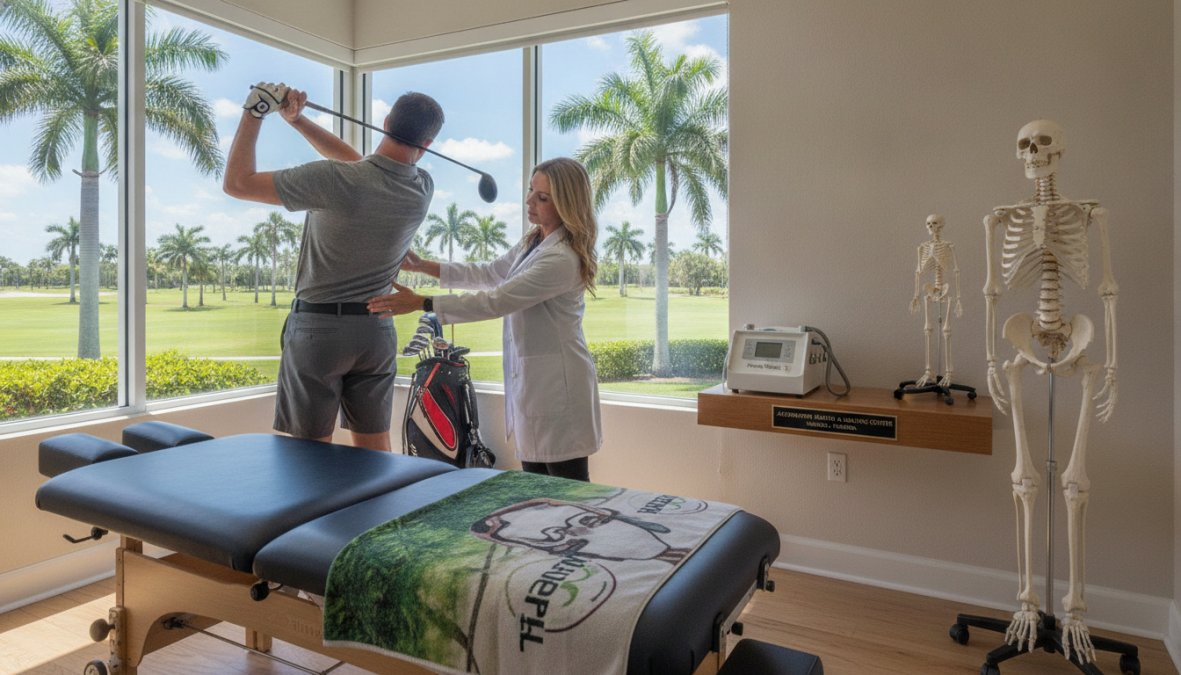
A chiropractor for golfers in naples florida distinguishes themselves from general practitioners through biomechanics assessment, evaluating your swing mechanics, identifying movement restrictions, and correlating those restrictions to pain or performance issues.
Golf-Specific Mobility Assessment Protocols
A specialized chiropractor uses specific tests to identify mobility restrictions relevant to golf:
- Hip internal rotation assessment: Restricted hip internal rotation forces compensatory lumbar rotation, creating lower back strain.
- Thoracic rotation test: Limited thoracic mobility reduces your ability to rotate your torso, forcing excess rotation through the lumbar spine.
- Shoulder external rotation range: Restricted external rotation limits your backswing arc and increases shoulder strain.
- Cervical rotation and extension: Neck mobility affects your ability to maintain a stable head position throughout the swing.
- Ankle dorsiflexion and plantarflexion: Ankle restrictions affect weight transfer and lower body mechanics.
These tests provide objective data about which specific movements are restricted, allowing targeted treatment rather than generic approaches.
Spinal Alignment and Hip Rotation Optimization
Hip rotation is the foundation of an efficient golf swing. The backswing should generate rotation primarily through the hips and thoracic spine, not the lumbar spine. If your hip internal rotation is restricted, your body compensates by increasing lumbar rotation, the primary mechanism of lower back injury in golfers.
Chiropractic adjustments restore proper spinal alignment and remove restrictions that limit hip mobility. Combined with corrective exercises targeting hip flexibility and stability, this creates lasting improvement. Many golfers find that after addressing hip and spinal alignment, their swing feels more powerful and consistent while pain decreases.
Golf Injury Treatment Naples FL: Advanced Therapeutic Modalities
Alternative Health & Healing Center combines traditional chiropractic adjustments with advanced technologies that accelerate healing and improve outcomes.
Piezo Wave 2 Technology and Acoustic Wave Therapy
Acoustic wave therapy uses focused sound waves to stimulate tissue healing, reduce inflammation, and break down scar tissue. For golfers, this technology is particularly effective for chronic tendinopathy, plantar fasciitis, soft tissue injuries that haven't responded to conventional treatment, and myofascial pain syndrome.
The Piezo Wave 2 system delivers acoustic waves that stimulate the body's natural healing response. Unlike corticosteroid injections or surgery, acoustic wave therapy addresses underlying tissue damage rather than masking symptoms. Treatment typically requires 3-6 sessions spaced one week apart.
Golfers report significant improvement in pain levels and functional capacity within 2-3 weeks of beginning acoustic wave therapy.
Applied Kinesiology and Corrective Exercise
Applied Kinesiology is a diagnostic and therapeutic system that evaluates muscle function, identifies imbalances, and prescribes corrective exercises. Rather than assuming all golfers with lower back pain need the same treatment, Applied Kinesiology identifies which specific muscles are weak, tight, or inhibited.
For example, a golfer with lower back pain might have inhibited glute muscles combined with overactive hip flexors. Applied Kinesiology identifies that strengthening the glutes and stretching the hip flexors addresses the root cause, preventing recurrence. This precision approach accelerates recovery and prevents chronic pain patterns from developing.
TPI Certified Chiropractor Naples: Sports Medicine Expertise
The Titleist Performance Institute (TPI) certification represents the gold standard for golf-specific biomechanics assessment and training. A TPI-certified professional has completed comprehensive training in golf swing mechanics, common movement restrictions in golfers, and how to assess and correct those restrictions.
Not every chiropractor in Naples holds TPI certification. Those who do have demonstrated commitment to understanding golf-specific biomechanics beyond general chiropractic education. When selecting a chiropractor for golfers in naples florida, TPI certification is a significant credential that indicates specialized expertise.
Post-Round Recovery Routines for Golfers
Preventing injury requires more than occasional chiropractic visits. Implementing a post-round recovery routine maintains improvements achieved during treatment and prevents pain from recurring.
Immediate post-round (within 30 minutes):
- Light walking or easy stretching to reduce muscle stiffness
- Foam rolling the hip flexors, IT band, and upper back (2-3 minutes each)
- Static stretching: hip flexor stretch, piriformis stretch, thoracic rotation stretch, shoulder external rotation stretch (hold each 30-45 seconds)
Later that evening:
- Ice any areas with acute inflammation (15-20 minutes)
- Continue stretching, focusing on areas that felt tight during the round
Next morning:
- Gentle mobility work: 10-minute routine targeting hip, thoracic, and shoulder mobility
- Light strengthening: focus on glutes and core stability
| Recovery Element | Timing | Duration | Frequency |
|---|---|---|---|
| Post-round stretching | Within 30 min | 10-15 min | After every round |
| Foam rolling | Evening | 10-15 min | Daily or every other day |
| Mobility work | Morning | 10 min | Daily |
| Strengthening exercises | Morning or evening | 15-20 min | 3-4x weekly |
| Chiropractic adjustments | As needed | 30-45 min | 2-4x monthly during season |
Consistency matters more than intensity. A 10-minute daily routine prevents most golf-related injuries more effectively than sporadic intensive treatment.
Chiropractic vs. Physical Therapy for Golf Injuries
Both chiropractors and physical therapists treat golf injuries, but their approaches differ. Chiropractic care emphasizes spinal alignment, joint mobility, and how restrictions create compensation patterns elsewhere. Chiropractors use adjustments to restore joint motion, soft tissue therapy to address muscular tightness, and corrective exercises to prevent recurrence.
Physical therapy emphasizes muscular strength, stability, and functional movement patterns. Physical therapists design exercise programs targeting specific weaknesses and create progressions that build strength and endurance.
The best outcomes often combine both approaches. A chiropractor addresses joint restrictions and alignment issues while a physical therapist builds strength and stability. If you must choose one, a chiropractor specializing in golf biomechanics addresses the root cause of most golf injuries.
Golf injuries don't have to end your season or force you to reduce your playing schedule. A chiropractor for golfers in naples florida who understands golf-specific biomechanics can identify the movement restrictions and alignment issues driving your pain, then address them with targeted adjustments, advanced therapies, and corrective exercises. Alternative Health & Healing Center combines specialized techniques including Applied Kinesiology and Piezo Wave 2 acoustic wave therapy to accelerate healing and prevent recurrence. If you're experiencing golf-related pain or want to improve your swing mechanics and performance, schedule a consultation to discover how specialized chiropractic care can transform your game and keep you playing pain-free.
Frequently Asked Questions
How can a chiropractor for golfers in Naples help improve my swing mechanics?
A specialized chiropractor for golfers uses golf-specific biomechanics assessment to identify restrictions in spinal alignment, hip rotation, and shoulder mobility that limit swing efficiency. Through spinal adjustments, corrective exercises, and mobility protocols, they restore the joint function and range of motion needed for a smoother, more powerful swing. Many golfers report improved consistency and distance after addressing these underlying movement restrictions.
What types of golf injuries do chiropractors treat?
Chiropractors treat common golf injuries including lower back pain from repetitive rotation, shoulder mobility issues affecting the backswing, elbow pain from impact stress, wrist strain, and hip tightness limiting rotation. They address both acute injuries and chronic conditions that develop from years of golfing. Using spinal adjustments, soft tissue therapy, and rehabilitation exercises, they target the musculoskeletal root causes rather than just symptoms.
How does chiropractic care compare to physical therapy for golf injury treatment in Naples?
Both chiropractic and physical therapy treat golf injuries effectively, but differ in focus. Chiropractors emphasize spinal alignment and joint function through adjustments and biomechanical correction, while physical therapists typically focus on muscle strengthening and rehabilitation exercises. Many golfers benefit from integrated care combining both approaches, chiropractic adjustments restore mobility, then physical therapy exercises maintain and strengthen those gains for long-term injury prevention.
What should I look for in a TPI certified chiropractor in Naples?
A TPI (Titleist Performance Institute) certified chiropractor has specialized training in golf-specific biomechanics and performance enhancement. Look for practitioners with credentials in sports chiropractic, experience treating golfers, and familiarity with golf swing mechanics. Verify they use advanced diagnostic tools, offer individualized treatment plans addressing your specific swing issues, and can integrate rehabilitation exercises tailored to golf performance, not just pain relief.
Can chiropractic care help prevent golf injuries before they happen?
Yes. Preventive chiropractic care identifies and corrects biomechanical imbalances, joint restrictions, and movement inefficiencies that typically lead to injury. Regular golf-specific mobility assessments, spinal adjustments, and corrective exercise programs maintain optimal joint function and swing mechanics. This proactive approach reduces injury risk, improves consistency, and keeps you playing pain-free throughout the season.