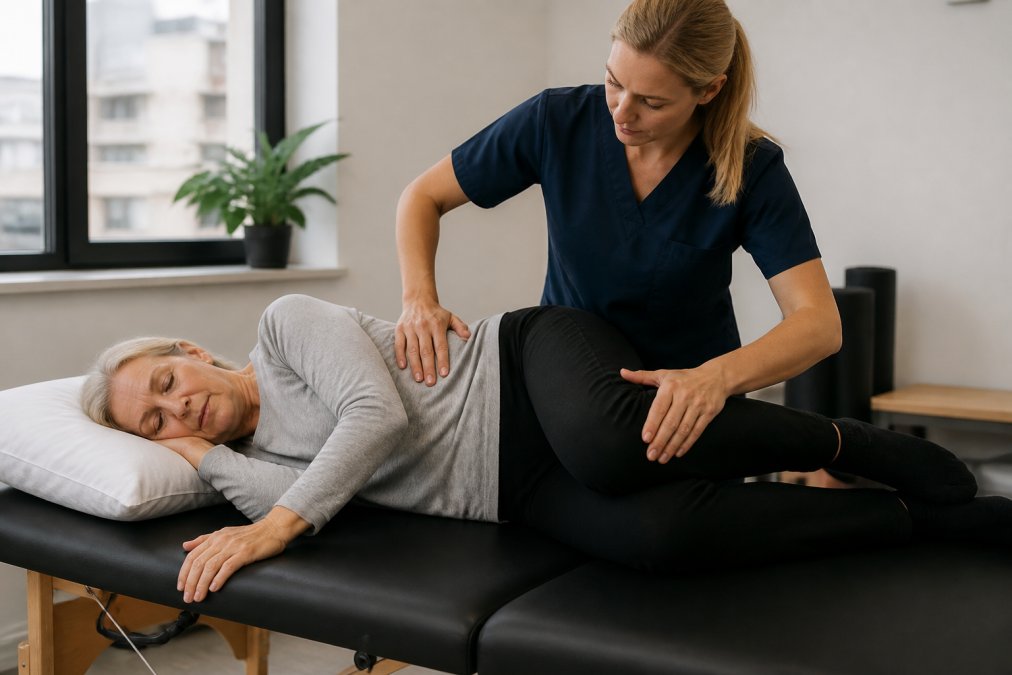
 listicle
Does Physical Therapy Work for Hip Pain? Evidence & Results
Table of Contents
- Does Physical Therapy Work for Hip Pain? The Evidence
- Common Causes of Hip Pain and How Physical Therapy Addresses Them
- When to See a Physical Therapist for Hip Pain
- Physical Therapy Exercises for Hip Pain That Deliver Results
- How Long Does Physical Therapy Take for Hip Pain?
- What to Expect During Your First Physical Therapy Session
- Home-Based vs. Clinic-Based Physical Therapy for Hip Recovery
- Can Physical Therapy Help You Avoid Hip Surgery?
- Frequently Asked Questions
Last Updated: August 18, 2026
Does Physical Therapy Work for Hip Pain? The Evidence
Physical therapy effectively treats hip pain, with research showing that conservative treatment resolves 70-80% of cases without surgery. Most people experience meaningful relief through targeted exercises, manual therapy, and activity modification. The key is matching the right approach to your specific condition, some patients improve within 2-3 weeks, while complex cases require 8-12 weeks of consistent work.
At Alternative Health & Healing Center, we've worked with countless patients dealing with hip pain from arthritis, bursitis, labral tears, and post-surgical recovery. The real value of physical therapy isn't just pain relief; it's restoring functional movement, improving joint stability, and preventing recurrence.
Common Causes of Hip Pain and How Physical Therapy Addresses Them
Hip pain stems from several distinct causes, each requiring a different therapeutic strategy. Hip flexor tightness from prolonged sitting shortens the iliopsoas muscle, pulling the pelvis forward and creating compensatory stress. Physical therapy addresses this through targeted stretching and strengthening of posterior chain muscles. A CoreStretch Stretching Tool provides deep, effective stretches for hip flexors, hamstrings, and glutes.
Gluteal muscle weakness forces the hip joint to stabilize itself, leading to pain and instability. Hip abductor strengthening through resistance exercises, using tools like the TheraBand Resistance Band Loop Set or RitFit Panther Home Hip Abductor and Adductor Machine, restores joint stability and reduces compensation patterns.
Hip joint osteoarthritis can't be reversed, but therapeutic exercise reduces pain by improving joint mobility, strengthening supporting muscles, and reducing inflammation. Labral tears and hip impingement require nuanced approaches focusing on improving hip joint mechanics and strengthening stabilizer muscles. Piriformis syndrome, where the piriformis muscle irritates the sciatic nerve, responds exceptionally well to physical therapy, typically resolving within 4-6 weeks.
When to See a Physical Therapist for Hip Pain
See a physical therapist when hip pain interferes with daily activities, persists beyond two weeks despite rest and over-the-counter pain management, or follows an injury or surgery. Early intervention is ideal, addressing movement dysfunction before it becomes ingrained prevents chronic pain and worsening conditions.
Seek immediate physical therapy if you've been diagnosed with hip osteoarthritis, labral tear, or bursitis. A qualified physical therapist will perform comprehensive assessment including gait analysis, range of motion testing, and functional movement evaluation to determine whether conservative treatment is appropriate.
Physical Therapy Exercises for Hip Pain That Deliver Results
The most effective programs combine hip abductor strengthening, range of motion work, and functional movement training.
Hip Abductor Strengthening and Stability Work
Hip abductors, primarily the gluteus medius and gluteus maximus, are the foundation of hip stability. Weak abductors create compensatory problems throughout the kinetic chain.
Side-lying hip abduction is the most basic and effective exercise. Lie on your side with your bottom leg bent, keep your top leg straight, and lift it 8-12 inches while maintaining neutral spine. Perform 15-20 repetitions per side, 3-4 times weekly. Progress by adding resistance bands or using a dedicated machine.
Clamshells target hip external rotators and upper glutes. Lie on your side with knees bent, heels together, and open your top knee toward the ceiling while keeping your pelvis stable. Perform 15-20 reps per side.
Single-leg stance improves hip stability dynamically. Stand on one leg for 30-60 seconds while maintaining a level pelvis. Progress by closing your eyes or standing on a foam pad.
Monster walks using a resistance band build hip abductor endurance. Step forward and laterally in a wide stance, maintaining tension on the band. Perform 10-15 steps in each direction.
Range of Motion and Stretching Routines
Hip joint stiffness accelerates pain and restricts functional movement. The 90/90 stretch targets the piriformis and external hip rotators. Lie on your back with one hip and knee bent to 90 degrees, then gently pull that knee toward your opposite shoulder. Hold for 30-45 seconds, 3 times per side.
Hip flexor stretches address iliopsoas tightness. Kneel on one knee with the other foot forward in a lunge position. Gently press your hips forward while keeping your spine neutral. Hold for 45-60 seconds, 3 times per side. A CoreStretch Stretching Tool provides deeper stretching through natural traction.
Supine hamstring stretches improve posterior chain flexibility. Lie on your back, loop a strap around one foot, and gently pull your leg toward your chest while keeping your knee slightly bent. Hold for 45-60 seconds.
Perform these stretches 5-7 days weekly, holding each for 45-60 seconds. Stretching is most effective when muscles are warm, after light activity or a warm shower.

Functional Movement and Gait Correction
Isolated exercises build strength and mobility, but functional movement training teaches your hip to work correctly during real-world activities.
Gait analysis identifies compensatory patterns. Many people with hip pain walk with a Trendelenburg gait, where the pelvis drops on the unsupported side. Physical therapy corrects this through mirror feedback and progressive weight-bearing exercises. A stationary bike provides low-impact functional training.
Step-ups and step-downs teach the hip to control eccentric loading. Start with a 4-6 inch step, step up while maintaining a level pelvis, then lower slowly. Perform 10-15 repetitions per leg.
Sit-to-stand training is foundational. Practice rising from a chair without using your arms, maintaining an upright torso, and controlling the descent. Perform 10-15 repetitions, 3-4 times weekly.
Walking on varied terrain challenges hip stability in ways flat ground doesn't. As pain improves, incorporate grass, inclines, and uneven surfaces into your routine.
How Long Does Physical Therapy Take for Hip Pain?
Most acute hip pain improves within 4-6 weeks of consistent physical therapy. Chronic conditions or post-surgical rehabilitation typically require 8-12 weeks. Improvement should be measurable and consistent, increased range of motion, reduced pain with specific movements, and improved strength within 3-4 weeks.
Most programs run 2-3 sessions weekly for the first 4-6 weeks, then transition to 1-2 sessions as you take greater responsibility for your home exercise program. Post-surgical patients follow structured timelines based on tissue healing phases. Hip arthroscopy typically requires 6-8 weeks; total hip replacement requires 12+ weeks.
What to Expect During Your First Physical Therapy Session
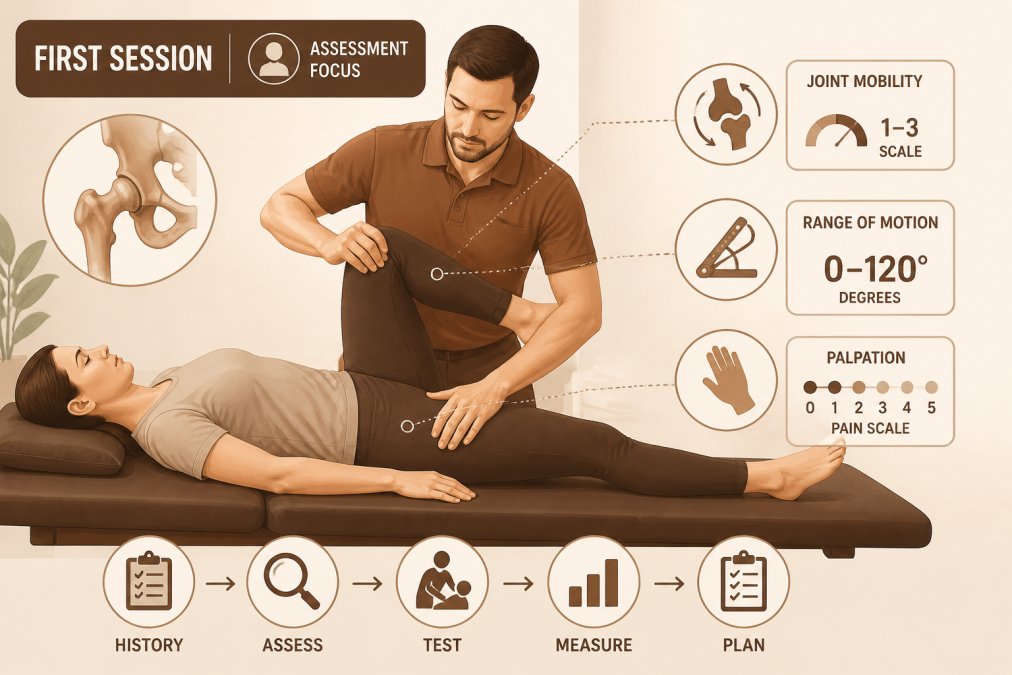
Your initial session is primarily assessment. The physical therapist will ask detailed questions about your pain history, what movements aggravate or improve your pain, your activity level, and your goals. They'll perform comprehensive physical examination including range of motion testing, strength assessment, palpation, and functional movement screening.
Expect gait analysis to identify compensatory patterns. Your therapist will assess pelvic alignment, hip rotation, hip flexor flexibility, and glute strength. They may perform specific tests like the FABER test (flexion-abduction-external rotation) or FADIR test (flexion-adduction-internal rotation) to identify pain sources.
Your therapist will explain findings, discuss whether physical therapy is appropriate, and outline a treatment plan including visit frequency, expected duration, and your home exercise program. The first session typically lasts 60 minutes with minimal treatment, mostly assessment and education.
Subsequent sessions follow a consistent structure: warm-up activity, manual therapy if needed, therapeutic exercise, and cool-down stretching.
Home-Based vs. Clinic-Based Physical Therapy for Hip Recovery
The most effective approach combines both: clinic-based sessions for assessment, manual therapy, and exercise progression, paired with a rigorous home exercise program.
Clinic-based physical therapy provides hands-on evaluation and treatment that home exercise can't replicate. Your therapist performs manual therapy techniques, joint mobilizations, soft tissue release, and myofascial decompression that reduce pain and improve tissue mobility. They provide real-time feedback on exercise form and progress your exercises systematically.
Home-based exercise is where transformation happens. Clinic visits typically occur 2-3 times weekly for 30-60 minutes. You have 165+ hours per week to reinforce improvements through home exercise. Patients who perform their home program consistently progress dramatically faster.
The optimal model: attend clinic sessions 2-3 times weekly for the first 4-6 weeks while learning your exercise program and receiving manual therapy. As pain decreases and strength improves, transition to 1-2 weekly sessions while maintaining your home program. Eventually, graduate to independent home exercise with periodic check-ins.
Some patients benefit from hybrid approaches: clinic-based sessions supplemented with telehealth check-ins. Your therapist can observe your home exercise form via video and adjust your program without requiring in-person visits.
Can Physical Therapy Help You Avoid Hip Surgery?
Physical therapy can help you avoid surgery in many cases. For conditions like hip flexor tightness, gluteal muscle weakness, bursitis, and mild hip impingement, physical therapy resolves symptoms in 70-80% of cases by addressing underlying biomechanical dysfunction.
Labral tears present a more complex picture. Some cause minimal symptoms and don't require surgery. Physical therapy can reduce pain and improve function by improving hip stability and reducing compensatory stress. However, if the tear is large, causes mechanical symptoms like locking or catching, or if conservative treatment fails after 8-12 weeks, surgery may be necessary.
Hip osteoarthritis can often be managed without surgery through physical therapy, weight management, and activity modification. Physical therapy doesn't reverse arthritis but improves joint mechanics, strengthens supporting muscles, and reduces pain significantly. Advanced arthritis with severe cartilage loss may eventually require hip replacement, but physical therapy typically delays surgery by years.
Early intervention is critical. Patients who address hip pain with physical therapy within weeks of onset have much better outcomes than those who wait months or years.
Alternative Health & Healing Center specializes in integrative approaches combining chiropractic care with Applied Kinesiology, soft tissue mobilization using advanced technology like the Piezo Wave 2, and manual therapy techniques. This comprehensive approach addresses not just the hip joint but the entire kinetic chain contributing to pain.
| Condition | Physical Therapy Success Rate | Typical Timeline | Surgery Risk |
|---|---|---|---|
| Hip flexor tightness | 85-90% | 4-8 weeks | Low |
| Gluteal weakness | 80-85% | 6-10 weeks | Low |
| Hip bursitis | 75-80% | 4-8 weeks | Low |
| Mild hip impingement | 70-75% | 8-12 weeks | Moderate |
| Labral tear (small) | 60-70% | 8-16 weeks | Moderate |
| Hip osteoarthritis (mild-moderate) | 65-75% | 8-12 weeks | Moderate |
| Piriformis syndrome | 80-85% | 4-6 weeks | Low |
The evidence overwhelmingly supports physical therapy as the first-line treatment for most hip pain conditions. Many people experience relief within weeks when they address underlying biomechanical dysfunction rather than just chasing symptom relief.
If you're dealing with hip pain affecting your quality of life, professional evaluation is the critical first step. Alternative Health & Healing Center offers comprehensive hip pain assessment and integrative treatment combining chiropractic care principles with advanced modalities and Applied Kinesiology expertise. Our team draws on nearly 40 years of clinical experience to identify the root cause of your pain and design a personalized treatment plan. Request an appointment today to begin your recovery.
Frequently Asked Questions
What exercises should I avoid if I have hip pain?
Avoid high-impact activities like running, jumping, or heavy lifting until cleared by a physical therapist. Skip exercises that cause sharp pain, such as deep lunges, high kicks, or movements that pinch the hip joint. Repetitive motions that aggravate your specific condition should also be modified. A physical therapist will assess your individual situation and provide a personalized list of movements to avoid during recovery. Pain is your body's signal, if an exercise hurts, stop and consult your therapist before continuing.
How long does physical therapy take for hip pain?
Most hip pain cases respond to physical therapy within 4 to 8 weeks of consistent treatment, though timelines vary. Acute injuries may improve faster, while chronic conditions like arthritis may require 8 to 12 weeks or longer. Frequency matters: typically 2 to 3 sessions per week yields better results than sporadic visits. Recovery also depends on your commitment to home exercises between sessions. Your physical therapist will reassess your progress regularly and adjust the timeline based on your functional improvements and pain reduction.
Is it better to rest or exercise a sore hip?
Complete rest can actually slow recovery and lead to stiffness and muscle weakness. The better approach is active rest: avoid movements that cause pain, but perform gentle, guided exercises that maintain mobility and strengthen supporting muscles. Physical therapy bridges this gap by prescribing therapeutic exercises that promote healing without re-injury. Early movement under professional guidance typically produces faster pain relief and functional restoration than prolonged immobilization. Your physical therapist will determine the right balance of activity and rest for your specific condition.
Can physical therapy prevent the need for hip surgery?
Yes, physical therapy successfully prevents surgery for many hip conditions, including bursitis, tendonitis, labral tears, and early-stage arthritis. Conservative treatment focusing on strengthening, mobility, and biomechanical correction addresses the root cause rather than just symptoms. Studies show that 70-80% of patients with hip impingement and similar conditions improve without surgery when they complete a structured physical therapy program. However, severe fractures, advanced arthritis, or significant structural damage may still require surgical intervention. A physical therapist and orthopedic specialist can assess whether your condition is a candidate for conservative care.
How does physical therapy address hip osteoarthritis?
Physical therapy manages osteoarthritis by reducing inflammation, improving joint mobility, and strengthening the muscles that stabilize and support the hip joint. Therapeutic exercises maintain cartilage nutrition through gentle movement, while manual therapy and soft tissue mobilization reduce pain and stiffness. Gait analysis corrects movement patterns that accelerate joint wear. Activity modification helps you stay active without overloading the joint. Although physical therapy cannot reverse arthritis damage, it significantly slows progression, improves function, and often delays or eliminates the need for joint replacement.