 How-to
How Do You Use Castor Oil Packs on Your Knees?
Last Updated: November 25, 2026
Quick Summary
To use castor oil packs on your knee, soak a flannel cloth in cold-pressed castor oil until saturated, lay it over the kneecap, cover it with plastic wrap, then add gentle warmth from a low-setting heating pad or warm towel. Keep sessions short and check your skin, and avoid sleeping with a pack on.
- Use about 2 to 3 tablespoons of cold-pressed castor oil for one knee-sized cloth.
- Choose a flannel or cotton cloth roughly 10 by 14 inches to wrap the joint.
- Patch test on your inner arm and wait 24 hours before first use.
- Keep heat on a low setting and never fall asleep with a heating pad on.
- Research on castor oil packs for knee pain is limited, so expect only modest, short-term comfort.
Table of Contents
- What a Castor Oil Pack Is and What Research Says About Knee Pain
- Materials You Need for a Castor Oil Pack
- How to Make a Castor Oil Pack for Your Knee
- How Long to Leave a Castor Oil Pack On
- Castor Oil Pack Safety and Precautions
- What to Expect After a Castor Oil Pack and Cleaning Your Supplies
- Deciding Whether to Book a Knee Evaluation at Alternative Health & Healing Center
- Frequently Asked Questions
What a Castor Oil Pack Is and What Research Says About Knee Pain
A castor oil pack is a cloth soaked in castor oil, placed on the skin and covered with heat. People use it to ease stiff, sore joints, including the knee. Many people with knee discomfort try castor oil packs at home as a simple, low-cost self-care step. A castor oil pack is one at-home option, and pairing it with other gentle ways to ease knee stiffness can broaden your self-care routine.
Research on castor oil packs for knee pain is limited. Most of what is said about them comes from anecdotal reports and general wellness guides rather than large clinical trials. Expect modest, short-term comfort at most, and do not expect the pack to repair joint damage. National Center for Complementary and Integrative Health overview of castor oil
A home pack can be a reasonable comfort measure, but persistent knee pain deserves a proper evaluation.
Materials You Need for a Castor Oil Pack
A knee pack works best when the cloth actually wraps the joint rather than sitting on top of it like a coaster. Gather these items before you start:
- Cold-pressed castor oil, about 2 to 3 tablespoons. That amount saturates a knee-sized cloth without dripping. If you are reusing a cloth that is already oiled, you usually need only 1 tablespoon to refresh it.
- Flannel or cotton cloth sized to the knee. Aim for a piece roughly 10 by 14 inches, large enough to cover the kneecap and wrap partway around the sides of the joint. Flannel holds oil better than thin cotton; an old flannel pillowcase or a dedicated pack cloth both work.
- A plastic wrap or waterproof barrier layer. This keeps oil from wicking into the heat source and into furniture. A cut-open gallon storage bag is a common stand-in.
- A heating pad on a low setting, or a warm damp towel. A moist towel holds heat longer than a dry one and is the gentler option for sensitive skin.
- An old towel or blanket to protect bedding, a couch, or a chair.
- A timer so you do not lose track of how long the pack has been on.
Use a cloth that is clean and dry before adding oil. Castor oil stains fabric, so set aside items you do not mind getting marked. Keep a separate cloth reserved for packs only, oil residue is hard to fully wash out, and a dedicated cloth makes reuse simpler.
Watch out: do not substitute a plastic bag that has touched food or chemicals, and do not use a cloth so large that it bunches under the knee and creates pressure points. If you also want to learn how to tape a knee for patellar tendonitis, the article walks through that self-care step.
The core supplies for a knee pack, with the amounts and sizes the article recommends:
| Item | Recommended value | Note |
|---|---|---|
| Cold-pressed castor oil | 2 to 3 tablespoons | 1 tablespoon to refresh a reused cloth |
| Flannel or cotton cloth | Roughly 10 by 14 inches | Flannel holds oil better than thin cotton |
| Heating pad or warm towel | Low setting | A moist towel holds heat longer |
| Patch test | 24 hours | Apply to inner arm before first use |
How to Make a Castor Oil Pack for Your Knee
Follow these steps to prepare the pack:
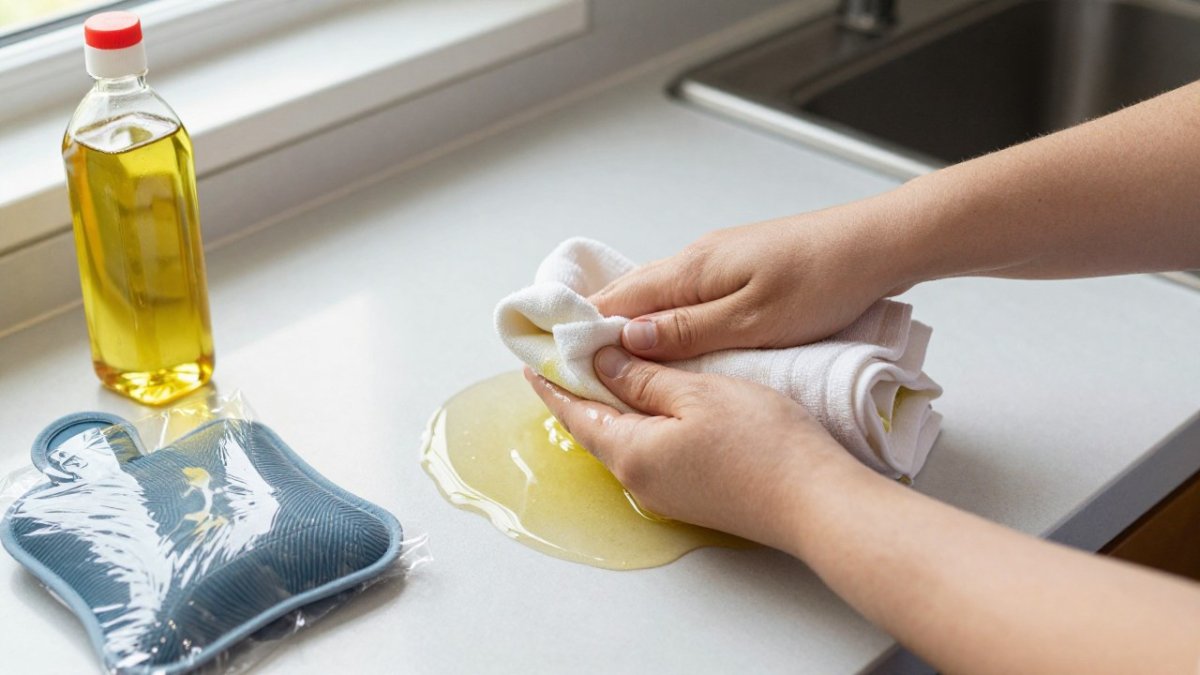
- Warm the castor oil slightly in a bowl set in warm water. It should feel warm, not hot.
- Soak the flannel in the oil until it is saturated but not dripping.
- Lay the cloth flat on the knee, covering the kneecap and the area around it.
- Cover the cloth with plastic wrap to keep oil from spreading.
- Add a heating pad or warm towel on top for gentle heat.
- Secure everything with the old towel so the pack stays in place.
A common mistake is using too much oil. A saturated cloth is enough; dripping oil makes a mess and does not add benefit.
Applying Heat Safely
Heat should feel comfortable, never painful. Test the heating pad on the back of your hand first. Keep it on a low setting, and never fall asleep with a heating pad on your knee. Stop right away if you notice burning, redness that lasts, or blistering.
How Long to Leave a Castor Oil Pack On
Many general wellness guides suggest leaving the pack on for a limited time, but no large trial establishes an ideal duration. No large trial establishes an ideal duration, so treat any suggested timing as a starting point and adjust to your skin.
The reason time matters is heat, not the oil. Prolonged warmth on one spot raises skin temperature, and skin that stays warm and damp for a long stretch is more prone to irritation and, with a heating pad, low-grade burns. The oil itself is generally well tolerated on intact skin; the risk climbs when heat and occlusion are combined for too long.
A practical approach:
- Start with a short session on a low heat setting and see how your skin responds.
- Check the skin during the first few sessions. Lift a corner of the cloth and look for redness that does not fade quickly.
- Keep sessions limited unless a clinician has told you otherwise. Longer is not better, and dripping oil plus extended heat mostly adds mess and risk.
- Remove sooner if your skin feels itchy, hot, or irritated, or if the pack shifts and concentrates heat on one spot.
Overnight use: sleeping with a pack is not advisable. You cannot monitor skin temperature or notice irritation while asleep, the heating pad can stay on far longer than intended, and oil leakage onto bedding is common. If you want to use a pack in the evening, do it while seated and awake, then remove it before bed.
Watch out: people with reduced sensation, from nerve damage, diabetes, or circulation problems, can be burned without feeling it, so keep heat low and duration short, or skip the heating pad entirely.
Castor Oil Pack Safety and Precautions
Castor oil is used on the skin, but it can cause irritation in some people. Keep these precautions in mind:
- Patch test first. Apply a small amount to your inner arm and wait 24 hours.
- Stop if irritated. Rash, itching, or swelling means you should stop using the pack.
- Keep oil away from eyes and broken skin. Do not apply over open wounds.
- Check with a clinician if you are pregnant, have diabetes, or have a skin condition.
- Never use castor oil internally. For a broader look at long-term safety considerations of other popular natural remedies, see long-term turmeric safety facts every adult should know. Ingesting it can cause serious digestive problems.
Watch out: heat can burn skin that has reduced sensation, so people with nerve damage should be especially careful.
Seek prompt medical care if your knee is swollen, hot, unable to bear weight, or if pain follows an injury. These signs need a clinician, not a home remedy.
What to Expect After a Castor Oil Pack and Cleaning Your Supplies
Some people feel a short period of warmth and comfort after removing the pack. Do not expect the pack to resolve chronic knee pain on its own.
Clean your skin gently with warm water and mild soap to remove oil. Wash the flannel separately in hot water. Castor oil can stain, so wash it on its own the first few times. Store the cloth and any leftover oil in a clean, sealed container. Replace cloths that smell rancid or look discolored.
Deciding Whether to Book a Knee Evaluation at Alternative Health & Healing Center
If your knee pain does not improve with home care, a professional evaluation can help find the cause. Alternative Health & Healing Center provides holistic and integrative chiropractic care, with nearly 40 years of practice experience and specialization in Applied Kinesiology. You can read more about those options on our Alternative Treatments for Joint Stiffness: Drug-Free Relief Options page.
Readers interested in advanced technology can learn more about PiezoWave 2 Therapy for Knee Pain. A clinician can explain whether it fits your situation.
If you are struggling with knee pain and want to find out what is causing it, consider scheduling a consultation. Contact Alternative Health & Healing Center to talk with a practitioner about your options.
Frequently Asked Questions
Does putting castor oil on knees help?
Evidence that castor oil packs relieve knee pain is limited. Most of what is known comes from small studies and anecdotal reports, not large clinical trials, so results vary from person to person. Some people find the warmth and the routine comforting, and that can make a knee feel better for a while. Think of a castor oil pack as a comfort measure rather than a treatment for the cause of knee pain. If knee pain is persistent, swelling is increasing, or the knee gives way, see a qualified health professional for an evaluation.
Can I leave castor oil on my knees overnight?
Overnight use is where most of the risk lies. A pack left on for many hours can keep the skin wet and warm, which raises the chance of irritation, redness, or a rash. Heat that sits on one spot for a long time can also burn skin, especially if you have reduced sensation or sleep deeply. For these reasons, most people should not leave a pack on overnight. Remove the pack, wipe the skin clean, and stop if you notice any stinging, blistering, or itching that does not settle.
When should you not use castor oil packs?
Do not use a castor oil pack on broken, infected, or very irritated skin, or over open wounds. Avoid it if you are allergic to castor oil or have had a reaction to it before. Stop and talk to a doctor before using one if you are pregnant, have diabetes or poor circulation, or have a condition that affects skin sensation. Never use a heating pad on a pack you have not checked for comfort first. If your knee is hot, red, swollen, or painful after an injury, get medical care rather than trying home treatment.
How do you know if a castor oil pack is working?
The best sign is whether your knee feels more comfortable over several weeks of consistent, safe use, along with whether your daily activities feel easier. Keep a short note of your pain level before and after each session. Relief that is small, short-lived, or absent is common and does not mean you did something wrong. If pain is not improving or is getting worse, that is a reason to schedule a professional evaluation instead of continuing the same routine.