 How-to
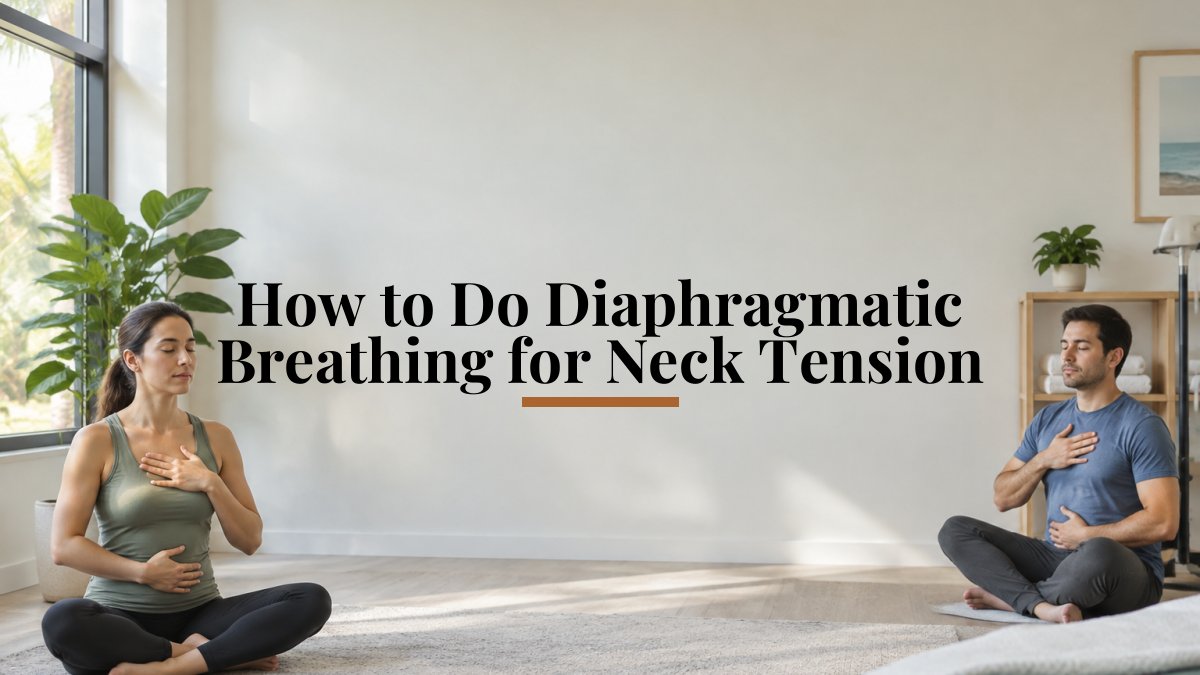
How to Do Diaphragmatic Breathing for Neck Tension
Quick Summary
Diaphragmatic breathing for neck tension means breathing slowly from the belly rather than the upper chest, which keeps the neck and shoulder muscles from working as breathing aids. Practice it lying down or seated for 5 to 10 minutes, with one hand on the chest and one on the belly. Many people find their neck feels looser over time.
- Place one hand on the upper chest and one on the belly, just below the ribs.
- Breathe in slowly through the nose for a count of four.
- Let the belly push the lower hand out while the upper hand stays almost still.
- Practice for 5 to 10 minutes, starting with 5 minutes once a day.
- Seek medical care promptly for neck pain with numbness, weakness, or trouble swallowing.
Table of Contents
- How Breathing Mechanics Affect Neck and Shoulder Tension
- Diaphragmatic Breathing Exercises for Neck Tension: Step-by-Step Instructions
- Belly Breathing vs Chest Breathing: What Changes in Your Neck
- From Supported Belly Breathing to Comfortable 360-Degree Breathing
- How Many Minutes a Day Should You Do Diaphragmatic Breathing?
- Troubleshooting Neck Tension and Diaphragmatic Breathing Side Effects
- Booking a Posture and Breathing Assessment at Alternative Health & Healing Center
- Frequently Asked Questions
Diaphragmatic breathing for neck tension is one of the simplest things you can practice at home, and it often gets overlooked when people are chasing relief for stiff, aching shoulders. Neck and shoulder tension can be linked to how a person breathes every day. The good news is that slow, controlled breathing from the belly, rather than the upper chest, can ease that load and help the neck muscles let go.
Neck and shoulder tension often comes from the muscles you use to breathe. When people breathe high in the chest, the neck and shoulder muscles work harder than they should. Over time, that extra effort can leave the area sore and tight. Learning to breathe with the diaphragm shifts the work back to the larger muscles of the core, where it belongs.
How Breathing Mechanics Affect Neck and Shoulder Tension
Breathing is not only about the lungs. The diaphragm is a dome-shaped muscle under the lungs, and it does most of the work in a calm, relaxed breath. When it flattens and descends, the belly rises and the ribs widen. When it relaxes, air leaves the lungs.
Accessory breathing muscles include the neck and upper shoulder muscles. These muscles are meant to help only when you need extra air, such as during exercise. When you breathe mostly with them, every breath pulls on the neck and shoulders.
Here is what that looks like in daily life:
- Shoulders lift toward the ears with each inhale
- The neck feels stiff or tired by the afternoon
- Breaths feel short, even when you are sitting still
- Tension builds during stress, long meetings or screen time
Shifting to diaphragmatic breathing gives those smaller muscles a rest. Some people find their neck feels looser once they make this change, though results differ from person to person.
Watch for symptoms that need prompt medical care. Sudden neck pain with numbness, weakness, trouble swallowing, chest pain or shortness of breath should be checked by a doctor right away.
Diaphragmatic Breathing Exercises for Neck Tension: Step-by-Step Instructions
The basic practice is simple. Give yourself 5 to 10 minutes in a quiet space, and go slowly. Do not force a deep breath.
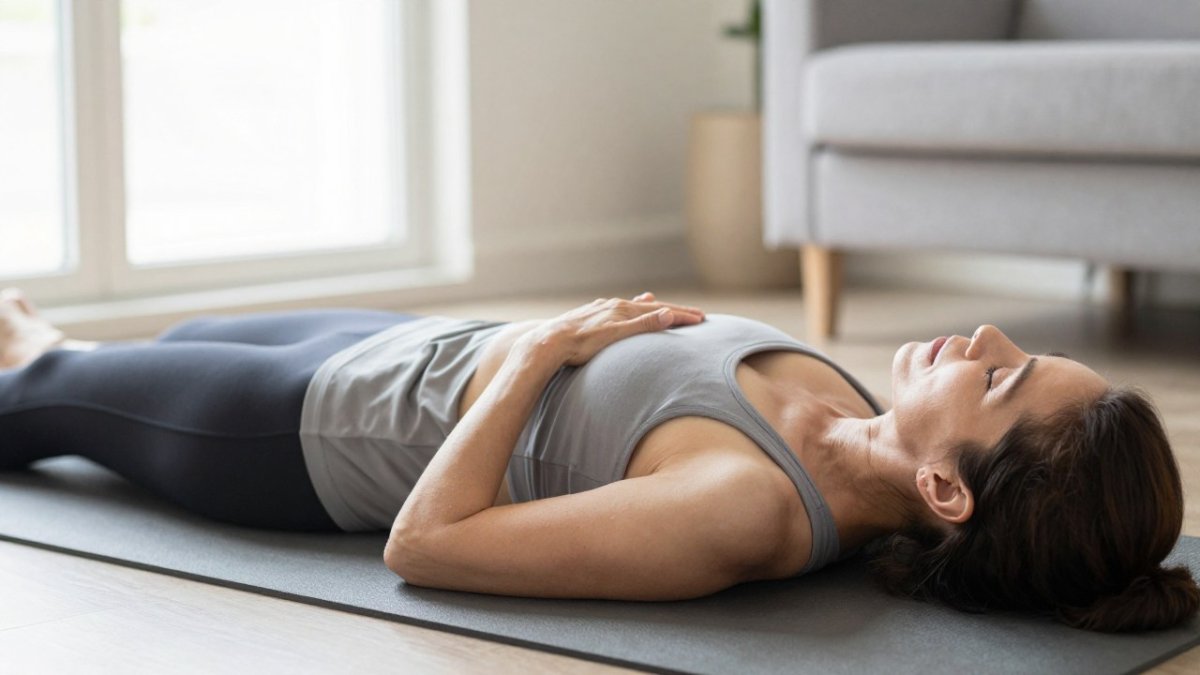
Starting Position: Lying on Your Back or Seated
You can begin in either position:
- Lying on your back: Rest on a firm surface with your knees bent and a small pillow under your head. This position takes weight off the neck and makes it easier to feel the belly move.
- Seated: Sit tall in a chair with both feet flat on the floor. Let your shoulders drop and keep your spine relaxed rather than rigid.
Most people find lying down easiest at first. Move to a seated position once the breath feels natural.
Hand Placement, Inhale and Exhale
- Place one hand on your upper chest and the other on your belly, just below the ribs.
- Breathe in slowly through your nose for a count of four.
- Let your belly push the lower hand outward. The upper hand should stay almost still.
- Breathe out slowly through your mouth or nose for a count of four to six.
- Let the belly fall as the air leaves. Keep the chest and shoulders relaxed.
- Repeat for 5 to 10 minutes.
Stop if you feel dizzy or lightheaded, and return to normal breathing.
Belly Breathing vs Chest Breathing: What Changes in Your Neck
Chest breathing and belly breathing feel very different in the neck. With chest breathing, the collarbones rise, the shoulders lift and the neck muscles tighten with each inhale. With belly breathing, the upper body stays quiet, and the neck can settle.
A simple way to compare them:
| Feature | Chest Breathing | Belly Breathing |
|---|---|---|
| Main moving area | Upper chest, shoulders | Belly, lower ribs |
| Neck muscles | Work hard on each breath | Stay mostly relaxed |
| Typical feel | Short, quick, tense | Slow, full, calm |
| Best used for | Brief bursts of effort | Daily rest and recovery |
Many people fall into chest breathing without noticing, especially when stressed or sitting at a desk. Gently placing a hand on the belly is a quick way to check your pattern during the day.
From Supported Belly Breathing to Comfortable 360-Degree Breathing
Progress in stages, and use a simple rule to decide when to move on: advance only when you can complete a full session in the current position with the upper chest and shoulders staying quiet and no increase in neck tension afterward.
Stage 1, Supported belly breathing (supine). Lie on your back with knees bent and a small pillow under the head. One hand on the chest, one on the belly. Practice 5 minutes once a day.
Stage 2, Side-lying breathing. Lie on your side with a pillow between the knees and one under the head to keep the neck neutral.
Stage 3, Seated breathing. Sit with the back supported, feet flat, and hands resting on the lower ribs. Practicing this supported position can make it easier to notice when your shoulders begin to tense, a useful cue to pair with other safe steps for neck comfort from Strudwick Chiropractic.
Stage 4, 360-degree breathing. Stay seated or supine and aim for expansion in front, sides, and back of the lower rib cage, imagine a band around your middle widening in all directions.
Stage 5, Breathing during daily activity. Once 360-degree breathing is easy at rest, practice three slow breaths before a meeting, at a red light, or when you notice the shoulders creeping up. This is where the pattern starts to replace chest breathing automatically.
Adaptations when lying down is not an option: use a recliner or a bed with the head elevated about 30 degrees, or sit in a firm chair with a lumbar support.
Watch out: pushing the belly out hard to prove the diaphragm is working recruits the abdominal wall and can pull on the neck. Let the belly rise as a result of the breath, not as a muscular effort.
If a stage brings back neck tension, drop back one stage for a few days rather than pushing through.
How Many Minutes a Day Should You Do Diaphragmatic Breathing?
For most people, a practical starting routine is 5 minutes, once or twice a day. Many find it helpful to pair the practice with a daily habit, such as after waking up or before bed.
A simple progression looks like this:
- Week 1: 5 minutes, once a day, lying down
- Week 2: 5 minutes, twice a day, lying or seated
- Week 3 and beyond: 10 minutes, once or twice a day, seated during the day
Short, regular sessions usually work better than one long session. Results vary, so treat these numbers as a starting point rather than a guarantee. A qualified healthcare professional can help you adjust the routine to your body.
Recommended daily practice length by week
Troubleshooting Neck Tension and Diaphragmatic Breathing Side Effects
A common pattern is that neck tension feels worse for the first few sessions, not better. That reaction is usually mechanical, not a sign the exercise is wrong for you. When the diaphragm does not yet do most of the work, the neck and upper shoulder muscles compensate by bracing on each inhale.
Work through these adjustments in order, and change only one at a time so you can tell what helped:
- Shrink the breath. Aim for a soft, quiet inhale that fills roughly half of what feels like a full breath. A breath you can hear is usually too big and recruits the neck.
- Slow the count, not the volume. Keep the inhale at a comfortable 3 to 4 seconds and lengthen the exhale to 5 or 6 seconds. Longer exhales tend to settle the nervous system without demanding more from the neck.
- Take the shoulders out of the job. Let them rest heavy rather than holding them still. Holding a shoulder down is still work.
- Shorten the session. Drop to 2 to 3 minutes and build back up over a week or two.
- Change position. If lying on your back makes the neck feel guarded, try side-lying with a pillow between the knees, or sit with your back supported and feet flat.
- Check the head and jaw. A pillow that pushes the chin toward the chest, or a clenched jaw, keeps the neck flexors active. Keep the chin level and let the jaw stay soft.
Watch out: if you feel the collarbones lift or the shoulders rise on each inhale, you have drifted back into chest breathing, stop, exhale fully, and restart with a smaller breath.
When to stop the practice for the day: dizziness, lightheadedness, tingling in the hands or around the mouth, or a headache that builds during the session. These usually mean you are breathing too fast or too deeply. Return to normal breathing and try again the next day with a smaller breath.
When to seek an assessment: neck pain that radiates into the arm, numbness or weakness in the hand, trouble swallowing, unsteadiness, or neck pain that follows an injury. Chest pain, shortness of breath at rest, or palpitations should be evaluated by a doctor promptly rather than worked on with breathing drills. You can also explore natural recovery options for musculoskeletal discomfort for broader support alongside your breathing practice.
Avoid breath holds and forceful belly pushes while you are troubleshooting. Both raise demand on the accessory muscles and tend to recreate the pattern you are trying to change.
Booking a Posture and Breathing Assessment at Alternative Health & Healing Center
If your neck tension keeps returning despite regular breathing practice, a professional assessment can help find other causes. At Alternative Health & Healing Center, Dr. Paul Finucan, DC, has over 40 years of experience, and the team uses an integrative approach that combines chiropractic care with multiple therapeutic modalities. Book a posture and breathing assessment to talk through your symptoms and next steps.
For broader options beyond breathing work, you can also read about non-invasive therapy for shoulder tension and simple stretches for desk-related muscle tension.
Frequently Asked Questions
How many minutes a day should you do diaphragmatic breathing?
Most people start with five to ten minutes once or twice a day, then build up gradually as the breathing feels easy. Short, regular sessions tend to be more useful than one long session done rarely. Stop if you feel lightheaded or your neck tightens noticeably, and reduce the time or the intensity. A licensed clinician can help you set a routine that fits your neck pain, your other health conditions and your daily schedule.
Can diaphragmatic breathing cause side effects?
For most people, slow belly breathing is gentle and well tolerated. Some people feel dizziness, lightheadedness, shortness of breath or increased tension, especially when they breathe forcefully or hold their breath. If you have heart, lung or breathing conditions, or if your neck pain comes with numbness, weakness or pain that radiates down an arm, talk with a qualified healthcare professional before starting. Stop any exercise that causes sharp pain or symptoms that worry you.
What is the difference between belly breathing and chest breathing?
Belly breathing, also called diaphragmatic breathing, uses the diaphragm to draw air deep into the lungs so the abdomen rises and the ribs expand gently. Chest breathing is shallow and relies on the upper chest, neck and shoulder muscles, which can keep those areas working even at rest. Shifting toward belly breathing often helps the neck and shoulders relax, though results vary between individuals.
Can breathing exercises for neck pain help with long-term symptoms?
Breathing exercises can support relaxation and may ease the muscle tension that often accompanies neck pain, but they are rarely a complete answer on their own. Research on diaphragmatic breathing for neck pain is limited, so expectations should be realistic. Combining breathing practice with posture changes, gentle movement and an individual evaluation from a qualified provider gives the best chance of meaningful improvement.