 How-to
Natural Support for Back Pain Recovery That Works
Last Updated: November 18, 2026
Quick Summary
Natural support for back pain recovery works best as a staged process: physical remedies like heat, ice, and gentle walking first, then low-impact movement, then strength work. Most acute lower back pain improves noticeably within two to six weeks, and adding activity in small steps prevents setbacks.
- Use heat for 15 to 20 minutes at a time and ice for 10 to 15 minutes in the first 48 hours.
- Gentle movement beats bed rest; take short walks every few hours to keep stiff joints from locking up.
- Add activity in small steps during rebuilding, and back off if pain climbs again.
- Change sitting position every 30 minutes; standing up briefly beats holding perfect posture for an hour.
- Call 911 for loss of bladder or bowel control, saddle numbness, or worsening leg weakness.
Table of Contents
- Natural Support for Back Pain Recovery: What Actually Helps
- Natural Remedies for Back Pain and Inflammation
- Lower Back Pain Recovery Time: What to Expect Week by Week
- Back Pain Exercises for Recovery: A Safe Progression
- The Best Sitting Position for Lower Back Pain
- Red Flags: When Self-Care Is Not Enough
- Building Your Personalized Back Pain Recovery Plan
- Frequently Asked Questions
Natural Support for Back Pain Recovery: What Actually Helps
Natural support for back pain recovery works best when you treat it as a staged process, not a single remedy. Most people recover from acute lower back pain within a few weeks using conservative care at home. As recovery moves beyond the initial phase, natural metabolic support can complement conservative care alongside gradual movement and other habits that help the body heal.
Back pain recovery is the process of reducing pain, restoring movement, and rebuilding strength after a back injury or flare-up. It rarely follows a straight line. Some days feel better than others, and that is normal.
Below, we break down what actually helps at each stage, what to skip, and when to call a professional.
Natural Remedies for Back Pain and Inflammation
Natural remedies for back pain and inflammation fall into three groups: physical, dietary, and hands-on. Each has a realistic role, a typical time to effect, and limits. Below is an evidence-graded summary so you can tell established approaches from uncertain ones.
Physical remedies are the first line for most people and have the strongest support for acute flare-ups:
- Heat therapy can relax tight muscles and improve comfort. Use a heating pad or warm shower for 15 to 20 minutes at a time, a few times a day. Relief is often felt within minutes, but the effect is usually temporary.
- Cold therapy calms fresh inflammation and numbs sore tissue. Ice the area for 10 to 15 minutes at a time in the first 48 hours after an injury, with a cloth between the ice and skin. Never ice for more than 20 minutes at once.
- Gentle movement beats bed rest. Short walks every few hours keep stiff joints from locking up and are among the best-supported self-care steps for acute low back pain.
- Topical capsaicin cream is sometimes used for surface soreness. Expect a warming or burning sensation; wash hands after applying and keep it away from eyes and broken skin.
Dietary support may help over time, but the evidence is mixed and effects are modest:
- Turmeric (curcumin) is a spice that is often discussed for its possible anti-inflammatory properties. GI upset is a reported side effect in some people.
- Ginger has modest evidence for reducing muscle soreness and may help with nausea if you take anti-inflammatory medication.
- Tart cherry juice and other polyphenol-rich foods are popular for recovery; benefits are small and best framed as supporting a generally anti-inflammatory eating pattern rather than as a treatment.
- Omega-3 fatty acids from fish oil are a supplement some people ask about. Check with your doctor before taking them, especially if you take anticoagulants.
- Vitamin D and magnesium are worth checking if your diet is limited or you have known deficiency; correcting a deficiency is different from taking them as a pain remedy.
Hands-on therapies include massage, acupuncture, and chiropractic adjustment. Some people find these helpful for short-term comfort and mobility, and results vary from person to person.
Realistic expectations by remedy:
| Remedy | Likely benefit | Time to effect | Limitations |
|---|---|---|---|
| Heat | Comfort, muscle relaxation | Minutes | Temporary; avoid on numb skin |
| Cold | Numbing, early inflammation | Minutes | Not for stiff, chronic pain |
| Walking | Function, stiffness | Days | Start short; build gradually |
| Turmeric/curcumin | Modest soreness support | Weeks | GI upset; interactions |
| Fish oil | General inflammation support | Weeks | Blood-thinning at high doses |
| Massage | Short-term relief, mobility | Same day | Temporary; not a cure |
| Acupuncture | Short-term pain relief | Days to weeks | Variable response |
| Chiropractic | Short-term mobility | Days | Avoid with certain red flags |
Watch out: supplements can interact with blood thinners, diabetes medication, and blood pressure drugs, and topical products can irritate skin. Check with your doctor or pharmacist before starting anything new, especially if you take prescription medication or have a chronic condition. For a closer look at which options have the most support, see our guide to natural anti-inflammatory supplements for spinal health.
Lower Back Pain Recovery Time: What to Expect Week by Week
Most acute lower back pain improves noticeably within two to six weeks. Chronic pain and nerve-related symptoms often take longer and need a different plan.
Here is a realistic timeline:
| Phase | Typical Timeframe | What to Expect |
|---|---|---|
| Acute | Days 1-7 | Sharp pain, muscle guarding, limited movement |
| Early recovery | Weeks 1-3 | Pain eases, walking gets easier, stiffness remains |
| Rebuilding | Weeks 3-8 | Strength and mobility return with steady exercise |
| Prevention | Week 8 onward | Focus shifts to posture, core strength, recurrence |
A common mistake is rushing the rebuilding phase. Pain fading does not mean tissues are fully healed. Add activity in small steps, and back off if pain climbs again.
Back Pain Exercises for Recovery: A Safe Progression
Exercise is one of the most reliable tools for back pain recovery, but the type and timing matter. Start with gentle mobility work, then add low-impact activity, then build strength.
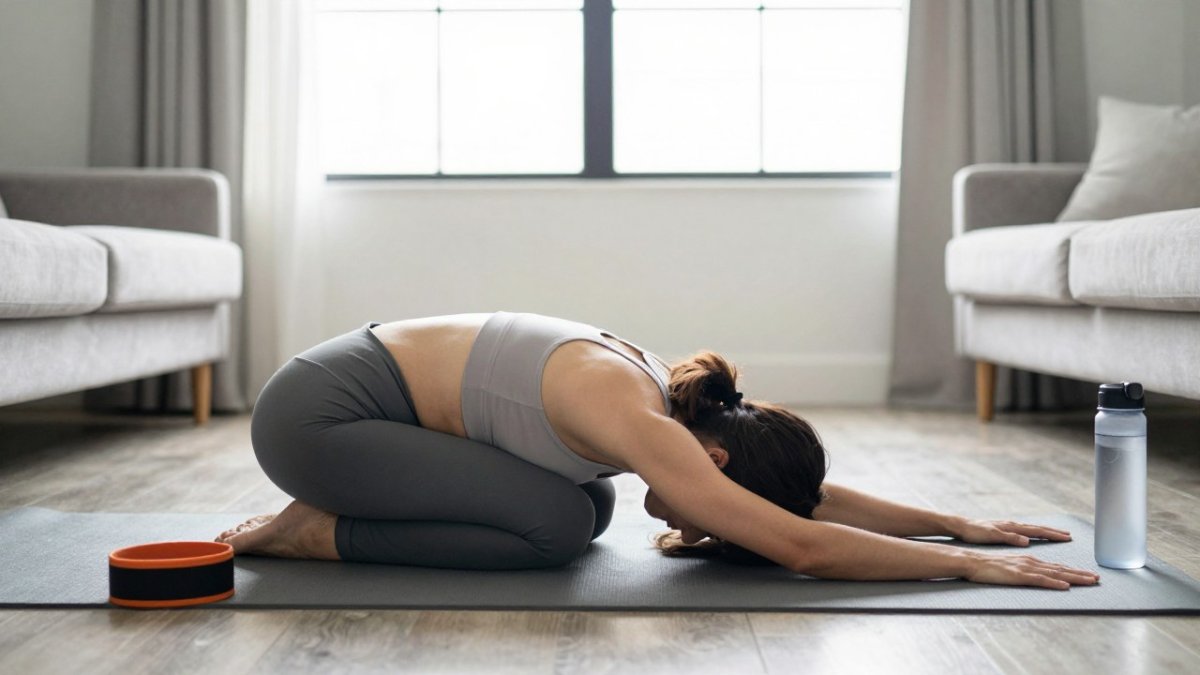
A safe progression looks like this:
- Mobility first. Try pelvic tilts, knee-to-chest stretches, and gentle cat-cow motions.
- Add low-impact movement. Walking, swimming, and cycling build endurance without jarring the spine.
- Build strength. Add core work and hip exercises once pain is stable.
- Include mind-body options. Yoga and tai chi support flexibility, balance, and confidence in movement.
Stop any exercise that sends sharp pain down the leg. Physical therapy helps prevent recurring back pain by correcting the patterns that caused it in the first place; our article on preventing recurring back pain with physical therapy explains how that works.
The Best Sitting Position for Lower Back Pain
The best sitting position for lower back pain keeps your feet flat, knees level with your hips, and your lower back supported. Good posture reduces strain, but no single position is perfect forever.
Set up your chair and desk like this:
- Feet flat on the floor, or on a footrest
- Hips slightly higher than your knees
- A small cushion or rolled towel behind your lower back
- Screen at eye level, elbows near 90 degrees
Change position every 30 minutes. Standing up briefly beats holding perfect posture for an hour.
Sleeping posture matters too. Side sleeping with a pillow between the knees keeps the spine neutral. Back sleeping with a pillow under the knees works well for many people. Our guide on how to sleep with chronic back pain covers pillow setups in more detail.
Red Flags: When Self-Care Is Not Enough
Some symptoms need medical attention right away, not home remedies. The list below is organized by urgency so you know whether to call emergency services, contact a clinician the same day, or book a routine visit.
Call 911 or go to an emergency department immediately if you notice:
- Loss of bladder or bowel control, or inability to urinate
- Numbness in the groin, inner thighs, or saddle area (the area that would touch a bike seat)
- Weakness in one or both legs that is getting worse, or new foot drop
- Back pain after a significant fall, car accident, or other trauma
- Back pain with fever, chills, or unexplained weight loss
- Severe pain that is new and unlike anything you have felt before
These signs can point to serious conditions such as cauda equina syndrome, fracture, or infection that require urgent evaluation. Do not wait them out, and do not try to treat them with home remedies.
Contact a clinician within 24 to 48 hours if you have:
- Pain that radiates below the knee, especially with numbness, tingling, or weakness
- Pain that has not improved after two to three weeks of self-care
- Pain that keeps returning after each recovery
- A history of cancer, osteoporosis, or long-term steroid use with new back pain
- Pain that wakes you from sleep or is worse at rest
Book a routine visit if:
- Pain is mild but has lingered for more than four to six weeks
- You keep modifying activities to avoid pain
- You want a plan for preventing recurrence
Which clinician to contact depends on the pattern. A primary care clinician is a reasonable first call for most people and can order imaging or refer you.
For pain that lingers beyond a few weeks, or keeps returning, a professional evaluation makes sense. If you are looking for a trusted chiropractor in the area, an exam is the right first step before any treatment plan.
Alternative Health & Healing Center in Naples, Florida, provides integrative chiropractic care, including Applied Kinesiology and the Piezo Wave 2 technology, for musculoskeletal and nerve pain.
Building Your Personalized Back Pain Recovery Plan
A personalized plan usually works better than a generic list of tips. Your cause, symptoms, and daily demands should shape what you do.
Use this checklist to build yours:
- Identify your likely trigger: lifting, sitting, sports, or an old injury
- Match your phase: acute, rebuilding, or prevention
- Pick two physical remedies to start (heat or ice, plus walking)
- Add one dietary support if your doctor approves it
- Schedule movement breaks every 30 minutes during the day
- Track pain daily on a simple 1-10 scale
- Set a review point at two weeks; if no better, get evaluated
Measuring recovery matters. Note what you can do now that you could not do last week. That progress tells you more than any single pain score. For the full range of non-surgical options, explore our overview of non-invasive back pain treatments.
Back pain that keeps coming back is a signal, not a life sentence. If self-care has stalled or the pain keeps returning, we can help you find the root cause instead of chasing symptoms. At Alternative Health & Healing Center, our team offers Applied Kinesiology, Piezo Wave 2 therapy, and a full range of integrative treatments built around your specific case.
Frequently Asked Questions
What is the fastest way to heal a lower back strain?
Most lower back strains improve fastest with early, gentle movement rather than bed rest. In the first 48 hours, short walks and light activity help maintain blood flow, while heat therapy can ease muscle tightness. Avoid heavy lifting and prolonged sitting. Over-the-counter pain relievers may help you stay mobile, but check with a clinician first. If pain does not begin easing within a week or worsens, seek an evaluation. Recovery timelines vary by cause and severity, so a personalized assessment matters more than any single remedy.
Which natural remedies may help with back pain and inflammation?
Evidence varies by remedy. Heat and cold therapy, gentle exercise, and massage have reasonable support for short-term relief. Some people ask about turmeric, ginger, and fish oil, which can interact with blood thinners. Always discuss supplements with a clinician before starting, especially if you take prescription medication or have a chronic condition. Treat these as supportive tools, not replacements for proper care.
How long does it take to recover from a pulled back muscle?
Recovery from a pulled back muscle varies, and many people find that symptoms ease gradually over the coming weeks. Acute strains often resolve faster than chronic pain patterns. Staying gently active, using heat, and avoiding prolonged bed rest support recovery. If pain lasts beyond six weeks, radiates down the leg, or comes with numbness or weakness, it is time to see a qualified professional for a proper evaluation rather than continuing self-care alone.
When should I see a doctor for back pain?
Seek care promptly if you have numbness or weakness in the legs, loss of bladder or bowel control, unexplained weight loss, fever, or pain following a fall or trauma. These are red flags that need urgent evaluation. Also see a clinician if pain lasts more than a few weeks despite self-care, keeps you from daily activities, or wakes you at night. For persistent or complex cases, a professional evaluation can help identify underlying causes.