 How-to
How to Sleep with Chronic Back Pain
Last Updated: November 1, 2026
Quick Summary
To sleep with chronic back pain, support your spine's natural curves by side sleeping with a pillow between slightly bent knees or back sleeping with a pillow under the knees. Keep your hips and knees aligned, use one firm head pillow, and avoid stomach sleeping, which arches your lower back.
- Side sleeping with a pillow between the knees stops your top leg from twisting your lumbar spine.
- Back sleeping with a pillow under the knees lets the lower back settle into its natural curve.
- Apply heat for 15 to 20 minutes about 45 minutes before bed to relax guarded muscles.
- Practice slow breathing for five minutes, four seconds in and six seconds out.
- Medium-firm mattresses tend to work well for most people with low back pain.
Table of Contents
- Why Back Pain Worsens at Night and How to Break the Cycle
- The Best Sleeping Position for Lower Back Pain
- Pillow Placement for Back Pain: Supporting the Spine at Every Angle
- Back Pain When Lying Down: Positions to Avoid or Modify
- Nighttime Back Pain Relief: A Bedtime Routine for Chronic Pain
- Choosing a Supportive Mattress and Adjusting Your Sleep Posture
- When Nighttime Back Pain Needs Medical Assessment
- Request an Appointment to Personalize Your Relief Plan
- Frequently Asked Questions
Why Back Pain Worsens at Night and How to Break the Cycle
If you're wondering how to sleep with chronic back pain, the short answer is this: support your spine's natural curves, keep your hips and knees aligned, and stop fighting positions that twist your lower back.
Here's the cycle: pain keeps you from getting comfortable, poor sleep makes you more sensitive to pain, and the next night is worse. Breaking that loop starts with your setup before you lie down.
Daytime posture feeds nighttime pain too. Daytime posture can also affect nighttime pain, so an ergonomic home office setup is worth considering.
The Best Sleeping Position for Lower Back Pain
The best sleeping position for lower back pain is one that keeps your spine in neutral alignment while taking pressure off the lumbar spine.
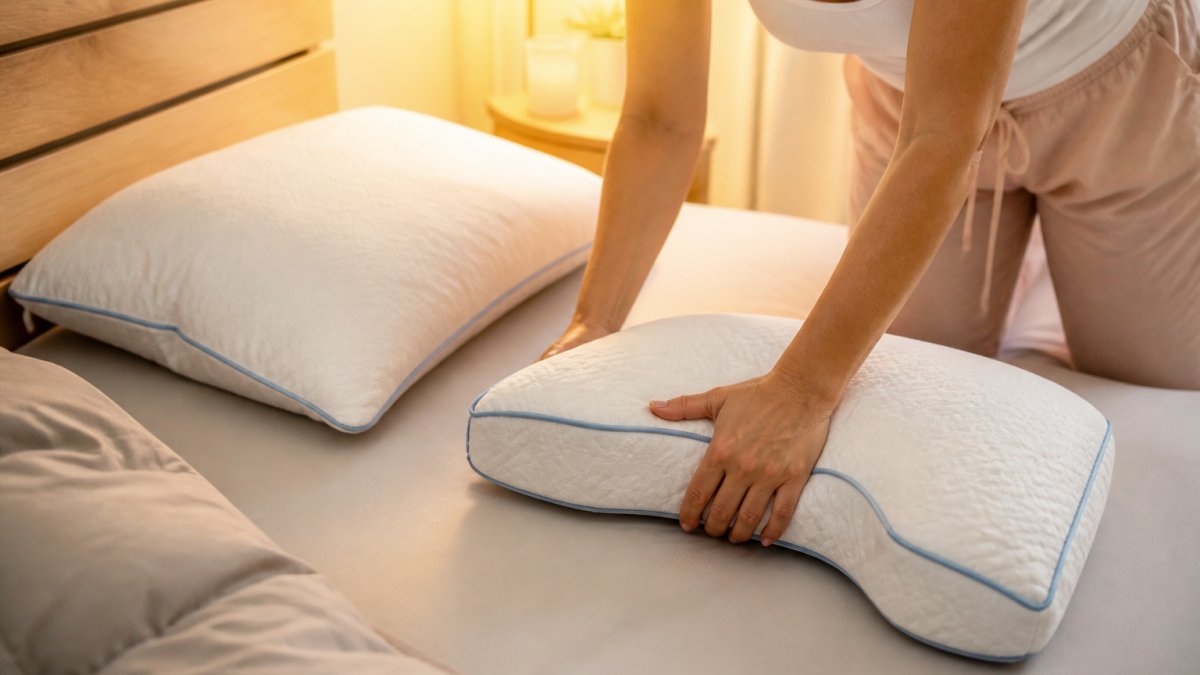
Side Sleeping with a Slight Knee Bend
Side sleeping works because it keeps the natural curve of the spine intact. The trick is the knee bend. Pull your knees up slightly and place a pillow between the knees.
Keep your head pillow firm enough to fill the gap between your neck and the mattress. If your head drops below your shoulder line, your spine bends sideways all night.
Back Sleeping with a Pillow Under the Knees
Back sleeping is the most spine-friendly option for many people with low back pain. Lying flat can flatten the lumbar curve, though. A pillow under the knees fixes that. It lifts the legs slightly and lets the lower back settle into its natural curve.
Skip the stack of head pillows. One supportive pillow keeps your neck neutral without pushing your chin toward your chest.
Pillow Placement for Back Pain: Supporting the Spine at Every Angle
Pillow placement for back pain matters as much as your sleeping position. A pillow in the wrong spot creates pressure; the right spot removes it. Think of pillows as shims that hold your spine in line.
Pillow Between the Knees and Under the Thighs
Here's where to put each pillow:
- Between the knees: keeps hips level during side sleeping
- Under the knees: supports the lumbar curve during back sleeping
- Under the thighs: helps stomach sleepers reduce lower back arch
A common mistake is using a pillow that's too thick under the head. It pushes your neck forward and strains your upper back. A thin, flat pillow often works better than a plush one.
Back Pain When Lying Down: Positions to Avoid or Modify
Back pain when lying down often traces back to stomach sleeping. Stomach sleeping forces your neck to turn and arches your lumbar spine, which loads the lower back for hours. If you can't stop, put a thin pillow under your thighs and keep your head pillow very flat.
Watch out: falling asleep on the couch or recliner "just for a minute" often ends with hours in a twisted position. If you doze off, move to your bed.
Other positions to modify:
- Flat on your back with no knee support: adds strain to the lumbar spine
- Side sleeping with legs stacked straight: twists the hips and lower back
- Fetal position curled tight: fine for short stretches, hard on the spine all night
Nighttime Back Pain Relief: A Bedtime Routine for Chronic Pain
Nighttime back pain relief starts well before lights out. With chronic pain, the goal of a bedtime routine is not just relaxation, it is to lower the nervous system's sensitivity before you get into bed, so the mattress and pillows have a chance to do their job. A routine for persistent pain can add a wind-down sequence that addresses the tension you carry into the bedroom.
Why the Hour Before Bed Matters More With Chronic Pain
Chronic pain keeps the nervous system in a sensitized state. Muscles stay guarded, breathing stays shallow, and the brain is primed to notice discomfort. If you climb into bed in that state, a supportive position helps, but it is fighting an uphill battle. Even the most effective relaxation techniques struggle to compensate for a surface that fails to provide neutral spinal alignment, making it essential to choose a mattress that accommodates your specific pressure points.
A 60-Minute Wind-Down Sequence
Try this sequence in order. Adjust the timing to your schedule, but keep the order consistent so your body learns the cue.
- 60 minutes out, stop screens and dim the lights. Bright light suppresses melatonin and keeps the brain alert. Swap the phone for a paper book or a low-light activity.
- 45 minutes out, apply heat for 15 to 20 minutes. A warm shower, a heating pad on the lower back, or a warm compress relaxes guarded muscles. Keep the heat moderate and never fall asleep with a heating pad on, that is a burn risk, especially with reduced sensation.
- 30 minutes out, do gentle, pain-free movement. A slow knee-to-chest stretch, a supine pelvic tilt, and a lying twist held softly for 20 to 30 seconds each. Move into mild tension, never into sharp pain. If a stretch reproduces leg symptoms, stop it.
- 20 minutes out, practice slow breathing. Four seconds in, six seconds out, for five minutes. The longer exhale nudges the nervous system toward a calmer state and reduces the muscle guarding that feeds nighttime pain.
- 10 minutes out, set up your sleep environment. Pillows in place, room cool and dark, phone on silent. Doing this before you get in prevents the mid-night scramble that wakes you fully.
- Lights out, get into your supported position deliberately. Side sleeping with a pillow between the knees, or back sleeping with a pillow under the knees. Settle in rather than collapsing into bed.
If you wake in pain during the night, do not stay in bed fighting it. Get up, walk gently for a few minutes, apply brief heat if it helps, and return to bed in your supported position. Lying awake in pain teaches the brain to associate the bed with discomfort.
What to Keep Out of the Routine
- Alcohol as a sleep aid. It may help you fall asleep but fragments sleep and increases pain sensitivity the next day.
- Heavy meals within two hours of bed. Digestive discomfort compounds back pain and disrupts sleep.
- Vigorous stretching or exercise right before bed. Save intense movement for earlier in the day; the pre-bed window is for gentle range of motion only.
Making the Routine Stick
Consistency matters more than duration. A 20-minute routine done every night beats a 60-minute routine done twice a week. Pair the routine with a fixed bedtime and wake time, including weekends, so your sleep drive and pain sensitivity stabilize together.
A consistent wind-down sequence can lower the nervous system's sensitivity before bed so your mattress and pillows can do their job. If you're considering adding red light therapy to your routine, learn how red light therapy reduces chronic back pain and what the research shows.
| Time before bed | What to do |
|---|---|
| 60 minutes | Stop screens and dim the lights |
| 45 minutes | Apply heat for 15 to 20 minutes |
| 30 minutes | Do gentle, pain-free movement |
| 20 minutes | Practice slow breathing, four seconds in, six seconds out |
| 10 minutes | Set up your sleep environment |
| Lights out | Get into your supported position deliberately |
Choosing a Supportive Mattress and Adjusting Your Sleep Posture
A supportive mattress holds your spine in line without sagging at the hips or shoulders. Medium-firm mattresses tend to work well for most people with low back pain.
Sleep posture matters as much as the mattress. Test this: lie on your side and have someone check that your ears, shoulders, and hips form a straight line. On your back, your chin should stay level, not tilted up or tucked down.
Small adjustments add up:
- Rotate or flip your mattress on schedule
- Replace pillows that have lost their shape
- Add a mattress topper if your bed is too firm
When Nighttime Back Pain Needs Medical Assessment
Most nighttime back pain is mechanical, it traces back to position, mattress support, and daytime strain, and it responds to the setup changes in this article. But some patterns deserve a professional look, and knowing the difference protects you from both unnecessary worry and dangerous delay.
Why Nighttime Pain Patterns Matter Clinically
Pain that is worse at night is common with mechanical back pain, because inactivity stiffens the spine and removes the daytime distraction that masks the ache. That pattern is expected and usually benign. What concerns clinicians is a different pattern: pain that is severe enough to wake you from sleep, that does not ease when you change position, or that is accompanied by other symptoms.
Red Flags That Warrant Prompt Care
Seek care promptly, same day or urgently, depending on severity, if you notice any of the following:
- New loss of bladder or bowel control, or numbness in the groin or saddle area. This combination needs emergency evaluation.
- Progressive weakness in one or both legs, such as foot drop or difficulty lifting your leg.
- Fever, chills, or unexplained weight loss alongside back pain.
Loss of bladder or bowel control, saddle numbness, and progressive leg weakness together are a medical emergency. Do not wait for a routine appointment, seek emergency care.
Patterns Worth a Routine Appointment
Not every concern is an emergency. Schedule a visit with a clinician if:
- Pain wakes you repeatedly over more than a week despite better sleep posture.
- Pain is getting worse over weeks rather than settling.
- Numbness, tingling, or weakness in the legs is new or spreading.
What an Assessment Typically Involves
Bring notes on your pain pattern, what makes it better or worse, and any positions that reliably trigger it, that information shapes the assessment.
Persistent pain that does not respond to better sleep posture is worth assessing too. Non-surgical options like spinal decompression therapy for back pain may be worth discussing with a qualified provider. Non-surgical options may be worth discussing with a qualified provider.
Request an Appointment to Personalize Your Relief Plan
Your pain pattern, health history, and daily habits shape what will work for you, so a personalized plan can be more useful than general sleep tips.
At Alternative Health & Healing Center, Paul F. Finucan, DC has nearly 40 years of practice experience and certifications in acupuncture, biofeedback, and NeuroCranial Restructuring.
If you're ready to discuss a personalized plan, you can request an appointment with a qualified provider. Before your visit, see how to prepare for a chronic pain consultation so the appointment is productive.
Get started with Alternative Health & Healing Center and build a relief plan made for your body, not a generic checklist. You can also find a trusted chiropractor in Naples for personalized back pain relief.
Frequently Asked Questions
What is the best sleeping position for chronic back pain?
Side sleeping with a slight bend in the knees and a pillow between the knees is often the most supportive position for chronic back pain because it keeps the spine in neutral alignment and reduces pressure on the lower back. Back sleeping with a pillow under the knees is a strong alternative for people who find side sleeping uncomfortable. Avoid stomach sleeping, which arches the lumbar spine and strains the neck. Individual preferences and the cause of your pain matter, so test positions gradually and note what feels best.
How should I use pillows to support my back while sleeping?
Pillow placement for back pain depends on your sleep position. Side sleepers should place a firm pillow between the knees to keep hips level and a pillow under the head that fills the gap between the neck and mattress. Back sleepers benefit from a pillow under the knees to flatten the lower back and a thin pillow under the head. Stomach sleepers should place a thin pillow under the pelvis or lower abdomen to reduce lumbar arching. Choose pillows that maintain the natural curve of the spine without pushing the head forward.
Why does my back hurt more when I lie down?
Back pain when lying down can happen because certain positions increase pressure on the spine, discs, or nerves, or because a mattress lacks support and lets the spine sag. Inflammation and muscle tension can also feel more noticeable at night when distractions fade. If pain consistently worsens when lying flat or wakes you from sleep, it is worth discussing with a healthcare professional, especially if you notice numbness, weakness, or pain that does not improve with position changes.
When should I talk to a healthcare professional about back pain that disrupts sleep?
Talk to a healthcare professional if nighttime back pain persists for more than a few weeks, regularly wakes you from sleep, or comes with red flags such as fever, unexplained weight loss, numbness or weakness in the legs, or loss of bladder or bowel control. These signs need prompt assessment. For chronic back pain that disrupts sleep without red flags, a clinician or chiropractor can help identify contributing factors and build a personalized plan that may include positioning changes, therapeutic modalities, and a consistent bedtime routine.
Nighttime back pain doesn't have to run your life. Better sleep posture helps, but lasting relief often needs a closer look at what's driving the pain. Alternative Health & Healing Center offers personalized, integrative care backed by decades of clinical experience and advanced therapies like the Piezo Wave 2. Request an appointment and take the first step toward sleeping, and living, more comfortably.