 How-to
7 Ways Weather Changes Worsen Autoimmune Joint Pain
Last Updated: November 23, 2026
Quick Summary
Weather changes can worsen autoimmune joint pain through falling barometric pressure, cold that thickens synovial fluid, and damp humidity that increases joint swelling and nerve sensitivity. Research shows any weather effect is modest and highly individual, so track your own patterns rather than assuming a forecast predicts a flare.
- Lower barometric pressure may let tissue around joints expand, adding stiffness and pressure.
- Cold thickens synovial fluid and narrows blood vessels, making joints stiffer and harder to move.
- Keep indoor humidity roughly between 30% and 50% to limit dust mites and mold.
- Log pain, stiffness, weather, sleep, stress, and activity for four to six weeks before judging patterns.
- Warm up indoors with light movement before heading outside on cold mornings.
Table of Contents
- Why Weather Changes Trigger Autoimmune Joint Pain
- Barometric Pressure and Arthritis Pain: What the Research Shows
- Humidity Joint Pain Relief: Managing Damp Days
- Autoimmune Disease and Cold Weather: Protecting Your Joints
- Is Arthritis Worse in Winter or Summer?
- Tracking Tools and Home Changes That Reduce Flares
- Diet and Mood: The Overlooked Side of Weather Flares
- When to Discuss Weather-Related Joint Pain With a Doctor
- Frequently Asked Questions
Why Weather Changes Trigger Autoimmune Joint Pain
If your knees ache before a storm arrives, you are not imagining it. Weather changes and autoimmune joint pain are closely linked, and many people with conditions like rheumatoid arthritis or lupus feel a shift in their symptoms when the forecast turns. The science on this pattern is still catching up.
Here is the short version: your joints can be sensitive to shifts in air pressure, temperature, and dampness. When those change fast, your body may react with more stiffness and swelling.
Below, we explain what may be happening and how to protect your joints on rough weather days.
The Barometric Pressure Connection
Barometric pressure is the weight of the air around you. When a storm approaches, that pressure drops.
Some people with autoimmune joint pain notice more discomfort as pressure falls. One common explanation is that lower pressure lets tissues around the joint expand slightly, which can add to stiffness and pressure inside the joint. This is not proven for everyone, but many patients report the link. When falling pressure adds to stiffness and discomfort, understanding how inflammation causes joint pain can help explain why symptoms may intensify.
Cold, Synovial Fluid, and Joint Stiffness
Synovial fluid is the fluid that cushions your joints. Cold weather can make it thicker, so joints feel stiffer and harder to move.
Cold also causes vasoconstriction, which means blood vessels narrow. Less blood flow to the hands and feet can make them feel cold and sore. For someone with cold intolerance, a common issue in rheumatic conditions, this can make mornings especially tough.
Barometric Pressure and Arthritis Pain: What the Research Shows
Research on barometric pressure and arthritis pain is genuinely mixed, and it helps to know why before you decide how much weight to give the forecast.
What the studies actually measure
Most weather-and-arthritis research falls into two buckets. Ecological studies compare clinic visits or pain scores across days and look for correlations with temperature, humidity, and pressure. Individual studies follow the same people over weeks or months and ask them to rate pain while researchers log the weather. The second design is stronger, but it is harder to run, which is why the literature is smaller and noisier than headlines suggest.
Published research on this question has reported mixed results, with some studies finding weak associations between weather and pain and others finding somewhat stronger links to humidity or temperature. The overall takeaway is that any effect appears modest and highly individual.
Why the mechanism is plausible but unproven
Several mechanisms could explain a real link:
- Tissue expansion. Lower barometric pressure may allow fluid and soft tissue around a joint to expand slightly, increasing pressure inside the capsule.
- Synovial fluid viscosity. Cold thickens synovial fluid, which can stiffen a joint before you have moved it.
- Nerve sensitivity. Changes in temperature and humidity can heighten nerve firing in already sensitized tissue.
- Behavioral confounds. Cold, damp days change sleep, activity, and mood, and each of those independently affects pain.
That last point is why researchers struggle to isolate weather from everything that travels with it.
What this means for your care plan
A pain management approach that fits your life matters more than chasing a single weather theory. A common goal is to keep joint mobility as steady as possible through the seasons.
Watch out: treating a low-pressure forecast as proof that a flare is coming can become a self-fulfilling expectation, because anxiety about pain is itself a known amplifier of nerve sensitivity.
A practical middle path is to treat weather as one variable among several. Log pressure, temperature, humidity, sleep, stress, and activity together for four to six weeks, then look for patterns. Bring that log to your rheumatologist rather than relying on memory, which tends to overweight the worst days.
Humidity Joint Pain Relief: Managing Damp Days
Damp days bring their own challenges. High humidity levels can make joint swelling feel worse and add to nerve sensitivity.
Here is how to manage humidity joint pain relief at home:
- Keep indoor humidity steady with a dehumidifier or air conditioner
- Wear breathable layers that wick moisture away
- Do gentle range-of-motion moves each morning
- Use therapeutic heat on stiff joints before activity
- Stay hydrated to support healthy circulation
For some people, acupuncture can ease chronic joint pain naturally. If you want to learn more, you can explore acupuncture for pain management.
Autoimmune Disease and Cold Weather: Protecting Your Joints
Cold weather and autoimmune disease can be a hard mix. Temperature extremes can trigger autoimmune flares, especially in people with rheumatic conditions.
Watch out: skipping warm-ups on cold mornings is a common mistake. Cold, stiff joints are more prone to strain, so start slow.
Try these steps to protect your joints:
- Warm up before heading outside with light movement indoors
- Layer up, and cover hands and feet first
- Use therapeutic heat before and after outdoor time
- Keep up physical activity to support thermogenesis, your body's own heat production
- Plan harder tasks for the warmest part of the day
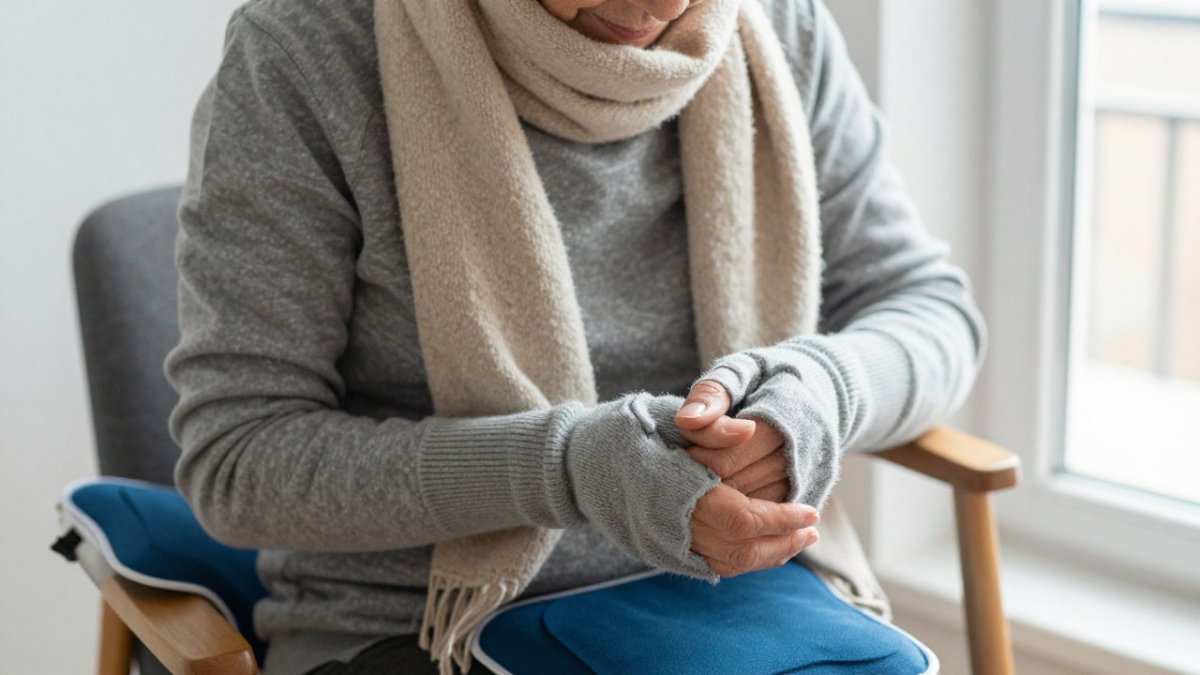
If cold-weather joint pain keeps limiting your day, you can review non-invasive joint pain therapies that support drug-free relief.
Is Arthritis Worse in Winter or Summer?
For many people, arthritis is worse in winter. Cold and damp conditions tend to increase joint stiffness and joint swelling.
Summer is not always easy either. Heat and humidity can raise systemic inflammation in some people, and sudden storms bring the same pressure swings as winter fronts.
The honest answer: it depends on your body. Climate sensitivity varies, and patient-reported outcomes show wide differences from person to person. Track your own pattern rather than assuming winter is always worse.
Tracking Tools and Home Changes That Reduce Flares
Two angles most guides skip: your home setup and your symptom log. Both are where you have the most control, and both reward specificity.
Home environment optimization, room by room
Humidity control. Indoor relative humidity is the single most useful number to manage. Indoor-air guidance commonly suggests keeping indoor relative humidity in a moderate range, often cited as roughly 30% to 50% (the EPA).
- In damp climates or basements, a dehumidifier sized to the square footage is the workhorse. Empty the tank daily or plumb it to a floor drain so it does not shut off overnight.
- In dry winter air, a cool-mist humidifier in the bedroom keeps overnight humidity in range. Clean it every few days; standing water in a dirty tank is a mold source.
- A hygrometer in the bedroom and living room can show you indoor humidity levels so you can adjust rather than relying on how the air feels.
Temperature regulation. Steady beats warm. A programmable thermostat set to a consistent overnight and morning temperature reduces the cold-shock stiffness that greets you at 6 a.m.
Bathroom and bedroom. Grab bars in the shower and beside the toilet, a shower chair, and a handheld showerhead reduce the load on stiff shoulders and knees on bad mornings.
Kitchen and storage. Move daily items to waist height.
Lighting. Bright, warm-toned lighting in the rooms where you dress and stretch supports morning routine during short winter days, when low light can drag mood and motivation down with it.
Symptom logging that your rheumatologist can actually use
A log is only useful if it is consistent and captures the variables that matter. A simple notebook works; so do apps such as Bearable, Flaredown, or the Arthritis Foundation's trackers. What matters is the fields.
| What to Track | Why It Helps |
|---|---|
| Pain level (0-10) at the same time each day | Shows trends over weeks rather than single bad days |
| Morning stiffness duration in minutes | A recognized clinical marker of inflammatory activity |
| Weather: pressure, temperature, humidity | Links specific variables to flares instead of 'bad weather' in general |
| Sleep hours and quality | A major non-weather trigger that is easy to overlook |
| Stress level (1-10) | Reveals the psychological side of flares |
| Activity and exercise done | Shows what helps or hurts |
| Medications and any changes | Helps separate drug effects from weather effects |
Log at the same time each day, ideally in the morning before medication, and review the data monthly rather than daily. Four to six weeks is usually enough to see whether a weather pattern is real for you.
Watch out: a log that only records bad days will confirm any theory you bring to it, so record every day, including the good ones.
If you want a wider menu of options, you can compare drug-free pain relief methods.
Diet and Mood: The Overlooked Side of Weather Flares
Weather-induced flares are not just physical. Gray skies and short days can bring seasonal affective dips in mood, and low mood can make pain feel heavier.
The psychological side is real. Anxiety about the next flare can raise tension, and tension adds to nerve sensitivity.
Diet can help too. A common approach is to build meals around anti-inflammatory foods, such as:
- Fatty fish rich in omega-3s
- Leafy greens and colorful vegetables
- Nuts, seeds, and olive oil
- Berries and other whole fruits
Some people find certain foods trigger their symptoms. If you want to dig into that, read our guide on identifying hidden triggers of chronic inflammation.
When to Discuss Weather-Related Joint Pain With a Doctor
See a doctor if joint pain comes with redness, warmth, or sudden swelling. Get prompt care for fever, chest pain, or trouble breathing, since these need urgent attention.
Also talk to a clinician if clinical symptoms change fast, if morning stiffness lasts a long time, or if pain starts limiting daily tasks.
At Alternative Health & Healing Center, our team includes Dr. If you want to know who you would be working with, you can meet Dr. Paul Finucan.
We do not diagnose or promise outcomes. A qualified clinician decides what is right for your case.
Weather-related joint pain can make you feel like you are at the mercy of the forecast. You are not.
Frequently Asked Questions
Why do all my joints hurt when the weather changes?
Barometric pressure shifts can cause tissue around joints to expand slightly, which increases pressure on already sensitive nerve endings. Cold also narrows blood vessels, reducing circulation to synovial fluid and making joints feel stiffer. For some people with autoimmune joint pain, these small changes may add to existing discomfort.
Does humidity make autoimmune joint pain worse?
Many people report more stiffness and swelling on humid days, though research results are mixed. Humidity joint pain relief usually comes from controlling the indoor environment: running a dehumidifier, keeping rooms between 68 and 72 degrees Fahrenheit, and staying lightly active so synovial fluid keeps moving. Track your symptoms against local humidity levels for a few weeks to see whether your body follows the pattern.
Is arthritis worse in winter or summer?
For most people, winter is harder. Cold temperatures reduce circulation, muscles tighten, and joint stiffness increases, especially in the morning. Summer brings its own challenges: heat and dehydration can worsen fatigue and swelling in some rheumatic conditions. The honest answer is that individual climate sensitivity varies, which is why logging your symptoms across seasons gives you better information than any general rule.
When should weather-related joint pain be discussed with a doctor?
Bring it up if flares are lasting longer than a few days, if swelling or redness appears in a joint, or if pain is limiting your normal activity. Weather sensitivity itself is not dangerous, but it can mask a genuine disease flare that needs treatment. A clinician can review your clinical symptoms, adjust your pain management plan, and rule out other causes before recommending therapies such as therapeutic heat, physical activity adjustments, or hands-on care.