 how-to
How to Prepare for Your First Kinesiology Session
Table of Contents
- What to Expect in a Kinesiology Session
- Mental Preparation and Goal Setting
- What to Wear and Bring to Your Appointment
- Kinesiology Session Duration and What Happens During It
- Preparing Your Health History and Documentation
- Questions to Ask Your Kinesiologist
- Post-Session Integration and Care
- Frequently Asked Questions
Last Updated: August 27, 2026
What to Expect in a Kinesiology Session
A kinesiology session combines physical assessment, muscle testing, and guided therapeutic work designed to identify and address imbalances in your body's function. Unlike a typical five-minute chiropractic adjustment, this is a comprehensive process. Your kinesiologist uses a client-centered approach that respects your individual health history and therapeutic goals.
The session begins with a detailed intake conversation about your health concerns, past injuries, current symptoms, and therapeutic goals. Your practitioner then conducts a physical assessment including posture observation, range-of-motion testing, strength checks, and balance work. Muscle testing, a core component of Applied Kinesiology, uses your body's own feedback system to pinpoint areas of dysfunction. This non-invasive biofeedback approach helps your kinesiologist understand how your nervous system is responding and where therapeutic intervention is needed.
What distinguishes kinesiology is the emphasis on the mind-body connection and nervous system regulation. Your practitioner evaluates how your entire system functions together, revealing patterns that explain why pain or dysfunction persists even after other treatments.
Mental Preparation and Goal Setting
Before your appointment, clarify what you want to achieve. Write down your primary concerns, whether chronic pain, limited mobility, post-injury recovery, or general wellness, and specify how these issues affect your daily life.
Consider what you've already tried. If you've seen other practitioners or attempted self-care strategies, note what worked partially, what didn't work, and what surprised you. This context helps your kinesiologist avoid repeating unsuccessful approaches. Approach the session with curiosity: you're partnering with a skilled professional to understand what's happening in your body.
Set realistic expectations. Your first session is diagnostic and introductory, establishing a baseline and identifying key dysfunctions. Lasting change typically requires follow-up sessions and integration work on your part. Open-mindedness matters more than skepticism, your body's feedback system responds better when you're not fighting the process mentally.
What to Wear and Bring to Your Appointment
Wear loose, comfortable clothing that allows your kinesiologist to observe your posture and movement without restriction. Think athletic wear or soft pants, anything you'd wear to a yoga class. Avoid tight jeans, restrictive belts, or heavy layers that obscure your body's alignment and mobility.
Bring your health history documentation: recent medical records, imaging results (X-rays, MRIs, CT scans), surgical reports, medication lists, and records from other practitioners. Include notes from physical therapy, chiropractic care, or other treatments.
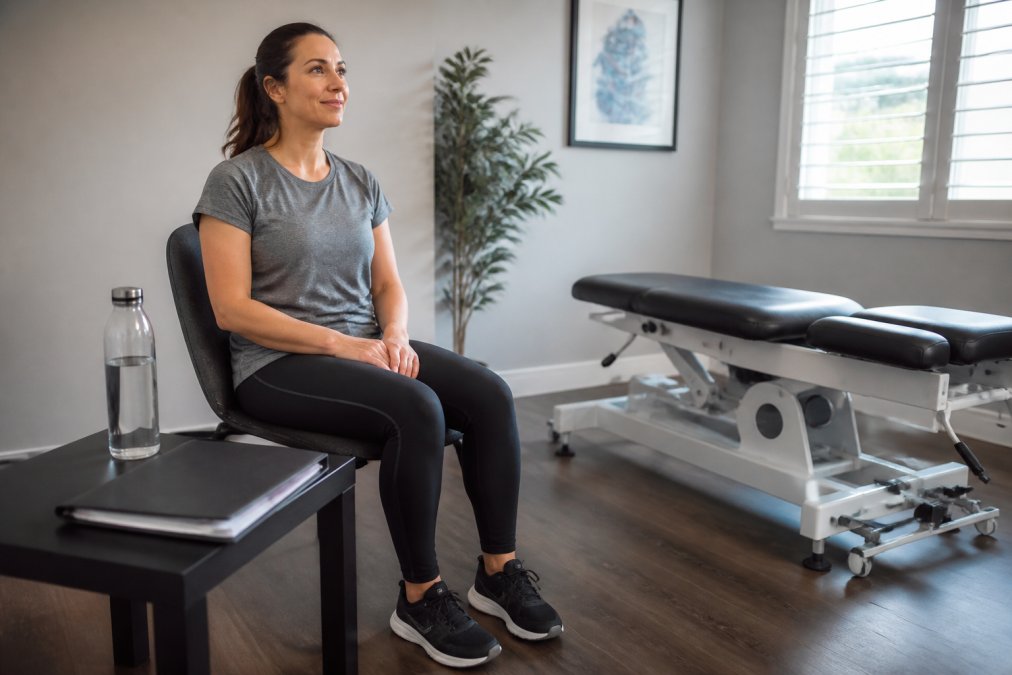
Bring a list of current medications and supplements, including over-the-counter medications, vitamins, herbal supplements, and prescription drugs. Arrive 10 to 15 minutes early to complete intake paperwork and settle into the environment. Drink water before you arrive, but not so much that you're uncomfortable during the session.
Kinesiology Session Duration and What Happens During It
Your first kinesiology session typically lasts 60 to 90 minutes (icak.com). A typical session follows this progression: intake and health history review (10-15 minutes), physical assessment and muscle testing (20-30 minutes), therapeutic work and guided exercises (20-30 minutes), and closing discussion with recommendations (10-15 minutes).
Your kinesiologist will observe your posture and movement, watching for asymmetries, compensatory patterns, and signs of pain or restriction. They may ask you to perform simple movements, standing on one leg, reaching overhead, bending forward, to evaluate your range of motion and balance capacity.
Muscle testing is the signature technique of Applied Kinesiology (icak.com). Your practitioner applies gentle, directional pressure to specific muscles while you resist, observing how your body responds. This isn't a strength test; it's a biofeedback tool revealing how your nervous system coordinates muscle function. Weak responses in muscles that should be strong, or unusual patterns across muscle groups, point to areas needing support.
During the therapeutic portion, your kinesiologist may use targeted stretching, specific exercises to activate weak muscles, soft tissue work, or other techniques to reset your nervous system's signaling and restore proper function. Many people feel immediate relief or improved mobility during this phase, though full benefits often unfold over following days and weeks.
Your practitioner will explain findings and discuss a treatment plan for follow-up sessions, providing specific recommendations for post-session integration and care.
Preparing Your Health History and Documentation
Gather your complete health history before your appointment. Create a written timeline of major health events: surgeries, significant injuries, chronic conditions, and when they occurred. Write down your current symptoms in detail: where you feel pain or dysfunction, what makes it worse, what provides temporary relief, and how it affects daily activities.
List all current medications with dosages and duration. Include over-the-counter pain relievers, sleep aids, supplements, herbs, and vitamins. This complete picture helps your kinesiologist understand potential factors affecting your nervous system and muscle function.

Compile imaging or lab results from the past two years. Bring copies of X-rays, MRIs, ultrasounds, CT scans, blood work, or other lab tests. Even if you don't fully understand them, they provide your kinesiologist with objective data about your body's structure and function.
Prepare a list of previous practitioners and treatments, including chiropractors, physical therapists, massage therapists, and acupuncturists. Write down approximately when you saw them, what they treated, and whether it helped. This prevents your kinesiologist from repeating unsuccessful approaches.
Write down your specific treatment goals. "Feel better" is too vague; "be able to walk my dog for 30 minutes without knee pain" is actionable. Note any emotional patterns connected to your physical symptoms, stress, anxiety, or trauma often show up as physical dysfunction.
Questions to Ask Your Kinesiologist
Ask what they found during muscle testing and physical assessment. What areas of dysfunction did they identify, and how do these findings explain your symptoms? A good practitioner explains findings in understandable terms.
Ask about the treatment plan. How many sessions do they recommend? What is the typical frequency? What outcomes can you realistically expect, and on what timeline? Be wary of practitioners who promise quick fixes; healing is individual and depends on many factors including your commitment to follow-up care.
Ask what you should do between sessions. Will you have homework, specific exercises, or stretches? How important is this integration work to your results?
Ask about their credentials and experience. How long have they been practicing Applied Kinesiology? What certifications do they hold? Have they worked with clients who have conditions similar to yours? At Alternative Health & Healing Center, our practitioners bring nearly 40 years of clinical experience and specialized certifications in Applied Kinesiology and related modalities.
Ask about modalities they use beyond muscle testing. Do they use soft tissue work, specific exercises, acupuncture, or other therapeutic tools?
Ask about realistic expectations for nervous system regulation and symptom tracking. How will you know if treatment is working? What should you notice in the days and weeks after your session?
Post-Session Integration and Care
The work doesn't end when your session ends. What happens in the hours and days following your appointment is crucial for integrating the changes your body has begun.
Hydration is essential after a kinesiology session. Your body has been engaged in therapeutic work, and proper hydration supports the nervous system's ability to integrate these changes. Drink plenty of water in the hours following your appointment.
You may experience temporary soreness, mild discomfort, or unusual sensations in the days after your session. This is normal and typically indicates your body is responding to therapeutic work. These sensations usually resolve within 24 to 72 hours (peer-reviewed research). If they persist beyond a few days or worsen significantly, contact your practitioner.
Follow the specific exercises or stretches your kinesiologist recommends. These aren't optional; they're part of your treatment plan and help reinforce nervous system changes initiated during the session. Most practitioners recommend doing these daily or several times per week.
Pay attention to symptom tracking in the days following your session. Notice changes in pain levels, mobility, energy, sleep quality, or emotional patterns. Keep a simple log if helpful, this objective data helps evaluate whether the approach is working.
Rest adequately. Your body is doing healing work, and sleep is when much integration happens. Avoid strenuous exercise for at least 24 to 48 hours after your session unless your practitioner recommends otherwise. Gentle movement like walking is fine; heavy lifting, intense cardio, or competitive sports should wait.
Notice emotional shifts. Sometimes as physical dysfunction resolves, emotions that were stored in your body surface. This is part of the healing process and usually passes quickly.
Preparing for your first kinesiology session sets you up for better results and a more productive therapeutic relationship. Clear goals, complete health documentation, appropriate clothing, and an open mindset create conditions for meaningful change. At Alternative Health & Healing Center, our nearly 40 years of clinical experience, combined with specialized training in Applied Kinesiology and advanced therapeutic modalities, means your first session will be thorough, professional, and genuinely focused on understanding your unique needs. Real transformation happens when you commit to the process, follow through with post-session care, and show up for follow-up appointments ready to build on the foundation established in that first session. Request Appointment with our team to begin your healing journey.
| Preparation Step | Timing | What to Do |
|---|---|---|
| Mental preparation | 1-2 weeks before | Clarify goals, write down symptoms, note what you've tried |
| Documentation gathering | 1 week before | Collect medical records, imaging, medication list, prior treatment notes |
| Clothing selection | Day before | Choose loose, comfortable athletic-style clothing |
| Arrival timing | Day of session | Arrive 10-15 minutes early to settle in |
| Hydration | Before and after | Drink water before arriving and throughout the day after |
| Post-session care | Days 1-7 after | Complete recommended exercises, track symptoms, rest adequately |
Frequently Asked Questions
Q: What should I wear to my first kinesiology session?
A: Wear loose, comfortable clothing that allows free movement, such as athletic wear or casual pants and a t-shirt. Avoid restrictive clothing like tight jeans or structured jackets. Your practitioner will likely perform physical assessments and mobility testing, so clothing that permits full range of motion is essential. Remove shoes before your session unless instructed otherwise.
Q: How long does a typical kinesiology session last?
A: Most kinesiology sessions last 45 to 60 minutes, though first appointments may run longer due to the client intake process. The initial consultation typically includes time for discussing your health history, performing a physical assessment, conducting muscle testing, and developing a treatment plan. Ask your practitioner about the expected duration during scheduling so you can plan accordingly.
Q: What questions should I ask my kinesiologist at my first appointment?
A: Ask about their approach to your specific condition, how many sessions they typically recommend, what therapeutic goals are realistic for you, and how they measure progress. Inquire about their experience with your particular health concern and what happens between sessions. Ask whether you'll receive guidance on exercises or lifestyle changes, and clarify how follow-up options work. Understanding their client-centered approach helps you feel confident in the therapeutic process.
Q: Do I need to bring medical records to my kinesiology appointment?
A: Yes, bring any relevant medical records, recent imaging results, and a list of current medications or supplements. Include documentation from previous practitioners, especially if you've had surgeries, injuries, or diagnoses related to your presenting symptoms. This information helps your kinesiologist understand your complete health picture and tailor their approach to your needs.


