 how-to
How to Relieve Stress With Applied Kinesiology
Table of Contents
- What Is Applied Kinesiology and How It Works for Stress
- Benefits of Muscle Testing for Stress Relief
- How to Restore Body Function Naturally Through Applied Kinesiology
- Self-Administered Acupressure Techniques for Stress
- Holistic Chiropractic Care for Stress Management
- Common Mistakes to Avoid in Applied Kinesiology Practice
- When to Seek Professional Applied Kinesiology Care
- Frequently Asked Questions
Last Updated: August 29, 2026
What Is Applied Kinesiology and How It Works for Stress
Applied kinesiology is a system of evaluating body function by testing muscle strength to identify and address physical imbalances, emotional blockages, and nervous system dysfunction. At Alternative Health & Healing Center, we use muscle testing as a biofeedback tool to help patients understand how stress manifests in their bodies and restore healthy function through targeted interventions.
The practice combines principles from chiropractic care, acupuncture, nutrition, and somatic awareness. When you experience chronic stress, your nervous system stays in a heightened state of alert, triggering muscle tension, postural misalignment, and restricted movement patterns that persist long after the stressful event has passed.
Understanding muscle testing as a biofeedback tool
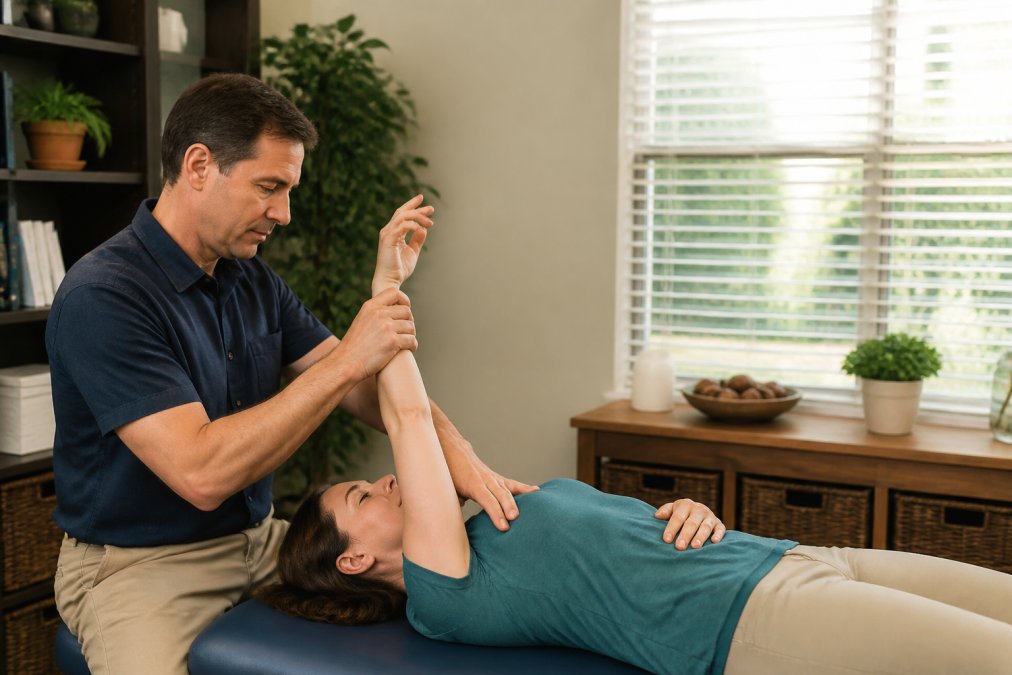
Muscle testing isolates specific muscles and applies gentle pressure to assess their strength response. A strong, stable response indicates proper nervous system signaling; a weak response suggests disrupted communication between your brain and body due to stress, trauma, or physical dysfunction.
The nervous system controls muscle function through direct neural pathways. When those pathways are compromised, muscles lose their ability to generate force. By identifying which muscles test weak, a practitioner can pinpoint which systems need attention and which interventions will be most effective.
Muscle testing as biofeedback gives you real-time information about your body's stress response. This tactile feedback helps your nervous system recognize healthy muscle function, beginning the process of nervous system re-education and stress relief.
The nervous system connection to physical tension
Your autonomic nervous system has two branches: the sympathetic nervous system (your accelerator) and the parasympathetic nervous system (your brake). Chronic stress keeps your sympathetic system activated, flooding your body with cortisol and adrenaline (the NIH). Over time, this becomes your baseline, muscles stay partially contracted, breathing stays shallow, and your body never fully relaxes.
Applied kinesiology addresses this by identifying which muscles are locked in stress-response patterns and using specific techniques to signal your nervous system that the threat has passed. Spinal adjustments, cranial techniques, acupressure, and pressure applied to specific reflex points all communicate with your nervous system to downshift from sympathetic dominance back toward parasympathetic balance.
When stress keeps your nervous system dysregulated, every system suffers: heart rate, digestion, immune function, sleep quality, and emotional regulation all decline. Applied kinesiology works because it addresses the root cause, the nervous system's inability to shift out of stress mode.
Benefits of Muscle Testing for Stress Relief
Muscle testing reveals the specific patterns your body has adopted in response to stress, identifying where tension lives, which muscles have become inhibited, and which reflex points need stimulation to restore balance.
One valuable benefit is objectivity. The muscle response gives you measurable feedback rather than relying on subjective feelings alone, helping you understand that stress has a physical component that can be identified and addressed through targeted intervention.
Another benefit is speed of results. Because applied kinesiology targets the specific systems affected by your stress, many patients report noticeable improvements in muscle tension, sleep quality, and overall calm within the first few sessions.
Muscle testing also identifies emotional blockages stored in muscles. Trauma, grief, anger, and fear create physical holding patterns in your body. Applied kinesiology can identify which emotions are locked into which muscles, allowing you to release them through targeted techniques.
How to Restore Body Function Naturally Through Applied Kinesiology
Restoring body function means bringing your nervous system back into balance and releasing the physical patterns that stress has created through a systematic process of identifying dysfunction, applying targeted interventions, and reassessing to confirm restoration.
Identifying stress-related muscle imbalances
The first step is comprehensive muscle testing across major muscle groups. A trained practitioner tests muscles in your neck, shoulders, back, hips, and legs. Each weak muscle reveals which nerve pathways are compromised and which systems need support.
Common stress-related imbalances include weak neck extensors (indicating cervical spine dysfunction), inhibited hip flexors (suggesting lower back strain), and weak serratus anterior muscles (revealing shoulder instability). Once weak muscles are identified, the practitioner assesses the cause, spinal misalignment, nutritional deficiency, emotional blockage, or reflex points needing stimulation, allowing for targeted treatment.
Releasing emotional blockages stored in muscles
Emotional blockages are real physical phenomena. Fear tightens hip flexors, grief contracts chest and shoulder muscles, and anger clenches jaw and neck muscles. Over time, these emotional holding patterns become habitual, and your body forgets how to relax.
Applied kinesiology releases these blockages through acupressure on specific meridian points, gentle spinal adjustments to reset nervous system responses, and breathing techniques combined with body awareness. You're working with your body's biofeedback system to help it recognize that emotional threats have passed and it's safe to relax.

Self-Administered Acupressure Techniques for Stress
Once you understand applied kinesiology principles, you can use self-administered acupressure to maintain progress between sessions and manage stress as it arises.
Jaw tension release points
Jaw tension is a common physical manifestation of stress. Your masseter and temporalis muscles clench unconsciously when stressed, creating a feedback loop where tight jaw muscles send stress signals to your brain.
To release jaw tension, locate the masseter muscle by clenching your teeth and feeling the muscle that bulges on your face. Apply gentle but firm pressure directly into that muscle, holding for 30 seconds while taking slow, deep breaths. For temple tension, place your fingertips on your temples and apply gentle circular pressure for 60 seconds.
The jaw connects to your vagus nerve, which controls parasympathetic activation (peer-reviewed research). By releasing jaw tension, you directly stimulate the nerve pathway that shifts your nervous system toward calm.
Hip flexor and lower back pressure points
Your hip flexors (iliopsoas muscles) are your body's primary stress muscles. Chronic stress keeps them partially contracted, pulling your pelvis forward, compressing your lower back, and maintaining exhausting physical readiness.
To release hip flexor tension, lie on your back with knees bent. Place your fingers just below your hip bone, moving inward toward your abdomen. Apply gentle sustained pressure for 60 seconds while breathing slowly. For lower back support, use your knuckles or a massage ball on muscles either side of your spine, holding each point for 30-45 seconds.
These techniques work best combined with deep breathing. As you apply pressure, consciously relax into the sensation rather than tensing against it. Your nervous system responds by downshifting toward parasympathetic activation.
Holistic Chiropractic Care for Stress Management
While self-administered techniques are valuable, professional chiropractic care addresses stress patterns requiring advanced assessment. A chiropractor trained in applied kinesiology can identify spinal misalignments, cranial restrictions, and nervous system dysfunction that self-care alone cannot resolve.
Spinal adjustments and cranial techniques
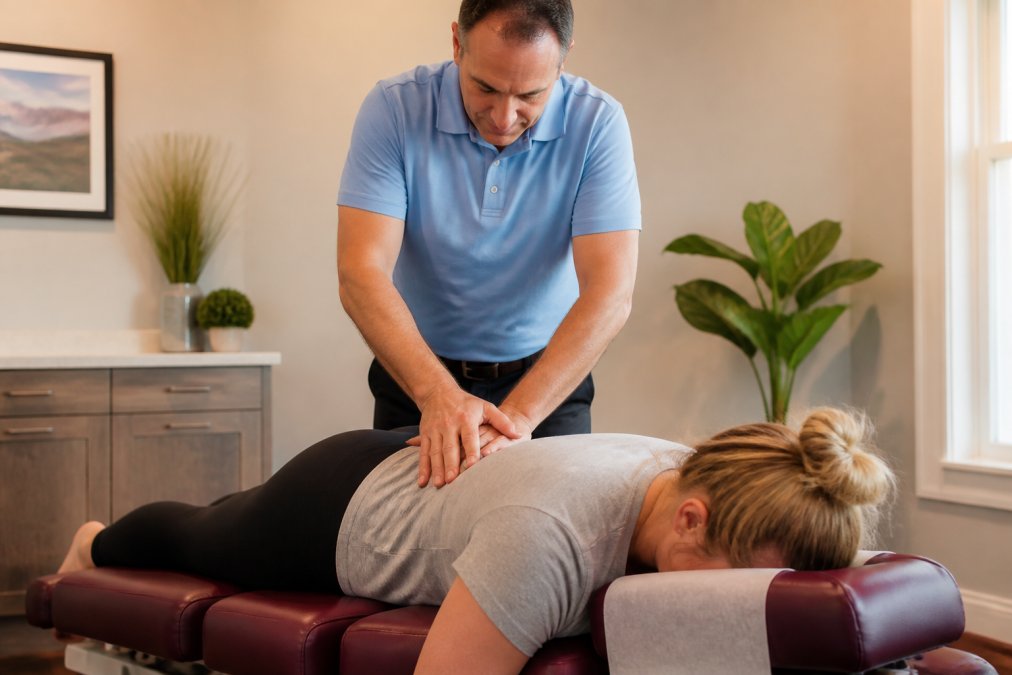
Spinal misalignments disrupt nerve signal flow from your brain to your body. Stress causes muscles to contract unevenly, pulling vertebrae out of alignment and perpetuating nervous system dysfunction. Chiropractic adjustments restore proper alignment, removing nerve interference and allowing your nervous system to shift out of stress mode.
Cranial techniques are specialized adjustments to skull bones and membranes surrounding your brain and spinal cord. These structures directly influence your nervous system's ability to regulate stress response. Gentle cranial adjustments release restrictions that keep your nervous system locked in sympathetic activation.
Combining chiropractic adjustments with applied kinesiology
The most effective approach combines chiropractic adjustments with applied kinesiology assessment. A practitioner uses muscle testing to identify exactly which spinal segments cause nerve dysfunction, then applies adjustments precisely where needed. At Alternative Health & Healing Center, our team uses applied kinesiology assessment before and after adjustments to confirm nerve function restoration, integrating specialized techniques that enhance your nervous system's ability to shift toward parasympathetic balance.
This integrative approach addresses stress at multiple levels: structural (spinal alignment), neurological (nerve pathway function), energetic (meridian balance), and nutritional (supporting stress-response systems).
Common Mistakes to Avoid in Applied Kinesiology Practice
Understanding common pitfalls helps you get better results from applied kinesiology practice.
The first mistake is treating muscle weakness as a strength problem. A weak muscle revealed by testing isn't weak because it needs more exercise, it's weak because the nerve signal is compromised. Strength training won't fix underlying nerve dysfunction.
Another mistake is inconsistency. Stress relief requires regular practice. Your nervous system needs consistent signals that it's safe to relax. Daily self-care combined with regular professional sessions creates the repetition your nervous system needs to establish new patterns.
Many people also ignore nutritional support. Your nervous system requires magnesium for muscle relaxation, B vitamins for nerve function, and omega-3 fatty acids for brain health (peer-reviewed research). Poor nutrition limits even excellent chiropractic care's effectiveness.
A final mistake is expecting instant permanent results. Applied kinesiology works quickly for many people, but your nervous system has spent months or years in stress mode. Most people see significant improvement within 4-6 sessions, with continued progress over several months.
When to Seek Professional Applied Kinesiology Care
Self-administered techniques are valuable for maintenance and mild stress, but certain situations require professional assessment. If you have chronic pain, significant muscle weakness, or stress unresponsive to self-care, a trained practitioner can identify underlying issues.
Professional care is especially important if you have a history of trauma, surgery, or injury. These events create specific nervous system dysregulation patterns requiring skilled assessment. If you're dealing with fibromyalgia, autoimmune conditions, chronic fatigue, or widespread pain, professional applied kinesiology offers a systematic approach to identifying root causes.
The Alternative Health & Healing Center team has nearly 40 years of clinical experience using applied kinesiology to help patients restore body function and relieve stress-related tension. Our practitioners are trained in muscle testing, spinal adjustments, cranial techniques, acupressure, and nutritional support. We assess your specific stress patterns and create a personalized treatment plan designed for your body's particular needs.
Chronic stress doesn't have to be permanent. When you understand how to relieve stress with applied kinesiology, identifying where tension lives in your body and using targeted techniques to release it, you can move from constant tension toward genuine calm. The Alternative Health & Healing Center team specializes in applied kinesiology assessment and treatment, using muscle testing, spinal adjustments, and cranial techniques to restore your nervous system's ability to shift out of stress mode. Request an appointment today to discover how applied kinesiology can help you reclaim your physical wellness and peace of mind.
Frequently Asked Questions
Does applied kinesiology really work for stress relief?
Applied kinesiology addresses stress by identifying and releasing physical tension patterns stored in muscles and the nervous system. While individual responses vary, many people experience reduced muscle tension, improved postural support, and better nervous system regulation through consistent applied kinesiology sessions. The effectiveness depends on the practitioner's skill, your body's responsiveness, and whether you combine sessions with stress-management practices like deep breathing and mindfulness.
How does muscle testing identify stress in the body?
Muscle testing uses applied kinesiology principles to assess how your body responds to physical pressure and specific stimuli. A practitioner applies gentle pressure to various muscles while observing strength or weakness responses. This biofeedback reveals areas where stress has created muscle imbalances, postural misalignment, or nervous system dysregulation. Muscle testing can pinpoint emotional blockages and physical tension patterns you may not consciously recognize, making it a valuable diagnostic tool for personalized stress relief.
Can I use applied kinesiology techniques on myself for stress management?
Yes, self-administered acupressure and simple muscle-awareness techniques can support stress relief between professional sessions. You can learn to apply gentle pressure to key stress-relief points like the jaw, neck, and hip flexors. Deep breathing combined with somatic awareness of muscle tension helps activate your parasympathetic nervous system and reduce cortisol levels. However, professional applied kinesiology sessions provide more comprehensive assessment and treatment, especially for complex stress patterns or chronic tension.
What is the difference between applied kinesiology and general chiropractic care?
Applied kinesiology integrates muscle testing and nervous system assessment into chiropractic treatment, offering a more comprehensive approach to stress and pain relief. While general chiropractic care focuses primarily on spinal adjustments, applied kinesiology combines spinal adjustments with nutritional advice, acupressure techniques, and cranial work to address the body-mind connection. This holistic approach identifies root causes of stress-related tension and restores healthy body functioning through personalized, multi-modal therapeutic intervention.


