 listicle
Integrative Pain Management for Seniors: 7 Top Options
Table of Contents
- What Integrative Pain Management Means for Seniors
- Non-Pharmacological Pain Relief for Seniors: 5 Approaches That Work
- Benefits of Chiropractic Care for Older Adults
- Managing Nerve Pain in Seniors Without Surgery
- The Root Cause Approach: Applied Kinesiology and Whole-Person Care
- Drug-Herb-Supplement Interactions: What Seniors Must Check First
- Paying for Integrative Care: Medicare, Insurance, and Home vs. Clinic Options
- Conclusion
- Frequently Asked Questions
Last Updated: September 11, 2026
What Integrative Pain Management Means for Seniors
Integrative pain management for seniors blends conventional medical care with evidence-informed complementary therapies to reduce pain and restore function. The core idea: treat the whole person, not just the sore joint.
How It Differs From Traditional Pain Care
Traditional care often starts and ends with a prescription. Integrative care starts with questions: How do you sleep? What does your gait look like? What medications and supplements do you take? A multidisciplinary team then assembles a plan combining chiropractic care, acupuncture, therapeutic massage, and mind-body practices.
The goal shifts from symptom management to functional restoration. That distinction matters when you're 70 and want to garden again, not just dull the ache.
Non-Pharmacological Pain Relief for Seniors: 5 Approaches That Work
Non-pharmacological pain relief for seniors covers any technique that reduces pain without drugs. These five approaches have the strongest practical track record.
- Mind-body practices (biofeedback, mindfulness, tai chi)
- Hands-on therapies (acupuncture, therapeutic massage)
- Chiropractic care and spinal adjustment
- Targeted devices (TENS units, percussive therapy)
- Heat and cold therapy at home
Many seniors combine two or three. A common mistake is quitting after one session, these approaches build over weeks, not days.
Mind-Body Practices: Biofeedback, Mindfulness, and Tai Chi
Biofeedback teaches you to influence heart rate, breathing, and muscle tension via real-time monitor feedback. Mindfulness changes how you relate to pain, reducing the distress that amplifies it. Tai chi adds gentle movement, balance work, and fall prevention in one package.
The National Center for Complementary and Integrative Health documents how these mind-body practices support chronic pain management. Apps like Headspace and Calm offer guided sessions for seniors who prefer practicing at home.
Hands-On Therapies: Acupuncture and Therapeutic Massage
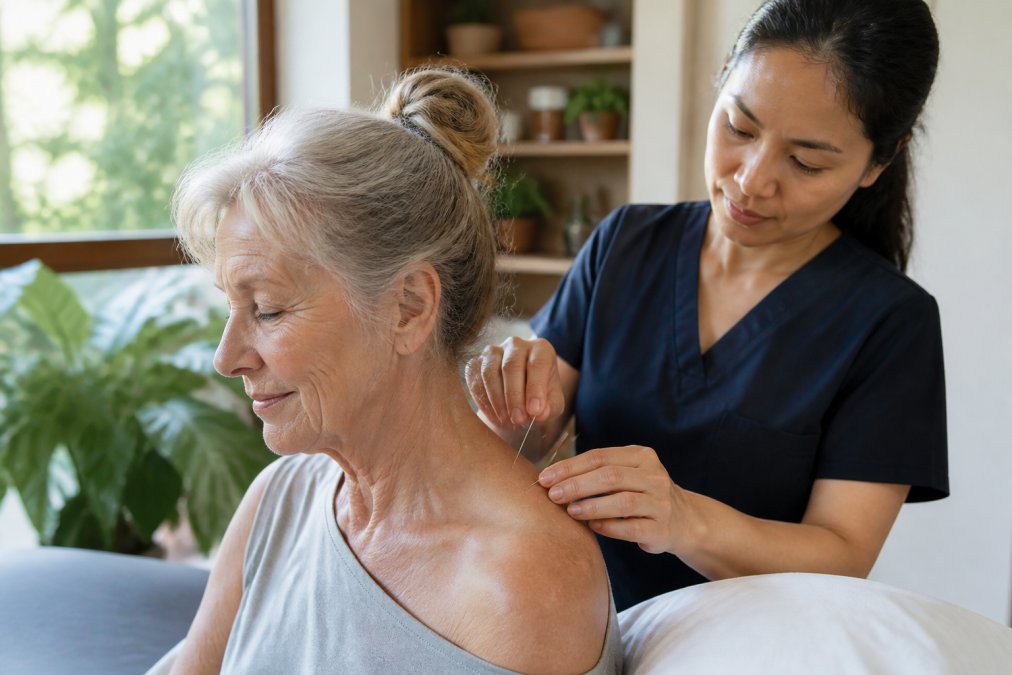
Acupuncture uses fine needles at specific points to influence pain signaling. Therapeutic massage releases muscle tension that contributes to chronic pain and mobility loss. Both work best as part of a broader plan, not one-off treatments.
If you're new to either, start with a practitioner who regularly treats older adults. Technique and pressure need adjusting for thinner skin, osteoporosis, and blood-thinning medications.
Benefits of Chiropractic Care for Older Adults
The main benefit of chiropractic care for older adults is improved joint mobility and reduced musculoskeletal pain without medication. A skilled chiropractor also assesses gait, posture, and alignment, falls are a leading cause of injury in this age group.
Chiropractic care for seniors looks different from care for a 25-year-old athlete: adjustments use lower force, soft tissue work plays a bigger role, and the plan usually includes home exercises to hold gains between visits.
Alternative Health & Healing Center has nearly 40 years of clinical experience, specializing in Applied Kinesiology and using advanced technology like the Piezo Wave 2. This integrative approach combines chiropractic care with multiple therapeutic modalities to address musculoskeletal and nerve pain.
Managing Nerve Pain in Seniors Without Surgery
Managing nerve pain in seniors without surgery is possible for many, though not all. Nerve pain from a pinched nerve, diabetic neuropathy, or spinal stenosis often responds to decompression therapy, acupuncture, and targeted exercise.
For patients hoping to avoid another surgery, the realistic goal is reducing pain enough to restore daily function, addressing both the nerve and the surrounding muscles that have compensated for months or years.
The Root Cause Approach: Applied Kinesiology and Whole-Person Care
Root cause analysis in integrative care asks why the pain started, not just where it hurts. A knee that aches may be compensating for a weak hip; chronic headaches may trace to jaw tension or cervical misalignment.
Applied Kinesiology uses manual muscle testing alongside standard orthopedic and neurological exams to identify underlying imbalances. It's especially useful for complex cases like fibromyalgia, where pain is widespread and no single joint explains it.
| Approach | What It Targets | Typical Session Length | Best For |
|---|---|---|---|
| Chiropractic adjustment | Joint alignment, mobility | 20-40 min | Back, neck, hip pain |
| Acupuncture | Pain signaling, inflammation | 30-60 min | Nerve pain, arthritis |
| Therapeutic massage | Muscle tension, circulation | 30-60 min | Stiffness, myofascial pain |
| Applied Kinesiology assessment | Underlying imbalances | 45-60 min | Complex, systemic pain |
| Biofeedback | Stress response, muscle tension | 30-45 min | Chronic pain with anxiety |
Drug-Herb-Supplement Interactions: What Seniors Must Check First
Drug-herb-supplement interactions are the safety gap most pain guides skip. The more prescriptions a person takes, the more chances a supplement, herbal tea, or topical rub has to change how those drugs behave. A 2023 review in the Journal of the American Geriatrics Society estimated that a large share of adults 65 and older use at least one dietary supplement alongside their prescriptions, and many never mention it to their doctor.
The Interactions That Come Up Most Often
Blood thinners (warfarin, apixaban, rivaroxaban, clopidogrel). Fish oil, turmeric/curcumin, ginkgo, garlic, ginger, and high-dose vitamin E can each add to the blood-thinning effect. The result is usually easier bruising, longer bleeding from a small cut, or a nosebleed that won't stop, a margin that matters on a blood thinner.
Diabetes medications (metformin, insulin, sulfonylureas). Cinnamon, berberine, fenugreek, and bitter melon can push blood sugar lower than expected when combined with a prescription. The interaction is additive, not obvious, and often shows up as unexplained afternoon shakiness.
Blood pressure medications. Licorice root, ephedra-containing products, and high-dose caffeine can raise blood pressure and work against the medication. Hawthorn and garlic may lower it further, causing dizziness on standing, a fall risk in this age group.
Antidepressants and anti-anxiety medications (SSRIs, SNRIs, benzodiazepines). St. John's Wort speeds up liver enzymes that clear many of these drugs, so the prescription can lose effectiveness. Kava, valerian, and passionflower add to sedation, increasing fall and confusion risk. electrolyte hydration benefits.
Thyroid replacement (levothyroxine). Calcium, iron, magnesium, and soy can bind levothyroxine in the gut and reduce absorption if taken too close together. The fix is timing, not avoidance: separate them by at least four hours.
The Verification Workflow That Actually Works
- Write down everything, including the boring stuff. Prescriptions, over-the-counter pain relievers, vitamins, herbal teas, topical creams, and anything a friend or family member recommended. Topicals count, menthol and capsaicin patches can interact with medications and irritate thin skin.
- Bring the list to a pharmacist, not just the physician. Pharmacists run interaction checks as part of their training and can flag combinations a busy primary care visit may miss, usually as a free consultation.
- Ask specifically about the three questions that matter: Does this supplement change how my prescription is absorbed? Does it add to the drug's effect? Does it add a separate risk (bleeding, sedation, blood sugar)?
- Start one thing at a time. If a new supplement causes a symptom, you want to know which one. Adding three at once makes that impossible.
- Re-check after any prescription change. A supplement that was fine alongside one medication may not be fine alongside its replacement.
The U.S. Food and Drug Administration maintains resources on supplement safety and reported adverse events, and the National Center for Complementary and Integrative Health publishes herb-by-herb interaction summaries written for patients rather than clinicians.
What This Means for Hands-On Therapies
Acupuncture and therapeutic massage are generally well tolerated, but tell your practitioner about blood thinners, pacemakers, recent surgeries, and implanted devices before your first session. Needling technique and pressure are adjusted for thinner skin, osteoporosis, and anticoagulant use, skipping that conversation is the most common reason a first session goes poorly.
Paying for Integrative Care: Medicare, Insurance, and Home vs. Clinic Options
Most articles on integrative pain management stop at "talk to your provider." That's not useful when the real questions are coverage, out-of-pocket cost, and whether treatment can be done at home. Here's the practical version.
What Original Medicare Covers, and What It Does Not
Chiropractic care. Original Medicare (Part B) covers manual manipulation of the spine when medically necessary to correct a subluxation. It does not cover chiropractic x-rays, massage, or maintenance adjustments after the active treatment phase. Expect the Part B deductible and 20% coinsurance.
Acupuncture. Original Medicare covers acupuncture only for chronic low back pain, and only when performed by a physician or by a nurse practitioner or physician assistant under a physician's supervision. It does not cover neck pain, arthritis, headaches, or fibromyalgia. Coverage is limited to a defined number of sessions, and patients are expected to show improvement.
Physical and occupational therapy. Covered when medically necessary, with an annual threshold above which the provider must document that the therapy is still reasonable and necessary.
Massage therapy. Not covered by Original Medicare when the purpose is relaxation or general wellness. It may be covered in limited circumstances when it is part of a skilled therapy plan, but this is the exception, not the rule.
Supplements and herbal remedies. Not covered. This is an out-of-pocket category, which is one more reason the interaction check in the previous section matters.
Medicare Advantage, Medigap, and Supplemental Benefits
Medicare Advantage (Part C) plans must cover everything Original Medicare covers, but many add benefits it doesn't, broader acupuncture coverage, fitness memberships, and in some plans, a set number of massage or chiropractic visits per year. These extras vary widely by plan and county, and can change each plan year.
Medigap (Medicare Supplement) plans do not add new services. They help pay the cost-sharing on services Original Medicare already covers, which can make a covered chiropractic or acupuncture visit far less expensive out of pocket.
How to Verify Coverage Before You Schedule
- Call the number on the back of your insurance card, not the general customer service line. Ask specifically: Is this service covered? Is a referral required? Is prior authorization required? What is my copay or coinsurance?
- Get the answer in writing if you can. Many plans offer a chat or secure message option that creates a record.
- Ask the provider's office to run a benefits check. Most clinics that treat seniors do this routinely and can tell you the expected out-of-pocket cost before the first visit.
- Keep the denial. If a claim is denied, you have the right to appeal. The denial letter will state the deadline and the process. Appeals are frequently successful when the provider documents medical necessity.
The Medicare.gov official site lists current covered services and lets you compare plan benefits by ZIP code.
Home-Based vs. Clinic-Based: A Decision Framework
Home-based care works well for:
- Heat and cold therapy
- TENS unit sessions
- Guided meditation, breathing, and biofeedback apps
- Gentle tai chi or chair yoga routines
- Range-of-motion and prescribed home exercises
Clinic-based care remains essential for:
- Acupuncture and dry needling
- Therapeutic massage and manual therapy
- Chiropractic adjustment and assessment
- Applied Kinesiology evaluation
- Any treatment requiring a licensed practitioner or equipment you cannot safely operate at home
For seniors with limited mobility, the practical answer is usually a hybrid: hands-on treatment in the clinic at a frequency the practitioner recommends, with a home routine in between to hold the gains. Transportation is often the real barrier, many Area Agencies on Aging and some Medicare Advantage plans offer ride benefits, and it is worth asking before assuming a clinic visit is out of reach.
Caregiver Involvement
Caregivers often make this work. The most useful things they can do are concrete: keep one updated medication and supplement list, drive to appointments, help set up a home TENS or heat routine, and note changes in pain, sleep, or mood between visits. That log is often more useful to a practitioner than anything gathered in a fifteen-minute exam.
Conclusion
Chronic pain doesn't have to define your daily life, but relief takes a plan built around your body, history, and medications. Alternative Health & Healing Center combines nearly 40 years of clinical experience, Applied Kinesiology, and advanced technology like the Piezo Wave 2 to address musculoskeletal and nerve pain at its source. If you're ready for a personalized, non-surgical path to lasting relief, request an appointment and let our team build a plan around you.
Frequently Asked Questions
What is the best way to manage pain in older adults?
There is no single best method. Integrative pain management for seniors combines several approaches: chiropractic care, acupuncture, therapeutic massage, mind-body practices like tai chi or biofeedback, and non-pharmacological tools such as TENS units or heat therapy. The right mix depends on the type of pain, overall health, and personal goals. A thorough evaluation by a qualified practitioner helps identify which combination will work best for you.
What are the benefits of chiropractic care for older adults with chronic pain?
Chiropractic care for older adults can improve joint mobility, reduce muscle tension, and support better nervous system function. Many seniors find it helps with arthritis discomfort, neck and back pain, and recovery from strains. When combined with other therapies like acupuncture or therapeutic massage, chiropractic care addresses both structural and soft-tissue components of pain.
How does integrative medicine differ from traditional pain management?
Traditional pain management often focuses on medication or surgery to suppress symptoms. Integrative medicine combines conventional care with complementary therapies such as acupuncture, biofeedback, and nutritional support. The goal is to treat the root cause, not just the symptom, while using non-pharmacological methods whenever possible. This patient-centered approach aims to restore healthy body functioning and relieve pain.
Can I receive Social Security disability benefits for chronic pain?
Social Security disability benefits may be available for chronic pain if it prevents you from working and meets the Social Security Administration's criteria. Chronic pain alone is not a listed impairment, but it can qualify when tied to a diagnosed condition such as arthritis or nerve damage. Consult a disability attorney or the SSA directly to understand your eligibility. Integrative care can support your overall function while you navigate the process.
What role does physical activity play in managing nerve pain in seniors?
Gentle, consistent physical activity is one of the most effective ways to manage nerve pain in seniors. Movement improves circulation, reduces stiffness, and supports nerve health. Low-impact options like tai chi, yoga, or walking help maintain mobility without aggravating symptoms. Always start slowly and consult a practitioner who can tailor activity to your specific condition, especially if you have neuropathy or radiculopathy.