 how-to
Piezo Wave Therapy for Athletes: Benefits & Recovery
Table of Contents
- What Is Piezo Wave Therapy and How It Works for Athletes
- Shockwave Therapy for Sports Injuries: Mechanism of Action
- Tendinopathy Treatment for Athletes With Piezo Wave
- Acoustic Wave Therapy for Sports Recovery and Performance
- Non-Invasive Sports Injury Treatment: Key Benefits for Athletes
- Post-Treatment Protocol: Optimizing Results After Piezo Wave Therapy
- Piezo Wave Therapy vs. Traditional Physical Therapy: What Athletes Need to Know
- Evidence-Based Success Rates and Safety Considerations
- Frequently Asked Questions
Piezo Wave Therapy for Athletes: Benefits & Recovery
Last Updated: July 27, 2026
Piezo wave therapy is reshaping recovery timelines for competitive and recreational athletes. At Alternative Health & Healing Center in Naples, Florida, we've observed firsthand how this technology delivers measurable results for chronic tendon pain, muscle injuries, and performance limitations. This guide explores the science behind piezo wave technology, its clinical applications for sports injuries, and why athletes are choosing this non-invasive approach over traditional rehabilitation methods.
Piezo wave therapy generates focused acoustic waves that stimulate cellular activity at the tissue level, enabling faster healing, reduced inflammation, and improved tissue regeneration without surgical risks.
What Is Piezo Wave Therapy and How It Works for Athletes
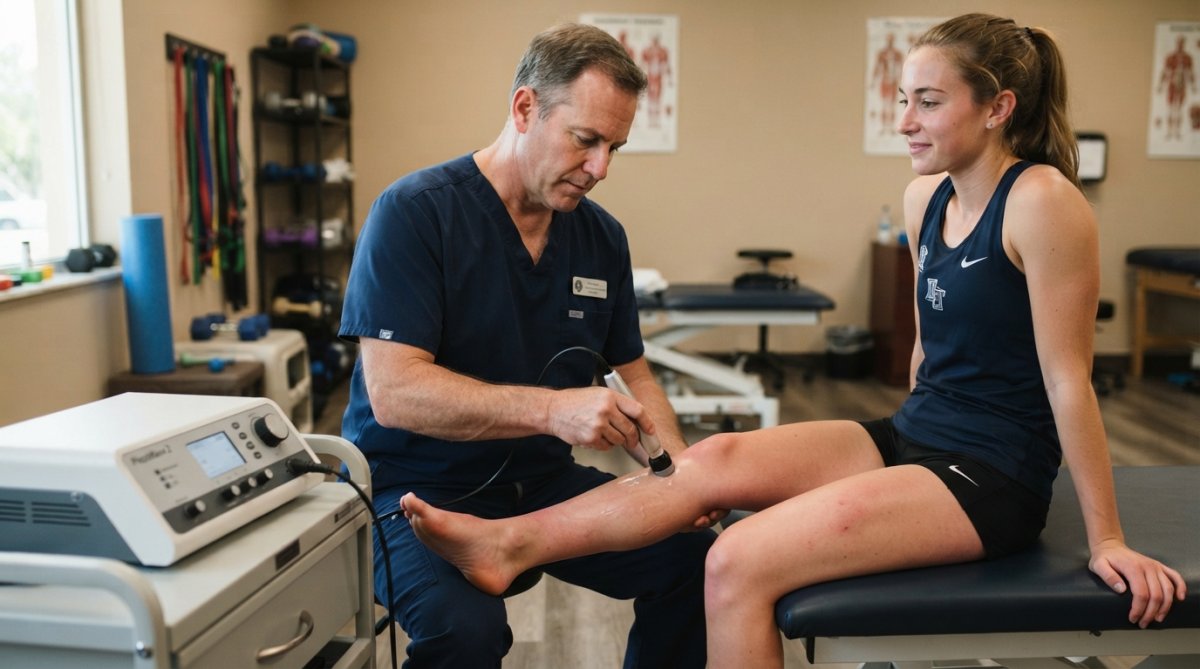
Piezo wave therapy is a specialized form of extracorporeal shockwave therapy designed for musculoskeletal conditions. The technology uses electrohydraulic energy to create acoustic waves that penetrate deep into affected tissues, triggering biological responses that promote healing and restore function.
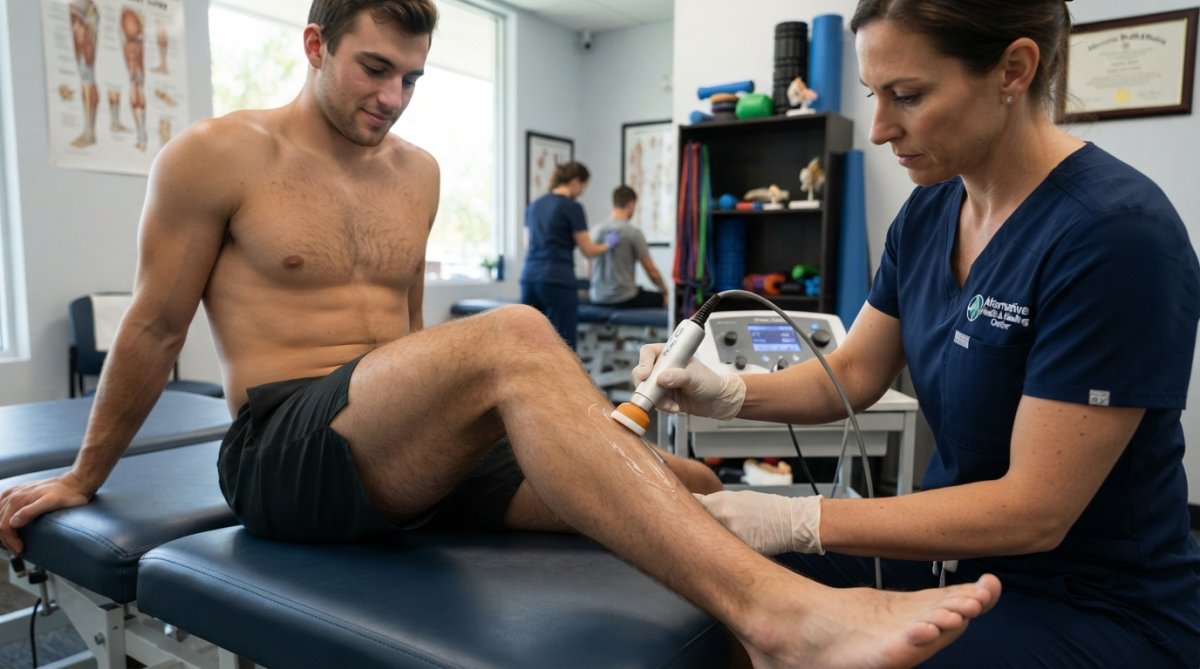
The word "piezo" refers to pressure-sensitive crystals that generate these waves. When electrical current passes through piezoelectric ceramic elements, they expand and contract rapidly, creating acoustic pulses at controlled frequencies and intensities. These pulses stimulate the body's natural healing mechanisms at a cellular level without damaging healthy tissue.
For athletes, the appeal is straightforward: piezo wave therapy accelerates the body's repair processes without incisions, anesthesia, or extended recovery periods. Athletes can often return to modified training within days rather than weeks or months.
Understanding Acoustic Wave Technology
Acoustic waves generated by piezo systems operate at frequencies between 16 to 24 Hz, with pressure levels calibrated to stimulate tissue without causing trauma. When acoustic waves reach damaged tissue, they create microtrauma that activates fibroblasts, cells responsible for collagen production and tissue repair. This controlled stimulation differs fundamentally from injury-induced damage.
The biological cascade begins immediately. Acoustic waves trigger inflammatory responses that mobilize healing resources, leading to tissue remodeling and strengthening.
How Piezo Wave Differs from Other Shockwave Systems
Electrohydraulic systems create shockwaves by igniting a spark plug in fluid, generating powerful but less precise wave patterns. Electromagnetic systems use magnetic coils to accelerate a metal projectile, producing less focused energy distribution than piezo systems.
Piezo technology produces highly focused acoustic waves with minimal energy loss and superior patient comfort. Sessions involve less discomfort, allowing for higher treatment frequencies without compromising tolerance, meaning more effective tissue stimulation over shorter periods.
Shockwave Therapy for Sports Injuries: Mechanism of Action
When acoustic waves penetrate injured tissue, they initiate multiple biological pathways that promote tissue regeneration while reducing chronic inflammation.
Stimulating Blood Flow and Cellular Repair
Acoustic waves activate endothelial cells lining blood vessels, triggering release of vascular endothelial growth factor (VEGF), which stimulates angiogenesis, formation of new blood vessels. Increased blood flow delivers oxygen and nutrients to damaged areas, accelerating healing.
Shockwave therapy stimulates stem cell production and activates fibroblasts, which migrate to the injury site and synthesize new collagen and extracellular matrix proteins. For athletes, this means stronger, more resilient tissue less prone to reinjury.
Tendon injuries typically show significant improvement within 4-6 weeks of treatment, though remodeling continues for months. Muscular injuries often respond faster, with athletes reporting improved function within 2-3 weeks.
Breaking Down Scar Tissue and Inflammation
Chronic injuries develop scar tissue that's structurally inferior to original tissue and restricts range of motion. Piezo wave therapy mechanically breaks down this scar tissue through acoustic force combined with the inflammatory response it triggers. The body then replaces damaged scar tissue with more functional tissue during healing.
Inflammation reduction occurs through multiple mechanisms. Acoustic waves suppress inflammatory mediators while activating anti-inflammatory pathways. This dual action is particularly valuable for chronic tendinopathies where persistent inflammation has become self-perpetuating.
Tendinopathy Treatment for Athletes With Piezo Wave
Tendinopathy, chronic pain and dysfunction in tendons, represents one of the most common injuries limiting athletic performance. Conditions like tennis elbow, Achilles tendinopathy, and patellar tendinitis affect both elite and recreational athletes. Traditional treatments often provide limited relief because they don't adequately address underlying tissue degradation.
Addressing Chronic Tendon Pain
Tendons heal slowly due to limited blood supply. Piezo wave therapy changes this by stimulating the tendon's intrinsic healing capacity and improving local blood flow. When acoustic waves penetrate a chronically painful tendon, they trigger a controlled inflammatory response that mobilizes healing cells.
Athletes report significant pain reduction within 2-4 weeks of beginning treatment, with continued functional improvement over subsequent months. The pain reduction mechanism operates on multiple levels: acoustic waves influence nerve signaling pathways involved in chronic pain perception while improved tissue quality creates lasting relief rather than temporary symptom masking.
Collagen Production and Tissue Regeneration
Damaged tendons show disorganized collagen architecture and reduced collagen content. Piezo wave therapy reverses this by stimulating fibroblasts to synthesize new collagen and reorganize existing fibers into more functional patterns.
Over 4-12 weeks, new collagen accumulates and remodels into organized structures that restore tensile strength. For athletes, the practical outcome is a tendon that's not only less painful but also stronger and more resilient, with lower reinjury rates compared to passive treatment approaches.
Acoustic Wave Therapy for Sports Recovery and Performance
Beyond injury treatment, acoustic wave therapy supports athletic recovery and performance optimization through the same mechanisms that promote tissue healing.
Reducing Pain and Improving Range of Motion
Pain restriction limits athletic performance by reducing muscular recruitment patterns and biomechanical efficiency. Piezo wave therapy addresses pain at its source, the tissue itself, rather than through pharmacological masking.
Improved range of motion follows naturally from reduced pain and improved tissue quality. As piezo wave therapy breaks down scar tissue and reduces inflammation, athletes regain mobility. This improved range of motion translates to better biomechanics, more efficient movement patterns, and reduced injury risk.
Many athletes notice improved flexibility and muscular tone within 2-3 weeks of starting treatment.
Accelerating Return to Athletic Activity
The non-invasive nature of piezo wave therapy means athletes can maintain training while undergoing treatment. Most modify activity level during treatment, avoiding high-impact movements and heavy loading, but continue low-intensity training and mobility work.
Return to full athletic activity typically occurs 4-8 weeks after starting treatment, substantially faster than traditional rehabilitation, which often requires 12-16 weeks for similar injuries.
Non-Invasive Sports Injury Treatment: Key Benefits for Athletes
Non-invasive treatment preserves tissue integrity, eliminates surgical risks, and allows athletes to maintain higher activity levels during recovery.
Avoiding Surgery and Extended Downtime
Surgical intervention carries inherent risks: infection, anesthesia complications, post-operative pain, and extended rehabilitation timelines. Many athletes face 6-12 months of modified activity with uncertain functional outcomes.
Piezo wave therapy eliminates these risks. There's no incision, anesthesia, or post-operative complications. Athletes resume daily activities immediately, with only 24-48 hours of avoiding high-impact activities while acute inflammation resolves.
For professional athletes, the difference in downtime is transformative. An athlete facing a 6-month surgical recovery can return to competition within 8-10 weeks using piezo wave therapy.
Minimal Side Effects and Quick Recovery
Piezo wave therapy side effects are minimal and temporary. The most common experiences are mild soreness at the treatment site and temporary redness or swelling, typically resolving within 24-48 hours.
Serious adverse events are extremely rare. The treatment doesn't damage healthy tissue, doesn't affect systemic health, and carries no pharmacological side effects. This safety profile makes piezo wave therapy appropriate for athletes of all ages and fitness levels.
Post-Treatment Protocol: Optimizing Results After Piezo Wave Therapy
Treatment success depends as much on post-treatment care as on the therapy itself. The acoustic stimulus initiates healing, but the athlete's actions during recovery determine tissue remodeling quality.
Immediate Care and Activity Modification
The 48 hours immediately following treatment are critical. During this window, the body mobilizes healing resources and manages controlled inflammation. Athletes should avoid high-impact activities, heavy loading, and intense training.
Gentle movement supports healing. Light stretching, easy walking, and mobility work keep tissue supple and prevent stiffness. Ice application for 15-20 minutes immediately post-treatment reduces acute inflammation.
Most athletes resume modified training 24-48 hours post-treatment by listening to tissue response. If pain increases beyond mild soreness, activity level is too high.
Progressive Rehabilitation and Muscular Recruitment
As acute post-treatment inflammation resolves, progressive rehabilitation begins, focusing on rebuilding muscular strength and neuromuscular control. Progressive loading follows a logical sequence: range-of-motion work, light resistance, sport-specific movement patterns, then return to full athletic activity. This progression typically spans 4-8 weeks depending on injury severity.
Piezo Wave Therapy vs. Traditional Physical Therapy: What Athletes Need to Know
Both piezo wave therapy and traditional physical therapy have roles in sports medicine. Understanding when each approach is optimal allows athletes to make informed decisions about recovery strategy.
Speed of Recovery and Clinical Efficacy
Traditional physical therapy relies on manual techniques, exercise prescription, and gradual tissue loading. This approach is effective but slow, with typical tendinopathy recovery timelines of 12-24 weeks.
Piezo wave therapy accelerates this timeline substantially. By directly stimulating tissue healing mechanisms, acoustic wave therapy produces measurable tissue changes within 2-4 weeks. This faster tissue remodeling translates to faster functional recovery and return to athletic activity.
The efficacy advantage is most pronounced for chronic conditions resisting conservative treatment. An athlete who's been doing physical therapy for 8 weeks with minimal improvement often responds dramatically to piezo wave therapy.
Combination Approach for Maximum Benefit
The most effective recovery strategy combines piezo wave therapy with targeted physical therapy. The acoustic stimulus initiates tissue healing and breaks down chronic scar tissue. Physical therapy then guides tissue remodeling through progressive loading and movement pattern training.
This combination approach produces faster recovery and more durable results than either modality alone. Athletes undergoing combined treatment typically return to full activity within 6-10 weeks, substantially faster than physical therapy alone.
At Alternative Health & Healing Center, we integrate piezo wave therapy with Applied Kinesiology and targeted rehabilitation to optimize outcomes, addressing not just injured tissue but also biomechanical patterns that contributed to injury.
Evidence-Based Success Rates and Safety Considerations
Understanding the evidence base for piezo wave therapy helps athletes make informed decisions about treatment.
Patient Outcomes and Reinjury Prevention
Athletes treated with piezo wave therapy report high satisfaction rates and sustained functional improvement. Pain reduction is reported in 60-80% of athletes within 4-6 weeks of treatment initiation. Functional capacity improvements and reduced pain with activity are similarly positive.
Reinjury rates for athletes treated with piezo wave therapy are notably lower than those treated with conservative management alone. Long-term follow-up studies show that improvements achieved within the first 3 months are generally maintained at 12-month and 24-month follow-up, suggesting lasting tissue changes rather than temporary symptom relief.
Contraindications and Who Should Avoid Piezo Wave Therapy
While piezo wave therapy is safe for most athletes, certain conditions warrant caution. Athletes with active infections at the treatment site should defer therapy until infection resolves. Pregnancy is a relative contraindication, particularly for treating abdominal or pelvic areas.
Athletes taking blood-thinning medications may experience increased bruising but can typically tolerate treatment safely. Those with severe osteoporosis should discuss treatment with their healthcare provider.
Most athletes are excellent candidates for piezo wave therapy, particularly those wanting to avoid surgery, those with chronic injuries resistant to conservative care, and those facing time-sensitive return-to-sport timelines.
Chronic pain and sports injuries don't have to derail athletic careers or require months of rehabilitation. At Alternative Health & Healing Center, we combine nearly 40 years of clinical experience with advanced piezo wave technology to accelerate tissue healing and restore athletic function. Our team specializes in treating sports injuries, tendinopathy, and myofascial pain using integrated protocols that combine acoustic wave therapy with Applied Kinesiology and targeted rehabilitation. If you're dealing with a sports injury or chronic pain limiting your performance, request an appointment with Alternative Health & Healing Center to explore how piezo wave therapy can accelerate your recovery and get you back to the activities you love.
Frequently Asked Questions
What is piezo wave therapy and how does it work for athletes?
Piezo wave therapy is a non-invasive treatment that uses acoustic waves to stimulate tissue regeneration and reduce inflammation in injured muscles and tendons. The sound wave technology triggers cellular activity, increases blood flow, and promotes collagen production, helping athletes recover from soft tissue injuries without surgery. Unlike traditional shockwave therapy, piezo wave systems deliver focused acoustic energy with greater precision and typically fewer side effects.
How does shockwave therapy for sports injuries compare to other treatment options?
Shockwave therapy, including piezo wave systems, offers a non-invasive alternative to surgery and prolonged physical therapy. It works by breaking down scar tissue, reducing chronic pain, and accelerating the healing process through stimulated blood flow and tissue regeneration. Many athletes choose this approach because it allows faster return to activity with minimal downtime, though combining it with targeted rehabilitation often produces the best outcomes for optimal biomechanics and muscular recruitment.
What types of athletic injuries can piezo wave therapy treat?
Piezo wave therapy effectively treats tendinopathy, plantar fasciitis, muscle strains, and soft tissue injuries common in sports. It's particularly beneficial for chronic conditions like tennis elbow, Achilles tendonitis, and jumper's knee. The therapy works well for injuries where inflammation and scar tissue limit range of motion or cause persistent pain. However, certain conditions, such as active infections, pregnancy, or malignancies, are contraindications, so a professional evaluation is essential before treatment.
How many piezo wave therapy sessions do athletes typically need?
Most athletes require 3-6 sessions spaced one to two weeks apart, though the exact number depends on injury severity, chronicity, and individual healing response. Some athletes see improvement within 1-2 sessions, while others with longstanding tendinopathy may need additional treatments. Following a structured post-treatment protocol, including progressive rehabilitation and proper activity modification, significantly improves patient outcomes and helps prevent reinjury. Your practitioner will customize the treatment plan based on your specific condition and recovery goals.


