 how-to
Piezo Wave Therapy for Soft Tissue Injury: A Complete Guide
Table of Contents
- What Is Piezo Wave Therapy for Soft Tissue Injury?
- Understanding Extracorporeal Shockwave Therapy (ESWT) for Soft Tissue Healing
- Conditions Treated: From Plantar Fasciitis to Tendonitis
- Piezoelectric Shockwave Therapy Benefits for Musculoskeletal Recovery
- Non-Invasive Therapy for Tendonitis: Why Piezo Wave Stands Out
- What to Expect During Your Piezo Wave Therapy Session
- Recovery Time, Post-Treatment Care, and Patient Outcomes
- Cost, Insurance Coverage, and Financial Reality
- Frequently Asked Questions
Last Updated: July 29, 2026
What Is Piezo Wave Therapy for Soft Tissue Injury?
Piezo wave therapy for soft tissue injury is a non-invasive treatment using acoustic waves to stimulate healing in damaged muscle, tendon, and ligament tissue. At Alternative Health & Healing Center in Naples, Florida, we've integrated this technology into our pain management protocols to help patients avoid surgery and recover faster. The therapy directs focused acoustic pulses into affected tissue, triggering cellular responses that reduce inflammation, eliminate calcifications, and restore function.
Unlike traditional physical therapy alone, piezo wave therapy accelerates the body's natural healing process. Many patients experience measurable pain reduction within the first few sessions, with continued improvement over several weeks. The acoustic waves penetrate deep into muscle and tendon structures, reaching areas that manual therapy cannot effectively treat.
Understanding Extracorporeal Shockwave Therapy (ESWT) for Soft Tissue Healing
Extracorporeal shockwave therapy (ESWT) is the broader category encompassing piezo wave therapy and other acoustic wave technologies. The term "extracorporeal" means the shock waves originate outside the body and are directed inward through the skin. ESWT has been used clinically for over three decades with extensive research documenting its effectiveness for musculoskeletal conditions.
When acoustic waves strike soft tissue, they create microtrauma at the cellular level. This controlled injury triggers the body's inflammatory response, recruiting growth factors, increasing blood flow, and stimulating new collagen and elastin production. Research from the National Center for Biotechnology Information documents that ESWT increases neovascularization, the formation of new blood vessels, in damaged tissue. This improved blood supply delivers oxygen and nutrients essential for healing, typically unfolding over 8-12 weeks.
Piezoelectric vs. Electrohydraulic vs. Electromagnetic Technology
Three primary technologies deliver shockwave therapy, each with distinct mechanisms and clinical characteristics.
Piezoelectric technology uses ceramic crystals that expand and contract when electrical current passes through them, generating acoustic waves with excellent precision. Piezoelectric systems like the Piezo Wave 2 produce focused waves that concentrate energy at a specific depth within tissue, reducing discomfort and minimizing damage to surrounding healthy tissue.
Electrohydraulic systems use a spark plug mechanism that creates a shockwave through fluid. While effective, electrohydraulic waves are less focused and create a broader treatment zone, increasing patient discomfort.
Electromagnetic technology uses magnetic coils to generate acoustic waves, offering good control but typically requiring longer treatment times than piezoelectric alternatives.
Conditions Treated: From Plantar Fasciitis to Tendonitis
Piezo wave therapy addresses many musculoskeletal conditions involving soft tissue degeneration, inflammation, or calcification that hasn't responded adequately to conservative care.
Plantar fasciitis, involving inflammation of the thick band of tissue along the bottom of the foot, responds exceptionally well. Piezo wave therapy breaks up calcifications and stimulates new collagen formation, addressing the underlying pathology rather than just treating pain.
Tendonitis across multiple joints benefits from this treatment. Achilles tendonitis, rotator cuff tendonitis, and patellar tendonitis all improve from the cellular stimulation acoustic waves provide. The therapy is particularly effective when calcific deposits have formed within the tendon.
Chronic muscle strains, ligament injuries, lateral epicondylitis (tennis elbow), and medial epicondylitis (golfer's elbow) frequently show dramatic improvement within 3-4 treatment sessions.
Plantar Fasciitis Piezo Wave Therapy and Other Common Applications
Plantar fasciitis piezo wave therapy has become a first-line non-surgical treatment for heel pain unresponsive to stretching, orthotics, and anti-inflammatory medication. Treatment protocols typically involve 3-4 sessions spaced 7-10 days apart, with many patients reporting 50-70% pain reduction by the third session.
Beyond plantar fasciitis, piezo wave therapy addresses myofascial pain syndrome and fibromyalgia-like symptoms. Sports injuries including acute muscle strains, ligament sprains, and overuse injuries often resolve faster when piezo wave therapy is incorporated early in rehabilitation, allowing physical therapy to progress more quickly.
Piezoelectric Shockwave Therapy Benefits for Musculoskeletal Recovery
Piezoelectric shockwave therapy creates a cascade of physiological changes that restore tissue function at the cellular level. Pain reduction represents the most immediate benefit, with many patients experiencing 30-50% reduction within the first 48 hours after treatment.
Tissue regeneration occurs through activation of stem cells and growth factor production. The controlled microtrauma triggers the body's natural healing cascade, leading to new collagen deposition and tissue remodeling that addresses the root cause rather than simply managing symptoms.
Improved mobility and function follow from reduced pain and tissue regeneration. Patients regain range of motion and strength without the prolonged immobility that surgery requires, returning to work, sports, and daily activities sooner.
The non-invasive nature eliminates surgical risks including infection, anesthesia complications, and extended recovery periods. Long-term results often exceed initial expectations because the treatment addresses underlying tissue pathology.
Non-Invasive Therapy for Tendonitis: Why Piezo Wave Stands Out
Non-invasive therapy for tendonitis has evolved dramatically, with piezo wave therapy emerging as one of the most effective options. Traditional approaches, rest, ice, anti-inflammatory medication, and physical therapy, work adequately for acute cases but often fail for chronic tendonitis persisting for months or years.
Tendonitis develops when repetitive stress or sudden overload causes microscopic tears in tendon fibers. The tendon's naturally limited blood supply makes self-healing slow, and inflammation becomes chronic. Piezo wave therapy breaks this cycle by forcing the tendon's healing response, increasing metabolic activity, stimulating new blood vessel formation, and triggering growth factor production.
What sets piezo wave apart is the speed and reliability of results. Physical therapy helps many patients but requires consistent effort over months. Corticosteroid injections provide temporary relief but don't address underlying pathology. Piezo wave therapy delivers measurable tissue changes that persist long after treatment concludes.
For tendonitis involving calcification, piezo wave therapy offers a distinct advantage. The acoustic waves mechanically break apart calcium deposits through cavitation, something stretching or strengthening exercises cannot achieve.
What to Expect During Your Piezo Wave Therapy Session
Understanding what happens during a piezo wave therapy session reduces anxiety and helps patients prepare mentally for treatment.
Pre-Treatment Preparation and Medical Screening
Before your first session, a comprehensive medical evaluation ensures piezo wave therapy is appropriate for your condition. This screening includes a detailed injury history, previous treatments, and any medical conditions or medications affecting treatment safety.
Imaging studies, typically ultrasound or X-ray, identify the exact location and extent of tissue damage, guiding precise positioning of the treatment head. Physical examination assesses range of motion, pain response, and structural integrity. A baseline pain scale measurement establishes a reference point for measuring improvement.
Avoid heavy exercise or activities aggravating your injury for 24 hours prior to treatment. Wear comfortable clothing allowing easy access to the treatment area.
During the Treatment: Pain Levels and Sensations
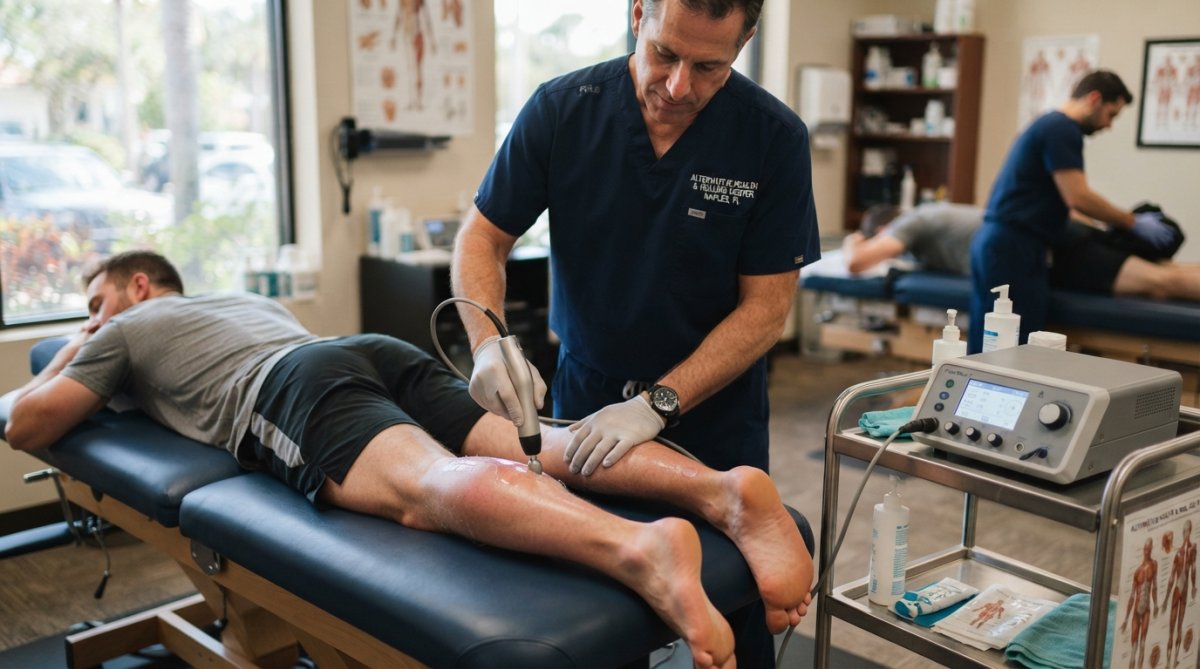
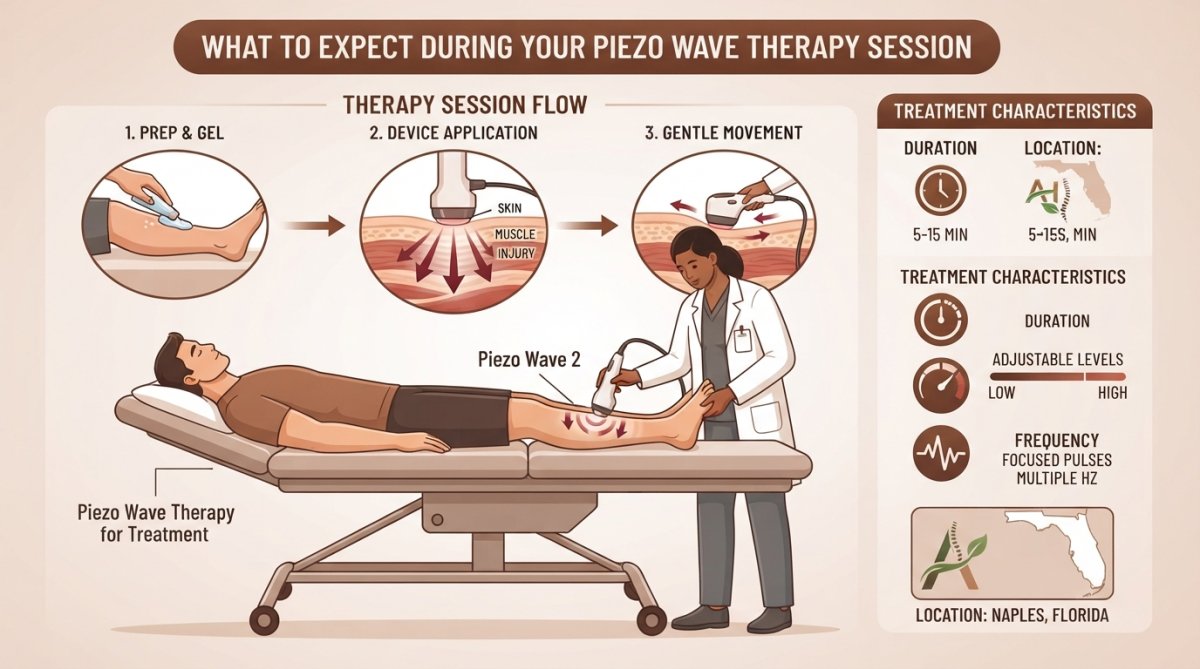
Treatment sessions typically last 15-20 minutes. The practitioner applies conductive gel to ensure good acoustic coupling between the treatment head and your tissue.
Most patients describe a tapping or thumping feeling as acoustic waves strike the tissue. Some experience mild discomfort, particularly if treating a very tender area, typically rating 2-4 on a 0-10 scale. The treatment head remains in contact with your skin throughout, and you'll hear a rhythmic clicking or buzzing sound as piezoelectric crystals vibrate at high frequency.
Many patients find the treatment surprisingly tolerable, with the controlled, predictable sensation feeling reassuring compared to the unpredictable pain from the injury itself.
Recovery Time, Post-Treatment Care, and Patient Outcomes
The recovery period following piezo wave therapy is dramatically shorter than recovery from surgical intervention. Most patients resume normal activities immediately after treatment, with only minor restrictions on the first day.
Realistic Healing Timelines and Pain Scale Improvements
Healing timelines depend on tissue damage severity, condition duration, and overall health. Acute injuries typically show improvement faster than chronic conditions persisting for years.
Many patients notice pain reduction within 24-48 hours after the first session. A typical treatment course involves 3-4 sessions spaced 7-10 days apart. By the third or fourth session, most patients report substantial improvement, with pain decreasing from 7-8 to 2-3 on a 0-10 scale.
Full tissue regeneration takes longer than pain reduction. While symptoms improve within weeks, collagen remodeling and tissue strengthening continue for 8-12 weeks after the final treatment. Many conditions that plagued patients for years show sustained improvement or complete resolution.
Contraindications and Who Should Not Use Piezo Wave Therapy
Active infections in the treatment area represent an absolute contraindication, as acoustic waves can spread infection throughout tissue planes. Pregnancy, particularly in the first trimester, is a contraindication as a precautionary measure.
Certain medications increase bleeding risk and make piezo wave therapy inadvisable, including anticoagulants like warfarin and antiplatelet agents like clopidogrel. Pacemakers and implanted cardiac devices require careful evaluation before proceeding. Metallic implants in the treatment area can reflect or scatter acoustic waves, reducing effectiveness.
Severe osteoporosis warrants caution, and uncontrolled diabetes requires careful consideration, though well-controlled diabetes is not necessarily a contraindication.
Cost, Insurance Coverage, and Financial Reality
Treatment costs typically range based on geographic location, the specific condition, and sessions required. Most patients require 3-4 sessions for optimal results, making the total treatment investment far less expensive than surgery.
Insurance coverage remains inconsistent. Some plans recognize piezo wave therapy as established treatment for specific conditions like plantar fasciitis and tendonitis, while others classify it as experimental. Medicare coverage varies by regional carrier and diagnosis. Prior authorization is often required.
Contact your insurance company before scheduling treatment to determine coverage and prior authorization requirements. Many practitioners offer payment plans or package discounts for multiple sessions.
When evaluating cost, consider alternatives. Surgical treatment typically costs tens of thousands of dollars and requires weeks of recovery. Ongoing physical therapy, injections, and medication management accumulate significant costs over time. Piezo wave therapy often represents excellent value when it eliminates the need for surgery.
Chronic pain from soft tissue injuries doesn't have to define your life. At Alternative Health & Healing Center, we combine nearly 40 years of clinical experience with advanced technology like the Piezo Wave 2 to deliver results that surgery cannot match. Our practitioners specialize in Applied Kinesiology and comprehensive musculoskeletal assessment, ensuring your treatment targets the actual source of your pain. From plantar fasciitis to tendonitis to sports injuries, piezo wave therapy for soft tissue injury has helped countless patients return to the activities they love. Request an appointment today and discover how personalized, technology-driven care can restore your health and mobility.
| Condition | Typical Sessions | Expected Timeline | Pain Reduction |
|---|---|---|---|
| Plantar Fasciitis | 3-4 | 4-6 weeks | 60-80% |
| Achilles Tendonitis | 3-4 | 4-8 weeks | 50-70% |
| Rotator Cuff Tendonitis | 4-5 | 6-10 weeks | 55-75% |
| Tennis Elbow | 3-4 | 4-6 weeks | 65-85% |
| Muscle Strains (chronic) | 2-3 | 2-4 weeks | 70-90% |
References & Further Reading:
For more information about piezo wave therapy and soft tissue healing, consult the American Academy of Orthopaedic Surgeons clinical guidelines on extracorporeal shockwave therapy. The Journal of Orthopaedic Surgery and Research publishes peer-reviewed studies documenting clinical outcomes. Additional evidence-based resources appear through PubMed's collection of shockwave therapy research.
Frequently Asked Questions
What is piezo wave therapy and how does it work for soft tissue injuries?
Piezo wave therapy uses piezoelectric shockwave technology to deliver acoustic waves that stimulate cellular healing in damaged soft tissues. The waves trigger neovascularization (new blood vessel formation) and increase metabolic activity in injured areas like tendons, ligaments, and muscles. Unlike invasive surgery, this non-invasive treatment activates your body's natural tissue regeneration processes without incisions or prolonged recovery.
How many piezo wave therapy sessions are typically needed for soft tissue injuries?
Treatment protocols vary based on injury severity and tissue type, but most patients require 3-5 sessions spaced 1-2 weeks apart. Some acute injuries may improve in fewer sessions, while chronic conditions like calcific tendinitis may need additional treatments. Your provider will assess your response after initial sessions and adjust the protocol accordingly. Recovery timelines range from weeks to several months depending on baseline condition.
Is piezo wave therapy painful, and what are the side effects?
Piezo wave therapy causes mild to moderate discomfort during treatment, often described as a tapping or pulsing sensation, but is generally well-tolerated without anesthesia. Common temporary side effects include localized redness, mild swelling, or bruising that typically resolves within days. Serious adverse events are rare. Contraindications include pregnancy, active infections, and certain anticoagulant medications. Discuss your full medical history with your provider before treatment.
What makes piezo wave therapy different from traditional shockwave therapy?
Piezoelectric shockwave therapy uses piezoelectric crystals to generate focused acoustic waves, offering precise targeting and adjustable intensity. Traditional electrohydraulic or electromagnetic shockwave devices work differently but may deliver similar clinical outcomes. Piezo systems often allow for ultrasound-guided treatment, improving accuracy for small or deep tissues. The choice depends on your specific injury location and your provider's equipment and expertise.


