 listicle
Spinal Decompression Naples FL: 2026 Review & Cost Guide
Table of Contents
- How Spinal Decompression Works and What It Treats
- Benefits of Spinal Decompression Therapy for Chronic Pain
- Spinal Decompression Recovery Time: What to Expect
- Chiropractic Spinal Decompression Cost and Insurance Options
- Comparing Naples Spinal Decompression Providers
- Is Spinal Decompression Right for You?
- Conclusion
- Frequently Asked Questions
Last Updated: September 23, 2026
How Spinal Decompression Works and What It Treats
Spinal decompression naples is a non-surgical therapy that gently stretches the spine to relieve pressure on compressed discs and nerves. This guide from Alternative Health & Healing Center explains how spinal decompression in Naples FL works, what it treats, and how to judge whether it fits your situation.
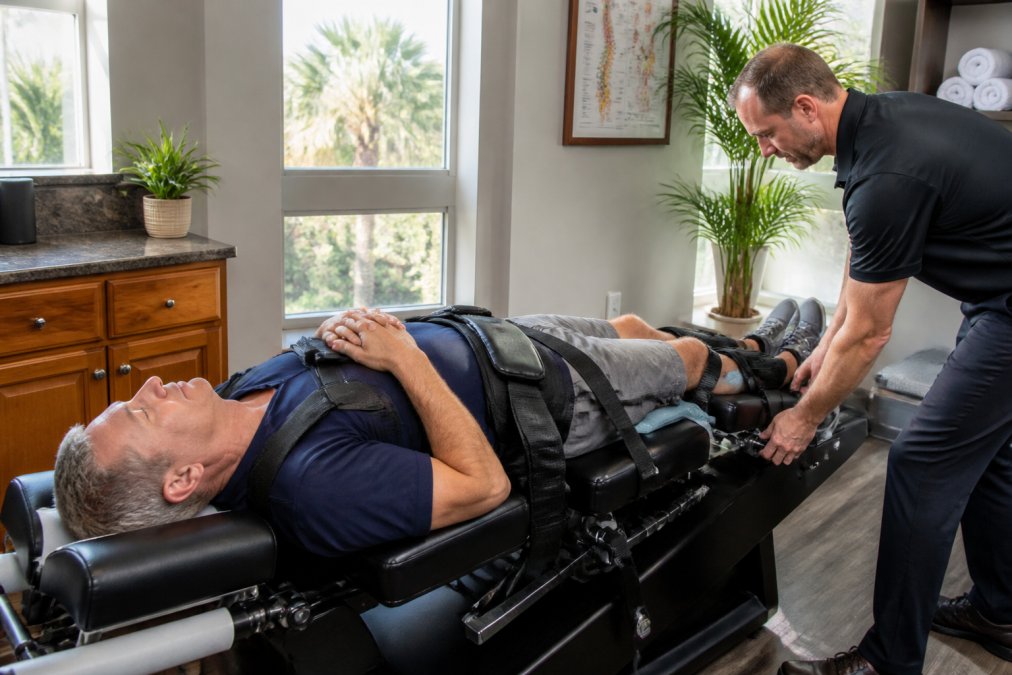
Motorized Traction vs. Manual Adjustment
Manual adjustment uses a chiropractor's hands to restore spinal alignment. Motorized traction, by contrast, applies a slow, measurable pull that holds the spine in a decompressed position for set intervals.
Benefits of Spinal Decompression Therapy for Chronic Pain
The clearest benefit of spinal decompression therapy is that it offers a minimally invasive path to pain relief for people who want to avoid surgery. Patients with radiculopathy, degenerative disc disease, or spinal stenosis often find that decompression reduces the shooting pain that travels down an arm or leg.
Other reported benefits include:
- Reduced pressure on compressed discs and nerve roots
- Improved mobility in the lumbar and cervical spine
- Less reliance on pain management medication
- A treatment plan that pairs with rehabilitation and therapeutic stretching
Spinal Decompression Recovery Time: What to Expect
Most people return to normal daily activity the same day. A typical session lasts 30 to 45 minutes, and many patients describe the sensation as a gentle stretch rather than discomfort. What separates a good outcome from a stalled one, however, is rarely the table itself, it is what happens in the 24 to 72 hours after each session.
The First 24 Hours After a Session
The decompression creates space between vertebral segments, but the surrounding muscles, ligaments, and fascia need time to adapt to that new position.
- Hours 0-2: A feeling of lightness or mild looseness in the treated region. Some patients notice immediate reduction in radiating pain; others notice nothing yet.
- Hours 2-12: Muscles may feel fatigued or slightly sore, similar to the day after a long stretch or a new workout. This is normal and usually resolves without intervention.
- Hours 12-24: The spine begins to settle. Patients who overdo activity in this window often report that the relief "wore off" faster than expected.
Post-Treatment Exercise Protocols That Protect Your Results
This is where most guides stop, and where the real work begins. Decompression temporarily reduces disc pressure and nerve compression; exercise teaches the surrounding musculature to hold that gain. Without it, the spine tends to drift back toward its previous compressed state.
- Core stabilization (daily): Dead bugs, bird dogs, and modified planks. These train the deep abdominal and multifidus muscles that support the lumbar spine. Start with holds of 5-10 seconds and build gradually.
- Cervical retraction and chin tucks (daily, if treating the neck): Gentle, slow repetitions that counteract forward head posture and reinforce the decompressed position of the cervical spine.
- Nerve glides (3-5 times per week): Sciatic nerve glides or median nerve glides, depending on the affected level. These improve nerve mobility without stretching the nerve itself.
- Hip and thoracic mobility (3-4 times per week): Tight hips and a stiff thoracic spine force the lumbar spine to compensate. Mobility work here reduces that load.
- Walking (daily): Low-impact, promotes circulation to the discs, and is one of the few activities that nourishes disc tissue through gentle loading and unloading.
How Long Until Results Hold?
Recovery time varies by condition and treatment plan. Some patients notice relief after a few sessions. Others need several weeks of consistent care before changes hold. A common approach is a series of visits followed by a maintenance schedule, often tapering from two or three sessions per week to one every few weeks.
Aftercare Beyond Exercise
Posture correction, workstation setup, sleep position, and load management all influence whether the decompressed position becomes the spine's new default. A provider who only adjusts the table and sends you home is leaving half the treatment on the table.
Chiropractic Spinal Decompression Cost and Insurance Options
Cost is the question most patients ask last and worry about first. The honest answer is that spinal decompression pricing depends on your location, the provider, the equipment used, and how many sessions your treatment plan includes, but that does not mean you have to walk in blind.
How Spinal Decompression Is Priced
Most clinics structure pricing in one of three ways:
- Per-session pricing: You pay for each visit individually. This offers flexibility but usually costs more per visit than a package.
- Package pricing: A bundled price for a full treatment plan, often 12 to 20 sessions. The per-session cost drops, but you commit upfront.
- Hybrid pricing: A discounted package with the option to add adjunct therapies (rehabilitation, soft tissue work, therapeutic modalities) at an additional per-visit rate.
Because rates vary widely, the only reliable number is the one your provider gives you after an exam.
What to Ask Before You Commit
When you request a quote, ask for a written breakdown that includes:
- The total number of sessions in the recommended plan
- The per-session cost and the total plan cost
- Whether the initial exam, imaging, or X-rays are included or billed separately
- Whether adjunct therapies (rehab, stretching, soft tissue work) are included or added per visit
- The clinic's policy on missed appointments, refunds, and early termination
Does Insurance Cover Spinal Decompression?
Insurance coverage for spinal decompression varies by plan and diagnosis. Some policies cover it when a physician documents a specific condition such as a herniated disc, radiculopathy, or degenerative disc disease. Others classify it as an elective or experimental therapy and exclude it entirely.
- Is spinal decompression covered under my plan, and under what diagnosis codes?
- Do I need a referral or prior authorization before treatment begins?
- What is my out-of-pocket cost per session, including deductible and coinsurance?
- Is there a visit limit per calendar year for chiropractic or decompression therapy?
- Does the plan require care to be medically necessary and documented by a physician?
Financing and Payment Options
Many clinics offer payment plans, third-party medical financing, or health savings account (HSA) and flexible spending account (FSA) acceptance. If cost is the barrier, ask specifically about:
- In-house payment plans: Monthly installments spread across the treatment period.
- Third-party medical financing: Lenders that specialize in healthcare procedures, often with promotional no-interest periods for qualified applicants.
- HSA/FSA eligibility: Decompression therapy may qualify as a medical expense if a physician documents it as medically necessary. Confirm with your plan administrator before assuming eligibility.
- Care credit or similar programs: Widely accepted in chiropractic offices and worth asking about directly.
Comparing Quotes Without Getting Misled
A lower per-session price is not always the better deal. A plan with 20 sessions at a low rate may cost more than a plan with 12 sessions at a higher rate if the shorter plan is better matched to your condition. Ask each provider to explain the clinical reasoning behind the recommended session count, not just the price.
Comparing Naples Spinal Decompression Providers
Choosing a provider comes down to equipment, clinical experience, and how well the treatment plan fits your condition. The table below summarizes what to weigh.
| What to Compare | Why It Matters | What to Ask |
|---|---|---|
| Equipment type | Different tables apply traction differently | Which decompression system do you use? |
| Clinical experience | Years of hands-on care affect outcomes | How long have you used this therapy? |
| Treatment plan | Session count and adjunct therapies vary | How many visits will I need? |
| Cost structure | Per-session vs. package pricing | What is the total plan cost? |
| Integrative care | Combining therapies can speed recovery | Do you offer rehab or stretching? |

Is Spinal Decompression Right for You?
Spinal decompression is a strong fit for adults with disc-related pain who want to avoid surgery and are willing to commit to a full treatment plan. It is less suitable for patients with spinal fractures, severe osteoporosis, or certain implants.
Conclusion
Chronic back and neck pain wears you down, and the search for relief can feel endless when nothing has stuck. Alternative Health & Healing Center combines nearly 40 years of clinical experience, Applied Kinesiology, and advanced technology like the Piezo Wave 2 to build a treatment plan around your specific condition. Request an appointment and get a clear answer on whether spinal decompression fits your recovery.
Frequently Asked Questions
How much does spinal decompression cost per session in Naples, FL?
Costs vary by clinic and treatment plan. Pricing depends on the provider, equipment, and whether adjunct therapies are included. Most clinics require a consultation and exam before quoting a plan. Contact Alternative Health & Healing Center directly for current pricing and financing options.
Will insurance pay for spinal decompression therapy?
Coverage depends on your specific plan and medical necessity documentation. Some insurance plans cover chiropractic care but exclude decompression as a separate service. Check with your insurer before starting treatment and ask the clinic about payment plans or financing.
What are the drawbacks of spinal decompression?
Common drawbacks include temporary soreness after sessions, the time commitment of multiple visits per week, and out-of-pocket costs if insurance does not cover it. It is not appropriate for everyone: patients with severe osteoporosis, spinal fractures, or certain implants may not be candidates. A clinical assessment determines whether it is safe for your situation.
How many sessions are usually required for spinal decompression?
Treatment plans vary depending on the condition and severity. Your provider will reassess progress periodically and adjust the plan. Recovery time varies by patient.
Is spinal decompression effective for herniated discs?
Research suggests non-surgical spinal decompression can reduce pain and improve function for some patients with herniated or bulging discs. Results vary based on disc location, severity, and overall health. It is not a guaranteed cure, and some patients need additional therapies. A thorough clinical assessment helps determine whether it is likely to help your specific case.