 listicle
Why Traditional Physical Therapy Fails: 7 Critical Flaws
Table of Contents
- Why Traditional Physical Therapy Fails: The Core Problems
- 7 Reasons Traditional Physical Therapy Doesn't Deliver Results
- 1. Limited One-on-One Time With Your Therapist
- 2. Insurance Reimbursement Models Prioritize Patient Volume
- 3. One-Size-Fits-All, Protocol-Based Treatment Plans
- 4. Symptom Management Instead of Root Cause Identification
- 5. Lack of Sport-Specific or Personalized Rehabilitation
- 6. Over-Reliance on Passive Modalities
- 7. Misdiagnosis and Incomplete Mechanical Assessment
- Signs Physical Therapy Is Not Working
- How Long Does Physical Therapy Take to Work?
- The Home Exercise Program (HEP) Failure Problem
- Alternatives to Traditional Physical Therapy
- Patient Advocacy and Communication Strategies
- How to Find Better Care: A Practical Framework
- Frequently Asked Questions
Last Updated: July 15, 2026
Why traditional physical therapy fails is a question more patients are asking as they experience stalled progress, repeated flare-ups, and mounting frustration with their care. At Alternative Health & Healing Center, we've observed how insurance-driven models, protocol-based approaches, and limited patient contact have compromised care quality. Below, we examine the seven critical flaws that explain why traditional physical therapy often falls short.
Why Traditional Physical Therapy Fails: The Core Problems
The structure of modern physical therapy is broken at its foundation. Insurance reimbursement models force clinics to prioritize patient volume over quality time with each individual. A therapist seeing 15-20 patients per day cannot deliver the personalized, hands-on care that complex injuries require. This creates a throughput factory where symptom management replaces root cause investigation.
Traditional physical therapy treats the body like a mechanical system with standardized fixes. One patient with a bulging disc gets the same protocol as another, despite completely different movement patterns, strength baselines, and functional demands. This one-size-fits-all approach is designed to work for insurance companies, not patients.
Insurance-Driven Volume Over Quality
Insurance reimbursement models create a direct conflict between patient outcomes and clinic revenue. Clinics are reimbursed per visit, not per result, which means a patient who recovers in four weeks generates less revenue than one requiring twelve weeks. This economic incentive structure doesn't reward clinics for getting patients better faster.
The volume-based model leaves therapists with 7-10 minutes of hands-on time per patient. Quality manual therapy, detailed movement assessment, and meaningful patient education cannot happen in that window. Therapists spend more time documenting for insurance than treating patients.
Research shows patient satisfaction in insurance-based clinics correlates directly with therapist availability. Clinics with higher patient-to-therapist ratios report lower outcome scores and higher dropout rates.
Protocol-Based Treatment Without Personalization
Insurance companies and large clinic chains standardize treatment using evidence-based protocols. While evidence-based practice sounds good, protocols are designed for average patients, and no patient is average. A protocol for rotator cuff injuries might specify four weeks of passive modalities followed by active recovery, but this timeline assumes a certain age, pain tolerance, and functional baseline that may not apply to your case.
Protocol-based treatment removes clinical judgment from the equation. A therapist following a standardized protocol doesn't ask deeper diagnostic questions: Why is this patient's core stability poor? What movement patterns created this injury? Is there a neurological component driving the pain?
The result is that patients receive treatment designed for the diagnosis, not for the person carrying it. This is why many patients plateau after initial improvement, the protocol addressed acute pain but never the root cause.
7 Reasons Traditional Physical Therapy Doesn't Deliver Results
1. Limited One-on-One Time With Your Therapist
In a typical insurance-based clinic, your actual one-on-one attention from the therapist might be 10-15 minutes of hands-on work, with the rest spent doing exercises while the therapist circulates between other patients. This fragmented attention prevents your therapist from developing deep understanding of your movement patterns, pain triggers, or how symptoms change throughout the day.
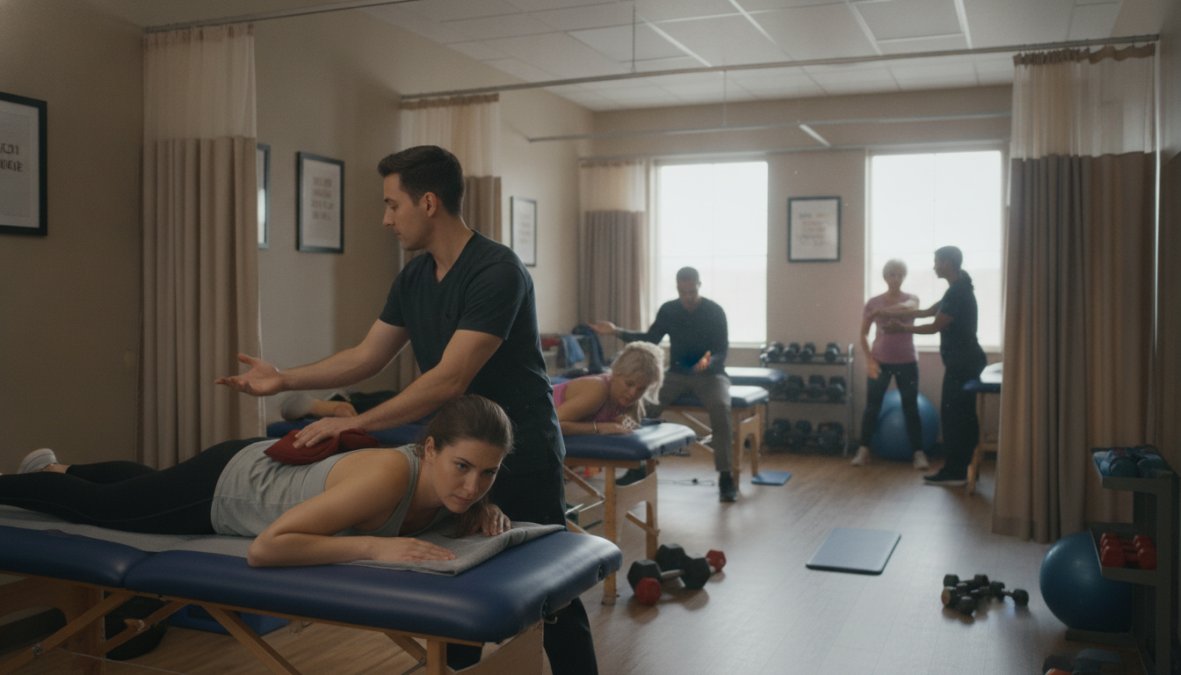
Quality rehabilitation requires sustained focus. When a therapist spends 30 continuous minutes with you, they can perform detailed mechanical assessment, identify subtle movement compensations, teach proper form, and adjust your program based on real-time feedback. The clinic model makes this impossible.
2. Insurance Reimbursement Models Prioritize Patient Volume
Insurance doesn't pay for outcomes, it pays for visits. This creates a perverse incentive where clinics profit from longer treatment durations, not faster recovery. Clinics naturally drift toward high-volume, low-complexity cases, exactly the opposite of what many patients need.
The reimbursement structure also locks patients into specific modalities. Insurance covers passive treatments like ultrasound and electrical stimulation more readily than extended manual therapy. So clinics use these modalities not because they're most effective, but because they're reimbursable.
3. One-Size-Fits-All, Protocol-Based Treatment Plans
A diagnosis of "lumbar strain" triggers a predictable sequence regardless of whether you're a 30-year-old athlete or a 70-year-old with osteoporosis. Your unique movement history, sport-specific demands, pain tolerance, and psychological readiness don't shape your treatment plan, the protocol does.
Real personalized rehabilitation requires understanding your specific functional goals. Are you trying to return to competitive tennis? Return to pain-free desk work? Each goal requires different training emphasis. Protocol-based care doesn't distinguish between these.
4. Symptom Management Instead of Root Cause Identification
Most traditional physical therapy addresses symptoms rather than causes. A patient with knee pain gets knee exercises, but the actual cause often lives elsewhere: poor hip mobility creates knee pain, weak scapular stabilizers create neck pain, weak glutes create lower back pain.
Identifying root cause requires time and expertise. Without it, patients improve temporarily but relapse once they stop coming. The underlying mechanical problem never gets fixed.
5. Lack of Sport-Specific or Personalized Rehabilitation
Generic rehabilitation exercises don't prepare you for your actual life demands. A runner with hip pain needs running-specific training that addresses eccentric loading and ground reaction forces. A baseball player with shoulder pain needs rotational power and deceleration control matching throwing mechanics.
Protocol-based care provides generic exercises like clamshells and glute bridges. These address a component of the problem but don't prepare you for the specific demands that caused the injury.
6. Over-Reliance on Passive Modalities
Passive treatments like ultrasound, electrical stimulation, and heat feel good and require minimal patient effort. They're also what insurance readily reimburses. A therapist can apply electrical stimulation to ten patients in an hour but can apply sustained manual therapy to one patient in an hour.
The problem is that passive modalities don't teach your body to move better. They reduce pain temporarily but should never be the foundation of rehabilitation. Active recovery, therapeutic exercise, and movement training actually change tissue, build strength, and rewire movement patterns, but they require patient effort and therapist expertise.
7. Misdiagnosis and Incomplete Mechanical Assessment
Many patients receive a diagnosis based on imaging alone, without thorough mechanical assessment. An MRI shows a bulging disc, so the patient gets diagnosed with "disc herniation," but imaging doesn't tell you whether the disc is actually causing the pain. Discs bulge in asymptomatic people all the time.
Proper diagnosis requires mechanical testing: movement patterns, strength testing, palpation, neurological screening, and functional assessment. Without this detailed assessment, treatment misses the mark.
Signs Physical Therapy Is Not Working
Red Flags You Should Watch For
If you're not seeing progress, several red flags suggest the approach isn't working. First, you're not seeing the same therapist consistently. Continuity of care matters enormously.
Second, your treatment plan never changes. If you're doing the exact same exercises in week six that you did in week two, the program isn't progressing appropriately.
Third, your therapist can't explain why you're doing specific exercises. A good therapist can connect each exercise directly to your functional goal and specific movement dysfunction.
Fourth, you're spending most sessions on passive modalities rather than active exercise. While passive work has a place early in recovery, the bulk of your time should shift toward active movement.
Fifth, nobody is assessing your home exercise program compliance or adjusting it based on your actual ability to perform exercises at home.
How Long Does Physical Therapy Take to Work?
Realistic Timelines vs. False Expectations
Acute injuries like muscle strains and mild sprains often show meaningful improvement within 2-3 weeks of appropriate treatment. Full recovery from acute injuries typically takes 6-12 weeks of consistent, progressive rehabilitation. Chronic injuries or complex cases take longer.
The critical variable is program quality and consistency. A patient in a high-volume clinic doing generic exercises might see slow progress over 12-16 weeks. A patient in a personalized program with consistent therapist contact and sport-specific training might see the same recovery in 6-8 weeks.
Many patients in traditional clinics plateau around week 4-6. They've improved enough that acute pain is manageable, but they haven't addressed underlying movement dysfunction. Without a therapist pushing them toward more challenging, functional exercises, they plateau indefinitely.
The Home Exercise Program (HEP) Failure Problem
Home exercise programs are where most traditional physical therapy breaks down. You're given a sheet with exercises and told to do them daily, but there's no follow-up on whether you're actually doing them or doing them correctly.
Studies show patients complete only 40-50% of prescribed home exercises, and many do them with poor form. Without direct feedback, patients default to movement patterns they've always used, the same patterns that created the injury. They're reinforcing dysfunction rather than building new movement habits.
A therapist who spends time observing your home exercises, correcting form, and adjusting difficulty would see dramatically better outcomes. The solution is a system that monitors performance, provides real-time feedback, and adapts difficulty automatically.
| Problem | Traditional Clinic Approach | Better Alternative |
|---|---|---|
| Limited therapist time | 10-15 min hands-on per session | 30+ min focused one-on-one care |
| Protocol-based treatment | Same exercises for all patients | Personalized program based on assessment |
| Symptom focus | Treat pain location | Identify and address root cause |
| Passive modality emphasis | Ultrasound, electrical stim | Active therapeutic exercise |
| HEP compliance | Generic sheet, no follow-up | Monitored program with feedback |
| Progress tracking | Subjective improvement | Objective measurements and data |
Alternatives to Traditional Physical Therapy
Integrative and Personalized Approaches
Integrative clinics combine physical therapy with complementary modalities like chiropractic care, acupuncture, and manual therapy. At Alternative Health & Healing Center, we use Applied Kinesiology, a system that identifies movement dysfunction through specific testing protocols, combined with advanced therapeutic technologies like Piezo Wave 2 acoustic wave therapy.
This integrative approach addresses multiple dimensions of pain simultaneously. Rather than focusing solely on the injured structure, we assess how your entire body compensates for injury and which tissues need stimulation to restore function. Personalized rehabilitation means extended assessment time and objective measurement tracking so you can see measurable progress.
Digital and AI-Powered Recovery Options
Sword Health's platform combines motion-tracking technology with licensed clinician oversight, allowing patients to receive real-time feedback on exercise form. Hinge Health's digital clinic provides wearable sensors that track movement during prescribed exercises, combined with one-on-one access to physical therapists.
These platforms work best for disciplined patients who don't require extensive hands-on manual therapy. For complex cases, they're supplementary rather than sufficient.
Patient Advocacy and Communication Strategies
Effective patient advocacy means asking specific questions about your program. Ask your therapist to explain the mechanical basis for each exercise. Ask what the expected timeline is for progression, exercises should get harder every 2-3 weeks. Request objective data on range of motion, strength, and functional capacity at regular intervals.
Communicate clearly about your functional goals. Be specific: "I want to return to running without pain" or "I need to sit at my desk for eight hours without symptoms." This specificity forces your therapist to design a program addressing your real-world demands.
How to Find Better Care: A Practical Framework
Initial Assessment: A thorough assessment should require 60-90 minutes minimum. Ask what assessment tools they use, do they rely on imaging alone or perform detailed mechanical testing?
Therapist Continuity: Will you see the same therapist consistently? Clinics that rotate patients among multiple therapists prioritize efficiency over continuity.
One-on-One Time: Aim for clinics where the therapist spends at least 20-30 minutes of direct hands-on or instructional time per session.
Program Progression: Ask how the program will change over time. A clinic committed to progression should describe specific criteria for advancing exercises.
Objective Measurement: Does the clinic track objective progress? Ask whether they measure and document range of motion, strength, and functional capacity regularly.
Home Exercise Program: How do they monitor and adjust your home exercise program? Do they watch you perform exercises and correct form?
Root Cause Focus: Do they investigate why the injury occurred? Ask whether they assess your entire kinetic chain and occupational or sport-specific demands.
If you're experiencing stalled progress, repeated flare-ups, or frustration with traditional physical therapy, the problem isn't your commitment, it's the system. Alternative Health & Healing Center offers a fundamentally different approach: personalized assessment using Applied Kinesiology, extended one-on-one treatment time, and advanced technologies like Piezo Wave 2 that accelerate healing while addressing root causes. With nearly 40 years of clinical experience, our team identifies what generic protocols miss. Request an appointment today and discover what personalized rehabilitation actually delivers.
Frequently Asked Questions
Why does traditional physical therapy often fail to provide lasting pain relief?
Traditional physical therapy frequently fails because it prioritizes patient volume over individualized care, relies on insurance-driven reimbursement models that limit session time, and often treats symptoms rather than root causes. Many clinics use one-size-fits-all protocol-based treatment plans that don't account for your unique mechanical assessment, underlying conditions, or personal recovery goals. Additionally, over-reliance on passive modalities without adequate patient education or personalized active recovery strategies limits long-term outcomes.
What are the signs physical therapy is not working for my condition?
Key warning signs include: no measurable progress after 4-6 weeks, persistent sharp pain or burning sensation that worsens with exercises, lack of clear explanation about your diagnosis or treatment plan, minimal one-on-one therapist attention, and feeling rushed through sessions. If your therapist hasn't identified and addressed the root cause of your pain, such as core stability deficits or movement dysfunction, or if you're not seeing improvement in functional movement and mobility, it's time to seek an alternative approach or second opinion.
How long does physical therapy take to work, and when should I expect results?
Most evidence-based physical therapy programs show measurable progress within 2-4 weeks if the treatment plan is properly personalized and targets the root cause. However, traditional insurance-based clinics often require 6-12 weeks due to limited session frequency and depth. If you're not seeing meaningful improvement in pain levels, range of motion, or functional ability within 4-6 weeks, your treatment plan may need adjustment. The timeline depends heavily on diagnostic accuracy, adherence to home exercise programs, and whether care addresses underlying mechanical issues rather than just symptom management.
What are the best alternatives to traditional physical therapy?
Effective alternatives include integrative approaches like Applied Kinesiology combined with advanced therapeutic modalities (cold laser, acoustic wave therapy, spinal decompression), digital platforms with AI-powered motion tracking and licensed clinician support, and private practice physical therapy that prioritizes personalized care and sport-specific training. Some patients benefit from combining traditional PT with complementary therapies or seeking practitioners who use comprehensive mechanical assessments and patient-centered care models that emphasize active recovery, functional movement, and long-term patient empowerment over passive treatment.