 How-to
Applied Kinesiology for Athletes: How to Build It Into Training
Last Updated: November 5, 2026
Quick Summary
Integrating applied kinesiology into athlete training means using manual muscle testing as a screening layer alongside strength and conditioning work, not as a replacement for it. Test early in the week, avoid testing after max-effort sessions or poor sleep, then adjust programming and retest to confirm the correction worked.
- A screen includes history, postural analysis, range of motion checks, manual muscle testing, and retesting after a light corrective input.
- Weak hip stabilizers call for single-leg work and glute activation before lifts, three times per week.
- Poor proprioception after an ankle sprain calls for balance and perturbation drills in daily short sets.
- Treat a positive finding as a question, not a verdict, and refer pain cases rather than tweaking the program.
- The biggest mistake is skipping credentials, since interpretation of muscle testing takes training.
Table of Contents
- Why Applied Kinesiology for Athletes Belongs in a Training Program
- Applied Kinesiology Muscle Testing: What Actually Happens in a Screen
- Step-by-Step: Integrating Applied Kinesiology Into an Athlete's Week
- Athlete Training Program Examples That Pair Testing With Strength Work
- Applied Kinesiology Evidence: What the Research Supports and What It Does Not
- Common Mistakes When Coaches Add Muscle Testing to a Program
- Book an Applied Kinesiology Assessment for Your Athlete
- Frequently Asked Questions
Why Applied Kinesiology for Athletes Belongs in a Training Program
Applied kinesiology is a hands-on assessment method that uses manual muscle testing to read how the nervous system is communicating with the muscles. For athletes, that feedback can reveal weaknesses and movement faults that standard strength tests miss.
The draw for coaches is simple. A muscle that tests weak may still look strong on a barbell. Applied kinesiology for athletes helps spot muscle inhibition early, before it turns into a strain or a chronic compensation. That is why more training programs are adding a screening layer alongside strength and conditioning work.
What most guides get wrong is treating muscle testing as a replacement for training. It is not. It is a screen that tells you where to aim your programming. Below, we show you exactly how to build it into an athlete's week without disrupting the work that already delivers results.
Applied Kinesiology Muscle Testing: What Actually Happens in a Screen
A manual muscle test is a simple procedure: the athlete holds a position while the practitioner applies gentle resistance and watches how the muscle responds. What separates a good screen from a rushed one is the sequence and the attention to facilitation patterns, the subtle shifts that show the nervous system is compensating.
Here is the typical flow:
- A short history covering injuries, training load, and recovery
- Postural analysis and range of motion checks
- Manual muscle testing across major muscle groups
- Retesting after a light corrective input to see if the response changes
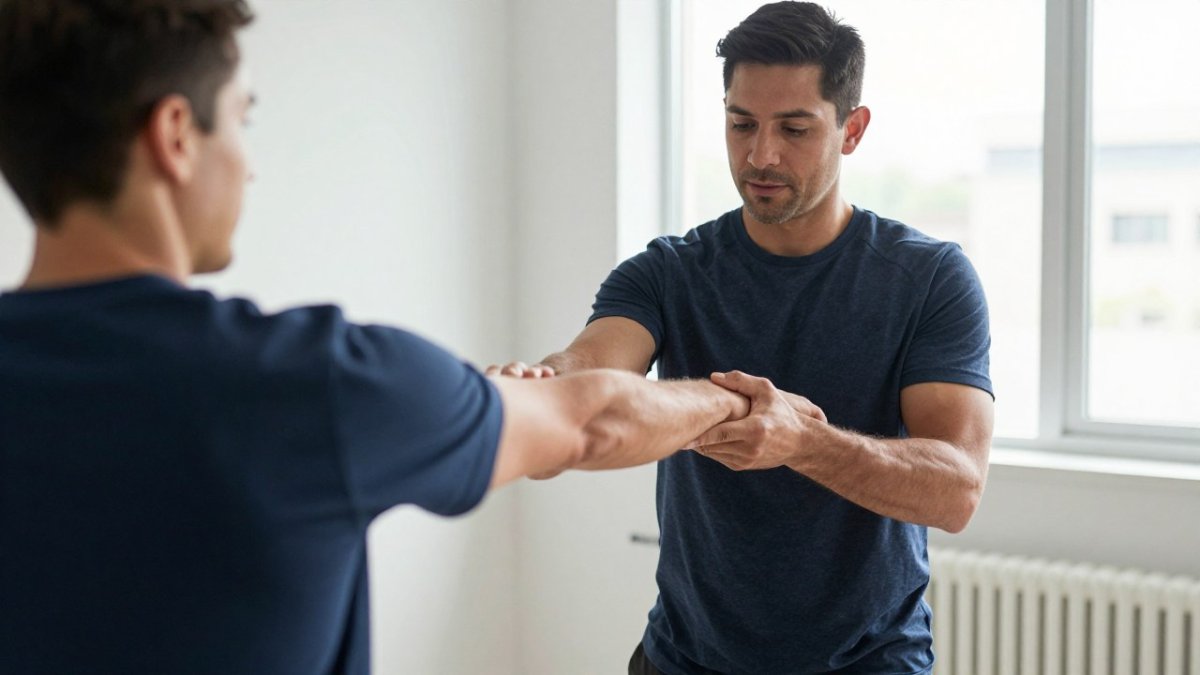
The goal is not a diagnosis. It is a way to identify where the kinetic chain may be losing force. For a plain-language walkthrough of the mechanics, see how muscle testing works.
Step-by-Step: Integrating Applied Kinesiology Into an Athlete's Week
Most guides stop at describing what a muscle test is. The harder question is scheduling: when in the week does testing happen, who does it, how long does it take, and what changes in the program as a result. The framework below is built to sit alongside normal strength and conditioning work rather than replace it, and it assumes a coach or practitioner who has been trained to interpret manual muscle testing.
Watch out: testing immediately after a max-effort session or on a day the athlete slept four hours will produce findings that reflect fatigue, not dysfunction, and you will chase problems that do not exist.
For concrete strength drills to pair with the findings, this guide on kinesiology techniques to strengthen core muscles gives you a starting set.
Athlete Training Program Examples That Pair Testing With Strength Work
Testing only matters if it changes what the athlete does next. Here is how findings translate into weekly programming for three common situations.
| Finding | Program Response | Frequency |
|---|---|---|
| Weak hip stabilizers | Single-leg work and glute activation before lifts | 3x per week |
| Poor proprioception after ankle sprain | Balance and perturbation drills | Daily, short sets |
| Muscle inhibition in the shoulder | Retest, then reduce overhead volume | Recheck weekly |
For a sprinter, a weak glute medius finding might mean adding lateral band work before sprint sessions. For a overhead athlete, a shoulder inhibition flag might mean pulling back pressing volume for two weeks. For a masters athlete returning from injury, it often means slower progression and more frequent rechecks.
The pattern is the same across sports: test, adjust, retrain, retest. Applied kinesiology for athletes is most useful when it feeds an evidence-based training plan, not when it sits in a folder.
Applied Kinesiology Evidence: What the Research Supports and What It Does Not
The honest position is that applied kinesiology sits in contested territory. Manual muscle testing is taught and used in clinical and sports settings, but studies of inter-rater reliability, whether two trained testers reach the same conclusion on the same muscle, have produced inconsistent results. Some trials find acceptable agreement on gross strength grading; others find that trained testers disagree often enough that a single test should not drive a program decision. The disagreement is not a reason to dismiss the method, but it is a reason to use it carefully.
A useful way to separate the claims is by tier.
**** Manual muscle testing can surface asymmetry, guarding, and movement faults that a coach might otherwise miss, particularly in athletes who look strong on a barbell but move poorly under load. Used as one data point among several, it prompts further assessment rather than closing a question.
Tier 2, plausible but unproven. The idea that a weak test reflects a specific neuromuscular inhibition pattern that a targeted drill can resolve within a session is widely reported by practitioners and consistent with what is known about fatigue and facilitation, but it has not been established in controlled trials at the level sports science usually demands.
Tier 3, not supported. Claims that a single muscle test can diagnose a specific organ, nutritional deficiency, or medical condition do not hold up. Neither does the idea that muscle testing can replace imaging, a physician's evaluation, or validated performance testing such as force plates or isokinetic dynamometry.
For a coach, the practical rule is to treat a positive finding as a question, not a verdict. If a test flags a shoulder and the athlete also reports pain with overhead pressing, that is a referral, not a program tweak. If a test flags a hip and the athlete moves well and reports nothing, the right response is to note it, retest next session, and change nothing until the pattern repeats.
Watch out: the most common credibility failure is a coach who presents a muscle test as a diagnosis to an athlete or parent. That overreach is what draws criticism to the field, and it is avoidable.
For an overview of the method and its intended use, read what applied kinesiology is and how it works.
Common Mistakes When Coaches Add Muscle Testing to a Program
The biggest mistake is skipping credentials. Muscle testing looks simple, but interpretation takes training. A coach who tests without proper grounding can misread a normal response as a problem and change a program for no good reason.
Other frequent errors:
- Testing once and never retesting, so you cannot tell if the correction worked
- Letting test results override good coaching judgment
- Ignoring load, sleep, and stress, which all affect muscle response
- Treating a weak test as a diagnosis instead of a question to explore
If you are bringing in outside help, check credentials carefully. This guide on finding a certified applied kinesiology practitioner walks through what to ask before you book.
Book an Applied Kinesiology Assessment for Your Athlete
An assessment is the fastest way to see whether muscle testing adds value to your athlete's program. Our team at Alternative Health & Healing Center brings nearly 40 years of practice experience and a specialization in Applied Kinesiology. We also use advanced technology, including the Piezo Wave 2, for musculoskeletal and nerve pain.
If you are ready to see how assessment fits into care, book a sports injury treatment assessment and we will map the next steps together.
Frequently Asked Questions
Can applied kinesiology replace strength and conditioning or medical care?
No. Applied kinesiology is best used as a screening and referral tool alongside strength and conditioning, not as a replacement. A muscle test can flag inhibition or weakness that a coach then addresses with targeted exercise, but it does not diagnose injury or substitute for imaging, physical therapy, or physician care. Keep the strength coach, athletic trainer, and physician in the loop, and treat any positive finding as a prompt for further evaluation rather than a final answer.
Is applied kinesiology evidence strong enough to build a program around?
The applied kinesiology evidence base is mixed. Manual muscle testing results can vary between testers, and the diagnostic claims of applied kinesiology lack strong scientific support. Use it as one input among several, pair it with objective measures like range of motion, jump testing, and force plate data, and avoid making training decisions on a single test result.
How should an athlete's progress be measured when using applied kinesiology?
Track the same markers at baseline and at regular intervals. Record manual muscle testing grades for the specific muscles you screened, range of motion, and one sport-specific performance metric such as sprint time or vertical jump. Pair those with how the athlete reports pain and function. Progress means the weak muscle now holds against resistance and the performance metric moves in the right direction, not just that a single test felt different on the day.
How can coaches and clinicians coordinate applied kinesiology with an athlete's training?
Agree on who does what before the season starts. The clinician performs the muscle testing and any hands-on care, the strength coach owns the corrective exercise and loading plan, and the athlete logs symptoms and performance between sessions. Share a one-page summary after each assessment listing the inhibited muscles, the prescribed exercises, and the re-test date. That keeps the applied kinesiology findings tied to the training program instead of sitting in a separate file.
Every athlete's body tells a story that standard testing can miss. If you want a clearer picture of where strength is leaking and how to correct it, our team can help. Alternative Health & Healing Center offers Applied Kinesiology assessments, integrative chiropractic care, and therapies such as the Piezo Wave 2 to support recovery and performance. Get started with Alternative Health & Healing Center and give your athlete a program built on how their body actually moves.