 blog
blog
Applied Kinesiology for Pain Relief: Benefits & How It Works
Table of Contents
- What Is Applied Kinesiology and How It Works for Pain Relief
- Applied Kinesiology Muscle Testing: The Diagnostic Foundation
- Core Applied Kinesiology Techniques for Pain Management
- Holistic Pain Relief Methods: Applied Kinesiology's Integrated Approach
- Specific Pain Conditions Treated with Applied Kinesiology
- Applied Kinesiology Scientific Evidence and Clinical Outcomes
- What to Expect During Your First Applied Kinesiology Session
- Frequently Asked Questions
Applied Kinesiology for Pain Relief: Benefits & How It Works
Last Updated: July 22, 2026
What Is Applied Kinesiology and How It Works for Pain Relief
Applied kinesiology combines chiropractic principles with muscle testing to identify and treat pain at its source. Unlike standard chiropractic care focused on spinal adjustments, applied kinesiology integrates muscle monitoring, nervous system assessment, and functional neurology to address root causes of dysfunction. A pinched nerve in your neck might originate from muscular imbalances in your lower back; chronic knee inflammation could stem from postural compensation patterns developed years ago.
The core principle is straightforward: your muscles communicate your body's health through their strength and responsiveness. By reading these signals through precise muscle testing, practitioners identify which systems are failing and which interventions will work for your specific situation.
The Role of Muscle Monitoring in Diagnosis
Muscle monitoring serves as your body's diagnostic language. When a muscle tests weak, it signals that the nervous system controlling that muscle has lost proper communication. A practitioner applies gentle pressure to a specific muscle while you resist. The muscle's response, strong, weak, or inconsistent, reveals what's happening in your body. A weak gluteus medius often indicates sacroiliac joint dysfunction causing sciatica; weak serratus anterior might explain chronic shoulder pain that physical therapy hasn't resolved.
How Muscle Testing Identifies Root Causes
Muscle testing reveals the chain of compensation that creates chronic pain. When one muscle or joint fails, surrounding structures immediately compensate to protect you. This works brilliantly for acute injuries but creates new imbalances over time. A patient with knee arthritis often has weak hip muscles that should stabilize the knee; a patient with neck pain frequently has weak core muscles that should support the cervical spine. Identifying these weak links through systematic muscle testing addresses the actual problem rather than just treating where it hurts.
Applied Kinesiology Muscle Testing: The Diagnostic Foundation
Muscle testing functions as both diagnostic tool and treatment monitor. Each muscle connects to specific organs, meridians, and nervous system pathways. When a muscle tests weak, it indicates dysfunction somewhere in that system; when it strengthens after treatment, it confirms the intervention worked.
What Muscle Testing Reveals About Pain Patterns
Muscle testing exposes the hidden architecture of pain. A patient with chronic lower back pain might test weak in multiple muscles: the iliopsoas, quadratus lumborum, and transverse abdominis. This pattern immediately indicates the problem isn't a single disc herniation but coordinated failure of stabilizer muscles protecting the spine. Testing also reveals whether pain patterns are neurological versus purely mechanical, distinguishing between causes where standard imaging often cannot.
Biofeedback and Nervous System Response
Your nervous system controls every muscle through electrical signals. When those signals degrade due to nerve compression, postural stress, or old injuries, muscles weaken and pain develops. Applied kinesiology uses muscle testing as biofeedback to monitor nervous system function in real time. As treatment progresses, muscles that tested weak begin testing stronger, indicating the nervous system has reestablished proper communication. The biofeedback mechanism also helps practitioners adjust treatment in the moment, if a correction doesn't produce expected muscle strength response, they immediately try a different approach.
Core Applied Kinesiology Techniques for Pain Management
Applied kinesiology pain relief relies on manual therapy techniques, neuromuscular rehabilitation exercises, and functional corrections working synergistically.
Manual Therapy and Spinal Adjustments
Manual therapy in applied kinesiology goes beyond traditional chiropractic adjustments. While spinal adjustments correct vertebral misalignments, applied kinesiology incorporates soft tissue work, joint mobilization, and neuromuscular re-education. Soft tissue techniques address muscular tension that creates and perpetuates pain. Spinal adjustments in applied kinesiology are guided by muscle testing, focusing on segments that muscle testing indicates are dysfunctional. This precision approach produces faster results and longer-lasting relief than generic protocols. Many patients report dramatic pain improvement after the first session because the adjustment removes nerve compression and muscle tension simultaneously.
Neuromuscular Rehabilitation and Joint Mobility
Neuromuscular rehabilitation bridges immediate relief and lasting recovery. Once manual therapy has reduced pain and removed nerve compression, weak muscles must be strengthened and retrained. This rehabilitation involves specific exercises targeting the exact dysfunction pattern your body displays. Joint mobility work complements muscle strengthening, joints restricted by pain and muscle tension need to reestablish full range of motion. The rehabilitation process typically spans several weeks, with patients noticing steady improvement as weak muscles strengthen and joint mobility increases.
Holistic Pain Relief Methods: Applied Kinesiology's Integrated Approach
Applied kinesiology recognizes that pain exists within a complex system of physical, neurological, and sometimes emotional factors. This integrated approach explains why applied kinesiology succeeds where narrower treatments fail.
Addressing Musculoskeletal Imbalances
Musculoskeletal imbalances create the foundation for most chronic pain. Your body is designed to move symmetrically; left and right sides should have equal strength and mobility. When imbalances develop, one side overworks while the other atrophies, creating compensation injuries. Applied kinesiology identifies these imbalances through systematic muscle testing. Correcting imbalances requires targeted strengthening of the weak side while sometimes reducing overactivity on the strong side. Postural correction is essential to preventing imbalances from returning.
Supporting Chronic Pain and Inflammation Management
Chronic pain and inflammation represent a vicious cycle: pain creates muscle tension, which creates more inflammation, which creates more pain. Breaking this cycle requires addressing both the inflammatory response and the mechanical dysfunction causing it. Applied kinesiology techniques reduce inflammation through multiple mechanisms. Manual therapy improves circulation, accelerating healing and reducing inflammatory markers. Spinal adjustments and joint mobilization remove mechanical stress that drives inflammation. Neuromuscular rehabilitation strengthens muscles that prevent movement patterns from creating inflammation.
Specific Pain Conditions Treated with Applied Kinesiology
Applied kinesiology addresses many pain conditions because it treats underlying dysfunction rather than specific diagnosis.
| Pain Condition | Primary Dysfunction | Key Treatment Focus | Expected Timeline |
|---|---|---|---|
| Sciatica | Piriformis muscle tension, sacroiliac dysfunction | Muscle release, nerve decompression | 4-8 weeks |
| Arthritis | Joint instability, weak stabilizer muscles | Joint mobilization, muscle strengthening | 8-12 weeks |
| Neck Pain | Postural misalignment, cervical muscle weakness | Spinal adjustment, postural correction | 4-6 weeks |
| Knee Pain | Quadriceps weakness, hip imbalance | Muscle testing-guided strengthening | 6-10 weeks |
| Chronic Back Pain | Multiple muscular imbalances, core weakness | Systematic muscle rebalancing | 8-16 weeks |
Sciatica, Arthritis, and Nerve Pain Relief
Sciatica responds dramatically to applied kinesiology. The sciatic nerve becomes compressed when the piriformis muscle tightens or when sacroiliac joint dysfunction creates mechanical pressure. Treatment focuses on releasing the piriformis muscle, correcting sacroiliac dysfunction, and strengthening hip muscles that stabilize the pelvis. Most patients experience significant relief within 2-3 sessions and complete resolution within 4-8 weeks.
Arthritis pain responds to applied kinesiology because most arthritis pain stems not from the arthritis itself but from muscular weakness and joint instability surrounding the arthritic joint. Strengthening these supporting muscles reduces pain dramatically even when arthritis remains unchanged on imaging. Nerve pain conditions like neuropathy, pinched nerves, and radiculopathy respond to applied kinesiology's nerve decompression techniques.
Sports Injuries and Repetitive Stress Conditions
Athletes benefit from applied kinesiology because it identifies exactly which muscles failed during injury and which movement patterns need correction to prevent recurrence. Repetitive stress injuries like carpal tunnel syndrome, tendinitis, and bursitis respond well to applied kinesiology's integrated approach. These conditions develop because of movement dysfunction and muscular imbalance. Applied kinesiology rehabilitation emphasizes functional movement patterns specific to your sport or activity.
Applied Kinesiology Scientific Evidence and Clinical Outcomes
Research into applied kinesiology has expanded significantly as practitioners recognize the need for evidence-based validation. According to research on manual therapy effectiveness, manual therapy combined with exercise produces superior outcomes compared to either intervention alone. Applied kinesiology's integration of these approaches aligns with this evidence base.
What Research Shows About Treatment Effectiveness
Clinical observations from practitioners using applied kinesiology consistently demonstrate rapid pain relief and functional improvement. Patients who have failed other treatments frequently experience dramatic improvement after applied kinesiology assessment and treatment. The consistency of these outcomes across different practitioners and patient populations suggests a genuine therapeutic effect.
Research from Journal of Chiropractic Medicine on muscle testing validity has examined the reliability and validity of applied kinesiology muscle testing. While some studies question diagnostic accuracy for systemic conditions, evidence supports its use as a measure of neuromuscular function and as a treatment monitoring tool.
Non-Invasive Benefits and Recovery Timelines
The non-invasive nature of applied kinesiology represents one of its greatest advantages. Treatment requires no injections, medications, surgery, or downtime. Recovery timelines vary based on condition severity, symptom duration, and patient compliance with rehabilitation. Acute injuries often improve within 2-4 weeks; chronic conditions persisting for years typically require 8-16 weeks of consistent treatment. Most patients experience noticeable improvement within the first 2-3 sessions.
According to American College of Physicians guidelines on non-invasive pain management, non-invasive approaches should be first-line treatment for most musculoskeletal pain conditions. Applied kinesiology aligns perfectly with this evidence-based recommendation.
What to Expect During Your First Applied Kinesiology Session
Your first session follows a structured process designed to comprehensively assess your condition and begin treatment immediately.
Assessment and Personalized Treatment Planning
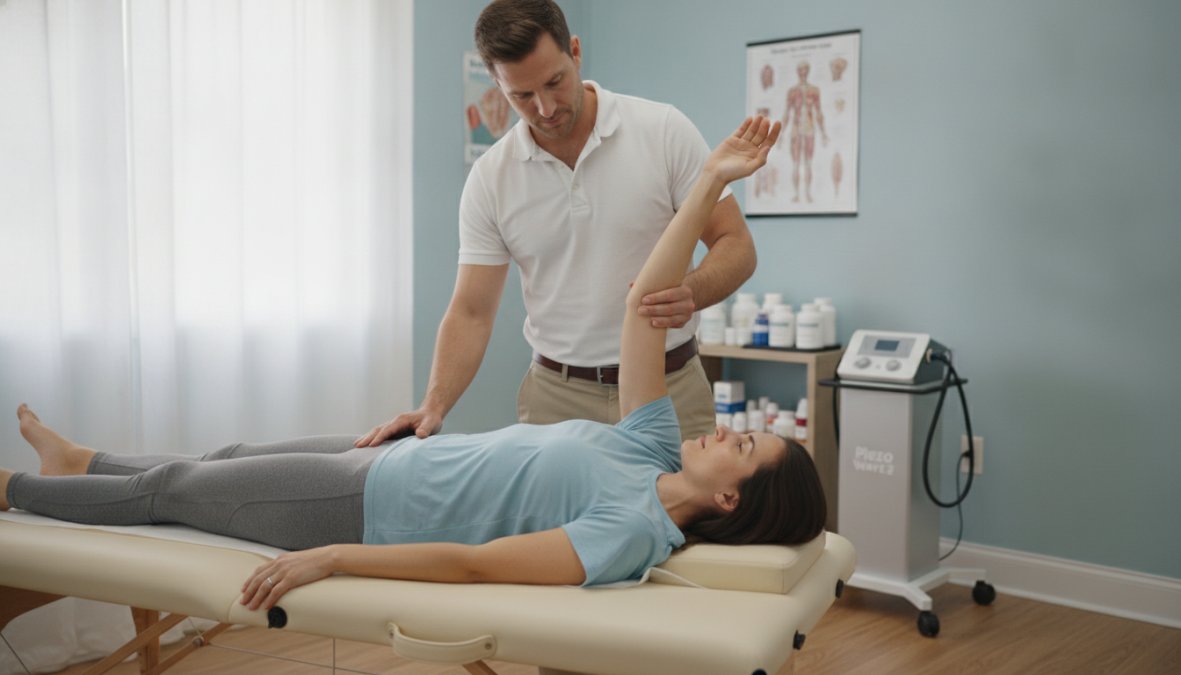
The initial session begins with detailed health history and discussion of your pain, injury, or health concern. Your practitioner asks specific questions about when pain started, what makes it better or worse, what treatments you've tried, and how the condition affects your daily life. Following the history, comprehensive physical examination includes orthopedic tests, postural analysis, and applied kinesiology muscle testing. This process typically takes 20-30 minutes and provides a complete picture of your condition.
Based on assessment findings, your practitioner explains what they discovered, why you have pain, and what treatment approach will address your specific dysfunction. Treatment begins during the first session. Your practitioner discusses a treatment plan including recommended session frequency and duration. Most patients benefit from 2-3 sessions per week initially, tapering to weekly or monthly maintenance sessions as they improve.
Safety, Contraindications, and Post-Treatment Care
Applied kinesiology is remarkably safe when performed by qualified practitioners. Certain conditions require modified treatment or precautions: severe osteoporosis, active infections, recent surgery, or pregnancy may need modified techniques. Patients taking blood thinners should inform their practitioner before treatment begins.
Post-treatment care significantly impacts recovery. Your practitioner typically recommends specific exercises to perform at home, postural modifications to implement throughout the day, and sometimes ergonomic adjustments to your work or living environment. Most patients notice improvement in pain and function within 2-3 sessions, with dramatic improvements often occurring within 4-6 weeks of consistent treatment.
Applied kinesiology offers a comprehensive approach to pain relief that addresses root causes of dysfunction rather than simply masking symptoms. If you've struggled with chronic pain, failed previous treatments, or want to avoid surgery, applied kinesiology may be the breakthrough you've been seeking.
Frequently Asked Questions
What types of pain can applied kinesiology help with?
Applied kinesiology addresses a wide range of pain conditions, including sciatica, arthritis, pinched nerves, sports injuries, and repetitive stress injuries. By identifying musculoskeletal imbalances and neuromuscular dysfunction through muscle testing, practitioners can target the root cause of chronic pain and inflammation, rather than just treating surface symptoms. Many patients experience relief from conditions that haven't responded well to traditional pain management approaches.
How does applied kinesiology muscle testing work to identify pain sources?
Applied kinesiology muscle testing uses biofeedback from your muscles to reveal functional imbalances and nervous system dysfunction. During testing, a practitioner applies gentle pressure while you resist, observing how your muscles respond. Weak or inhibited muscles often indicate underlying structural or neurological issues contributing to your pain. This diagnostic approach allows practitioners to pinpoint root causes rather than guessing, making treatment more targeted and effective for lasting relief.
Is applied kinesiology scientifically proven for pain relief?
Applied kinesiology combines evidence-based manual therapy techniques with diagnostic muscle monitoring. While research continues to evolve, clinical outcomes show that the non-invasive approach effectively reduces pain and restores function in many patients. The integration of neuromuscular assessment, spinal adjustments, and therapeutic rehabilitation addresses documented musculoskeletal dysfunction. Results depend on the specific condition and individual factors, so discussing your medical history with your practitioner helps set realistic expectations.
How does applied kinesiology differ from kinesiology taping or traditional chiropractic care?
Applied kinesiology is a diagnostic and treatment system using muscle testing to identify dysfunction, whereas kinesiology taping is a supportive technique applied to skin. Applied kinesiology goes deeper, it analyzes nervous system function and structural imbalances to develop personalized treatment plans. Unlike some traditional chiropractic approaches focused solely on spinal adjustments, applied kinesiology integrates manual therapy, rehabilitation, and functional assessment for comprehensive, patient-centered pain management.