 blog
blog
Natural Relief for Chronic Nerve Pain: 7 Proven Approaches
Table of Contents
- Understanding Chronic Nerve Pain and Natural Relief Options
- Neuropathic Pain Natural Treatment: How the Body Responds
- Supplements for Nerve Pain Relief: What the Science Shows
- Diet for Nerve Pain: Nutritional Strategies That Support Recovery
- Nerve Pain Exercises: Movement-Based Natural Relief
- Integrative Therapies for Natural Relief of Chronic Nerve Pain
- Common Mistakes That Slow Nerve Pain Recovery
- Creating Your Personalized Natural Relief Plan
- Frequently Asked Questions
Last Updated: July 24, 2026
Chronic nerve pain affects millions of Americans, limiting mobility and reducing quality of life. For those seeking alternatives to pharmaceutical interventions, natural relief for chronic nerve pain offers evidence-supported options that address root causes rather than just symptoms. At Alternative Health & Healing Center, we've spent nearly 40 years helping patients discover how targeted natural approaches, combined with advanced therapeutic modalities, can restore function and reduce pain significantly. This guide explores seven proven strategies for managing neuropathic pain naturally, from supplements and dietary changes to movement-based therapies and integrative treatments.
Understanding Chronic Nerve Pain and Natural Relief Options
Chronic nerve pain, or neuropathy, occurs when peripheral nerves send incorrect pain signals to the brain for extended periods. Unlike acute pain that resolves after injury heals, neuropathic pain persists for months or years, often without obvious tissue damage. Natural relief works by reducing inflammation, supporting nerve regeneration, and interrupting pain signaling pathways through non-pharmaceutical means.
Conventional approaches often mask symptoms without addressing underlying nerve dysfunction. Research shows that multimodal approaches, combining dietary changes, targeted supplements, therapeutic movement, and hands-on therapies, produce better outcomes than single interventions alone. The body's capacity to repair nerve tissue is remarkable when given proper nutritional support, reduced inflammatory load, and appropriate mechanical stimulus through exercise and therapy.
Neuropathic Pain Natural Treatment: How the Body Responds
When peripheral nerves are damaged or compressed, inflammatory cytokines accumulate around nerve fibers, amplifying pain signals and slowing repair. Natural treatment approaches reduce this inflammatory environment, support myelin regeneration, and restore proper nerve conduction velocity.
The body's healing response follows a predictable timeline. In the first 2-4 weeks, inflammatory markers spike as the immune system clears debris. During weeks 4-12, nerve sprouting and remyelination accelerate. By week 12 onward, structural repairs stabilize. Blood flow matters significantly, damaged nerves have compromised vascular supply, limiting oxygen and nutrient delivery to repair sites. Natural vasodilatory compounds and movement-based therapies improve microcirculation, accelerating recovery. According to research from the National Institute of Neurological Disorders and Stroke, peripheral nerve regeneration occurs at approximately 1 millimeter per day under optimal conditions.
Neuropathic pain natural treatment differs fundamentally from treating acute nerve compression. Chronic neuropathy requires sustained support for nerve tissue health because damage has already progressed. Alternative Health & Healing Center's integrated approach combines Applied Kinesiology assessment with advanced technologies like Piezo Wave 2 therapy to identify which tissues need specific support.
Supplements for Nerve Pain Relief: What the Science Shows
Supplements for nerve pain relief work through specific mechanisms: reducing inflammatory mediators, supporting myelin synthesis, improving mitochondrial function in nerve cells, and enhancing neurotransmitter balance.
Alpha-lipoic acid (ALA) crosses the blood-brain barrier and acts as a potent antioxidant within nerve tissue. It reduces oxidative stress that accelerates nerve degeneration and supports mitochondrial energy production. Practitioners typically recommend 600-1200 mg daily, divided into two doses, for 8-12 weeks before assessing improvement.
B-complex vitamins, particularly B6, B12, and folate, are essential cofactors in myelin synthesis and neurotransmitter production. B12 deserves special attention because it's poorly absorbed orally in many people; sublingual or injectable forms ensure adequate tissue levels.
Acetyl-L-carnitine supports mitochondrial function and nerve growth factor production. Typical dosing ranges from 1500-3000 mg daily.
Magnesium reduces neuroinflammation and supports calcium regulation in nerve cells. Glycinate and threonate forms penetrate nerve tissue more effectively than oxide forms.
Omega-3 fatty acids from fish oil reduce inflammatory eicosanoids and support myelin integrity. Most practitioners recommend 2-3 grams of combined EPA/DHA daily.
Introduce one supplement every 2 weeks and assess response after 6-8 weeks before adding the next.
| Supplement | Typical Dose | Primary Mechanism | Timeline to Effect |
|---|---|---|---|
| Alpha-lipoic acid | 600-1200 mg/day | Antioxidant, mitochondrial support | 6-8 weeks |
| B-complex (high-potency) | 1-2 capsules daily | Myelin synthesis, neurotransmitter production | 8-12 weeks |
| Acetyl-L-carnitine | 1500-3000 mg/day | Mitochondrial function, nerve growth factor | 6-10 weeks |
| Magnesium glycinate | 300-500 mg/day | Neuroinflammation reduction | 4-6 weeks |
| Omega-3 (EPA/DHA) | 2-3 grams/day | Anti-inflammatory, myelin support | 8-12 weeks |
Diet for Nerve Pain: Nutritional Strategies That Support Recovery
What you eat directly influences nerve tissue inflammation and regeneration capacity. Diet for nerve pain isn't about restriction; it's about providing the specific nutrients nerve tissue requires to repair itself.
Anti-inflammatory foods form the foundation. Fatty fish (salmon, sardines, mackerel) provide EPA and DHA that reduce neuroinflammatory cytokines. Colorful vegetables, dark leafy greens, beets, and cruciferous vegetables, contain polyphenols that neutralize free radicals. Berries contain anthocyanins with demonstrated neuroprotective effects.
Healthy fats are essential. Avocados, nuts, seeds, and olive oil provide anti-inflammatory compounds and building blocks for myelin repair. Avoid vegetable oils high in omega-6 linoleic acid; excessive omega-6 relative to omega-3 amplifies neuroinflammation.
Protein quality matters. Grass-fed beef, pasture-raised poultry, and wild-caught fish provide complete amino acid profiles plus micronutrients (zinc, selenium, iron) that support nerve function.
Remove inflammatory triggers. Refined carbohydrates and added sugars spike blood glucose, triggering inflammatory responses that impair nerve healing. Processed foods containing seed oils and trans fats promote oxidative stress. Eliminating these foods produces noticeable improvement within 3-4 weeks for many patients.
Specific nutrients deserve emphasis. Vitamin D supports immune regulation and nerve growth factor expression. Zinc is critical for myelin formation. Curcumin from turmeric has demonstrated analgesic and anti-inflammatory properties. Quercetin from apples and onions stabilizes mast cells that release inflammatory mediators around damaged nerves.
Nerve Pain Exercises: Movement-Based Natural Relief

Movement-based natural relief works through multiple mechanisms: improving vascular flow to damaged nerves, reducing neuroinflammation through gentle mechanical stimulation, restoring proprioceptive feedback that interrupts pain signaling, and rebuilding strength in stabilizing muscles.
Safe exercise progressions follow this sequence. Begin with gentle range-of-motion exercises that move the affected limb without resistance. Perform these 2-3 times daily for 5-10 repetitions, stopping well before any pain occurs. Continue this phase for 2-3 weeks.
Progress to active-assisted movement. Use your other limb to help the affected area move through a larger range. Perform 3-5 times per week for 2-3 weeks.
Add gentle resistance only after pain-free movement is established. Light resistance bands or bodyweight exercises introduce loading without overwhelming healing tissue. Stop immediately if pain increases.
Proprioceptive training restores the nervous system's ability to sense limb position. Balance exercises, standing on one leg while holding a chair, or walking heel-to-toe activate sensory pathways that compete with pain signals, reducing perceived pain while improving functional stability.
Walking remains one of the most underrated interventions. Consistent, pain-free walking 20-30 minutes daily improves circulation, reduces inflammatory markers, and provides proprioceptive input without joint stress.
Integrative Therapies for Natural Relief of Chronic Nerve Pain
Beyond supplements, diet, and exercise, integrative therapies address nerve pain through specific mechanical and energetic mechanisms.
Acupuncture influences pain signaling through multiple pathways. Needle insertion triggers local immune responses that reduce inflammatory markers, stimulates endorphin release, and modulates neurotransmitter balance. Research from the National Center for Complementary and Integrative Health documents acupuncture's effectiveness for neuropathic pain, particularly when combined with other modalities. Treatment typically involves weekly sessions for 6-8 weeks.
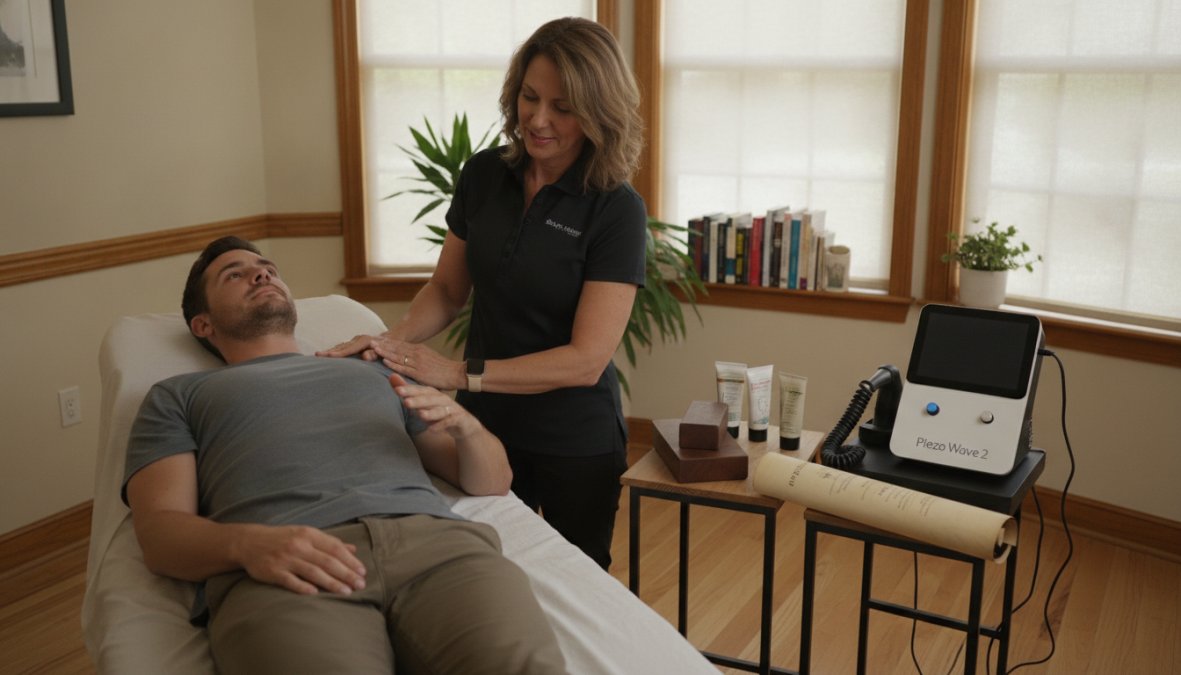
Cold laser therapy (low-level laser therapy) penetrates tissue to stimulate mitochondrial function and reduce inflammatory cytokines. Piezo Wave 2 technology delivers acoustic wave therapy that improves microcirculation and stimulates tissue repair at the cellular level. Treatment protocols typically involve 6-12 sessions spaced 1-2 weeks apart.
Manual therapy and soft tissue mobilization address muscular guarding and fascial restrictions that develop around damaged nerves. Applied Kinesiology identifies specific muscles and fascial patterns contributing to nerve dysfunction, allowing targeted treatment.
Spinal decompression therapy benefits patients with nerve pain stemming from disc herniation or stenosis. Sessions typically last 20-30 minutes, performed 3-5 times weekly for 4-6 weeks.
Biofeedback and neuromuscular re-education teach the nervous system to modulate pain signals consciously. Electromyography (EMG) biofeedback shows patients their muscle tension patterns in real-time, allowing them to learn relaxation techniques that reduce protective guarding.
Common Mistakes That Slow Nerve Pain Recovery
Understanding what delays healing helps you avoid costly detours in your recovery journey.
Attempting too much too quickly is the most common mistake. Better approach: increase stimulus by 10-15% every 2-3 weeks, only if current level is well-tolerated.
Inconsistency undermines progress. Nerve tissue responds to consistent stimulus over weeks and months. Sporadic efforts prevent the cumulative adaptations that produce lasting relief.
Ignoring dietary inflammatory triggers while taking anti-inflammatory supplements creates a biochemical contradiction. Identify your specific triggers, common culprits include refined carbohydrates, seed oils, and processed foods, and eliminate them consistently.
Waiting too long to seek professional assessment allows compensatory patterns to develop. Early professional evaluation prevents secondary problems.
Relying on a single intervention limits results. Patients who achieve the best outcomes combine 3-4 modalities simultaneously.
Expecting linear progress leads to discouragement. Nerve pain recovery is typically non-linear, with weeks of improvement followed by plateaus.
Creating Your Personalized Natural Relief Plan
Effective natural relief for chronic nerve pain requires individualization. Your specific nerve involvement, underlying cause, overall health status, and lifestyle constraints all influence which approaches will work best.
Start with assessment. Identify which nerves are involved, what activities aggravate your pain, what provides temporary relief, and what your functional goals are.
Build your foundation with diet and basic supplements. Eliminate inflammatory foods, add nutrient-dense whole foods, and introduce 1-2 foundational supplements (typically magnesium and omega-3) before adding others. Give this foundation 4-6 weeks to demonstrate benefit.
Add movement-based interventions next. Pain-free exercise should begin early and continue throughout recovery. Start conservatively with gentle range-of-motion work and progress gradually.
Integrate professional therapies based on your specific presentation. At Alternative Health & Healing Center, our team uses Applied Kinesiology to identify which specific tissues need attention, then applies appropriate modalities based on your individual assessment.
Monitor progress systematically. Track pain levels daily (0-10 scale), functional capacity, and sleep quality. Reassess every 4 weeks. If progress plateaus after 8-12 weeks, modify your approach.
Expect 12-16 weeks for substantial improvement. Nerve tissue heals slowly. Those who commit to 12 weeks of consistent multimodal treatment typically experience 50-70% pain reduction and significant functional improvement.
Chronic nerve pain doesn't have to be permanent. Thousands of patients have discovered that natural relief for chronic nerve pain is possible through systematic, multimodal approaches that support the body's own healing capacity. At Alternative Health & Healing Center, our nearly 40 years of clinical experience with nerve pain, combined with our expertise in Applied Kinesiology and advanced therapeutic technologies, means we've seen which combinations work best for different presentations. If you're ready to move beyond symptom management toward actual nerve tissue healing, [request an appointment](https://www.alternativehealthhealing.com/contact) with our team and discover your personalized natural relief plan.
Frequently Asked Questions
What is the most effective natural remedy for chronic nerve pain?
Natural relief for chronic nerve pain typically combines multiple approaches rather than relying on a single remedy. The most effective strategy integrates neuropathic pain natural treatment methods, such as targeted exercises, dietary anti-inflammatory foods, and evidence-based supplements, with integrative therapies like acupuncture or cold laser therapy. Results vary by individual, so working with an experienced practitioner to personalize your approach ensures you address your specific nerve pain triggers and underlying causes.
Can supplements for nerve pain relief actually help regenerate damaged nerves?
Certain supplements have demonstrated potential to support nerve health and function. Research suggests that specific nutrients can help reduce inflammation and support the body's natural healing processes. However, supplements work best as part of a comprehensive strategy that includes diet modifications, targeted exercises, and professional care. Quality, consistency, and proper dosing matter significantly, generic supplementation without professional guidance often yields disappointing results.
How does diet for nerve pain actually reduce symptoms?
Chronic nerve pain is often amplified by systemic inflammation. Anti-inflammatory foods reduce this inflammatory cascade, which can calm nerve irritation and support the body's repair mechanisms. A diet rich in omega-3 fatty acids, antioxidants, and specific vitamins addresses nutritional gaps that impair nerve healing. Additionally, eliminating foods that trigger inflammation in your body, which varies individually, can produce noticeable relief within weeks of consistent dietary changes.
Are nerve pain exercises safe if I have severe neuropathy, or will they make it worse?
Properly prescribed nerve pain exercises are safe and often essential for recovery, even with severe neuropathy, but the key is appropriate progression and modification. Generic exercise routines can aggravate symptoms, which is why professional guidance matters. A practitioner experienced with neuropathic conditions will assess your specific limitations, start with gentle movements, and progress gradually. The goal is to restore function and circulation without triggering excessive pain, which requires personalized exercise design rather than one-size-fits-all programs.