 How-to
Does a Daily Stretching Routine Relieve Lumbar Spine Pain?
Last Updated: November 4, 2026
Quick Summary
A daily stretching routine can support lumbar spine relief by reducing muscle tension around the lumbar spine and easing the pull of tight hip flexors, hamstrings, and gluteal muscles on the pelvis. A seven-move sequence done for about ten minutes daily works best, with 20- to 30-second holds and two rounds per side. Stretch only to mild tension, never into sharp pain.
- Warm up with two minutes of walking or marching in place before you stretch.
- Hold each stretch 20 to 30 seconds and aim for two rounds per side.
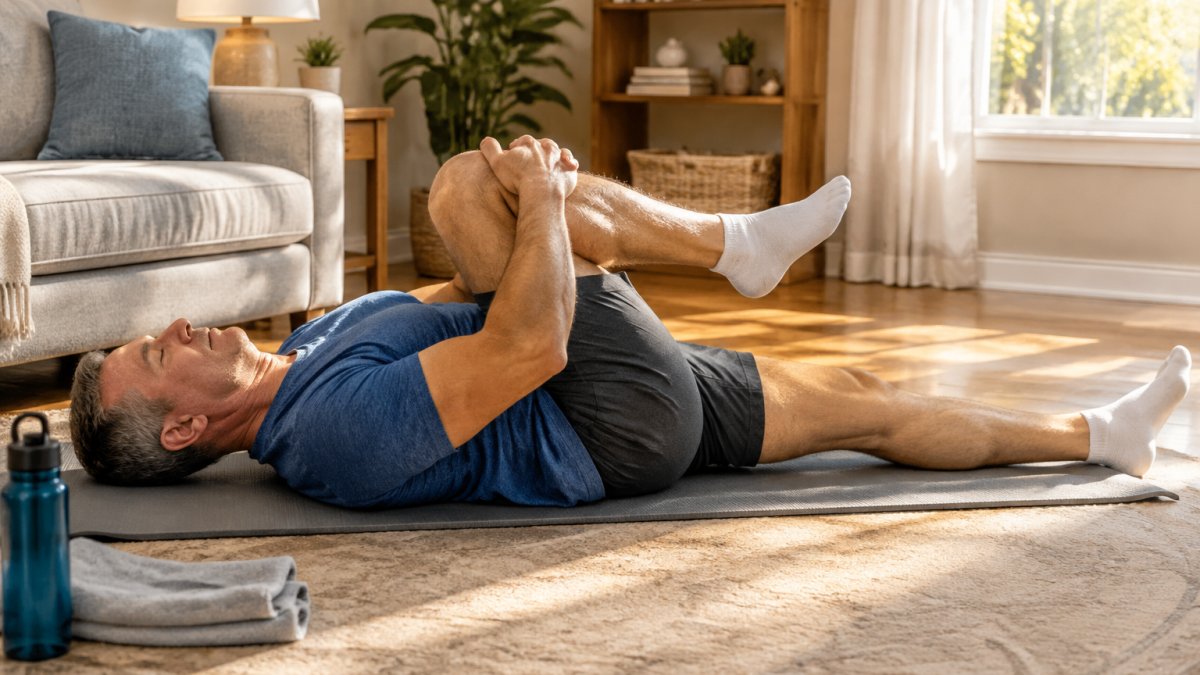
- The seven-move routine takes about ten minutes and starts with knee-to-chest.
- Five to ten minutes daily beats one long weekly session for consistency.
- Stop and see a clinician for numbness in the groin, loss of bladder control, or weakness in both legs.
Table of Contents
- Why a Daily Stretching Routine for Lumbar Spine Relief Works
- What You'll Need Before You Start Stretching
- 7 Exercises for Lower Back Pain: A Step-by-Step Daily Routine
- Standing Stretches for Lower Back Pain You Can Do Anywhere
- Physiotherapy Exercises for Lower Back Pain: Building a Progressive Routine
- Stretches for Lower Back Pain That Feels Better Immediately
- Common Mistakes to Avoid and When to Stop Stretching
- Request an Appointment at Alternative Health & Healing Center
- Frequently Asked Questions
Why a Daily Stretching Routine for Lumbar Spine Relief Works
A daily stretching routine for lumbar spine relief works because it reduces muscle tension around the lumbar spine, the five vertebrae that carry most of your upper body's weight. Tight hip flexors, hamstrings, and gluteal muscles pull on the pelvis and change spinal alignment. Gentle, repeated stretching eases that pull.
The American Academy of Orthopaedic Surgeons notes that most lower back pain improves without surgery, and controlled movement is a core part of recovery. At Alternative Health & Healing Center, we see the same pattern in practice: patients who stretch daily between visits hold their gains longer.
Below is a seven-move routine you can start today, plus the mistakes that stall progress.
How Stretching Affects the Lumbar Spine and Surrounding Muscles
Stretching does not "realign" vertebrae by force. It changes what surrounds them.
- Muscle tension drops. A held stretch signals tight fibers to relax.
- Range of motion improves. Better hip mobility means less strain on the lower back.
- Blood flow increases. Warm, moving tissue feels less stiff.
The lumbar spine itself has limited movement. Most low back stiffness comes from the hip girdle and gluteal muscles, not the vertebrae.
Who Benefits Most From Daily Lumbar Stretching
Daily lumbar stretching suits people with mild to moderate stiffness from sitting, mild deconditioning, or healed old injuries. Desk workers, retirees, and active adults in their 50s and 60s tend to respond well.
It is not the right starting point for everyone. If sleep is part of your problem, our guide on how to sleep with chronic back pain covers positioning that supports the lumbar spine overnight.
What You'll Need Before You Start Stretching
You need very little: a mat or carpeted floor, a towel, and five to ten minutes. Loose clothing helps, and a firm surface beats a soft mattress.
Warm up first. Two minutes of walking or marching in place raises tissue temperature and lowers injury risk.
Set a timer. Most people hold stretches too briefly, then rush. Aim for 20 to 30 seconds per hold, two rounds per side.
Watch out: pushing into sharp pain defeats the purpose. Stretch to mild tension, never to the point of pain.
7 Exercises for Lower Back Pain: A Step-by-Step Daily Routine
This seven-move sequence takes about ten minutes. Move slowly, breathe, and stop any stretch that sends pain down your leg. The table gives the dosage, and the numbered steps give the form cues.
| Exercise | Time per Side | Best For |
|---|---|---|
| Knee-to-chest | 20-30 sec | Lower back tightness |
| Child's pose | 30-45 sec | Full spine decompression |
| Pelvic tilt | 10 reps | Core and spinal alignment |
| Lumbar rotation | 20-30 sec | Stiff, locked lower back |
| Piriformis stretch | 20-30 sec | Glute and sciatic discomfort |
| Hamstring stretch | 20-30 sec | Pelvic tilt from tight hamstrings |
| Hip flexor stretch | 20-30 sec | Anterior hip tightness |
Do the sequence in order, starting with the moves that settle the lower back before rotation or loading. Two rounds per side is the target; one round is fine on a stiff morning.
Knee-to-Chest Stretch
- Lie on your back on a firm surface with both knees bent and feet flat.
- Bring one knee toward your chest, clasping your hands just below the kneecap or behind the thigh.
- Pull until you feel a gentle stretch across the lower back and buttock, not a sharp pinch.
- Hold 20 to 30 seconds, breathing slowly, then lower the foot and switch sides.
Watch out: pulling on the kneecap itself can irritate the joint; grip the back of the thigh if the knee is sensitive.
Child's Pose
- Kneel on the mat with your big toes touching and knees spread about hip-width to shoulder-width apart.
- Sit your hips back toward your heels and walk your hands forward.
- Let your chest sink toward the floor and rest your forehead on the mat or a folded towel.
- Hold 30 to 45 seconds, breathing into your lower back.
If your knees complain, place a folded towel behind them or sit on a firm pillow between your heels and hips.
Pelvic Tilt
- Lie on your back with knees bent and feet flat, arms relaxed at your sides.
- Tighten your abdominal muscles and press your lower back gently into the floor; your pelvis rocks slightly toward your ribs.
- Hold two seconds, then release and let the lower back return to its natural curve.
- Complete 10 slow reps, exhaling as you press down.
This is a small movement. If your buttocks lift off the floor, you are pressing too hard.
Lumbar Rotation
- Lie on your back with knees bent and feet flat.
- Let both knees fall slowly to one side while your shoulders stay flat on the floor.
- Stop where you feel a mild stretch in the lower back or outer hip, and hold 20 to 30 seconds.
- Return to center and repeat on the other side.
Watch out: if the knees drop fast and the lower back twists sharply, slow down, control matters more than range.
Piriformis Stretch
- Lie on your back with both knees bent.
- Cross one ankle over the opposite knee, forming a figure-four.
- Reach through and pull the supporting thigh toward your chest until you feel a deep stretch in the buttock.
- Hold 20 to 30 seconds, then switch sides.
Stop if you feel tingling, numbness, or an electric sensation running down the leg, that suggests the sciatic nerve is being compressed rather than the muscle being stretched.
Hamstring Stretch
- Lie on your back with one leg straight and the other bent.
- Loop a towel or strap around the ball of the straight foot and hold one end in each hand.
- Straighten the leg upward until you feel a stretch behind the thigh, keeping the knee softly unlocked.
- Hold 20 to 30 seconds, then switch sides.
Tight hamstrings tilt the pelvis and load the lower back. This stretch is often the missing piece for people who stretch only their back.
Hip Flexor Stretch
- Kneel on one knee in a half-lunge with the other foot flat in front, both knees at about 90 degrees.
- Tuck your pelvis under, think of pointing your tailbone toward the floor, before you move.
- Shift your weight forward gently until you feel a stretch at the front of the hip of the kneeling leg.
- Hold 20 to 30 seconds, then switch sides.
Tight hip flexors from sitting are a leading cause of lumbar stiffness. The pelvic tuck makes the stretch work; shifting forward without it mostly stretches the knee.
How to Run the Routine Day to Day
Consistency beats intensity: five to ten minutes daily produces more change than one long weekly session. A common pattern is the full sequence in the morning, then only knee-to-chest, child's pose, and the hip flexor stretch in the evening. If soreness lasts more than a day, reduce the hold time or range and build back up.
Standing Stretches for Lower Back Pain You Can Do Anywhere
Standing stretches for lower back pain fit into a workday without a mat. Try a standing hip flexor stretch at the office, a standing side bend, or a gentle standing lumbar extension with hands on the lower back.
These work well as a mid-day reset. Two minutes of standing movement every hour beats one long stretch at night for desk-bound workers.
Physiotherapy Exercises for Lower Back Pain: Building a Progressive Routine
Physiotherapy exercises for lower back pain generally follow a simple rule: start easy, and add difficulty only when the current level feels comfortable. Consistent adherence to these incremental movements establishes a sustainable foundation for relieving back pain while you explore further techniques for managing discomfort at home.
If you want to understand how many sessions a course of care usually involves, read how many physical therapy sessions for back pain may be needed.
Three Levels of Progression
Think of the routine in three levels. Stay at each level for at least one to two weeks before moving up, and drop back a level on a flare-up day.
- Level 1, Gentle range of motion. Knee-to-chest, pelvic tilt, and lumbar rotation at a small range. The goal is to move without guarding, not to stretch far.
- Level 2, Hold and control. Add child's pose, the piriformis stretch, the hamstring stretch, and the hip flexor stretch with 20- to 30-second holds. Exhale into each stretch, inhale as you hold.
- Level 3, Load and integrate. Add gentle abdominal bracing during pelvic tilts and child's pose, longer holds up to 45 seconds, and a second round of the hip-focused moves. This is where the routine carries over into sitting, standing, and lifting.
Modifications for Limited Mobility
Limited floor mobility should not block you. The same movements can be done seated or in bed:
- Knee-to-chest, bed version. Lie on a firm bed and bring one knee toward your chest with your hands behind the thigh; the mattress height removes the need to get down to the floor.
- Seated pelvic tilts. Sit tall in a firm chair, feet flat, and rock your pelvis forward and back slowly for 10 reps. This trains the same abdominal engagement as the floor version.
- Chair-based hamstring stretch. Sit at the edge of a chair, extend one leg with the heel on the floor and the knee softly unlocked, and hinge forward from the hips until you feel a stretch behind the thigh. Hold 20 to 30 seconds.
Watch out: if getting down to the floor and back up is the hardest part of the routine, do the seated and bed versions until floor mobility improves, the stretch stimulus is the same.
Adding Core Engagement and Breath Control
Breathe out as you move into a stretch, in as you hold; breath control lowers muscle guarding. Add gentle abdominal bracing during pelvic tilts and child's pose: tighten the abdomen as if bracing for a light cough, hold two seconds, release.
For a deeper progression, our guide on core-strengthening kinesiology techniques shows how to build abdominal support safely.
When to Hold at a Level or Step Back
Advance a level every one to two weeks if the current level feels easy and produces no next-day soreness. Hold at the current level if a stretch still feels tight or if you are guarding. Step back a level for two to three days after a flare-up, then resume. Sharp pain, numbness down the leg, or weakness is a reason to stop and see a clinician, not to push through a higher level.
Stretches for Lower Back Pain That Feels Better Immediately
Stretches for lower back pain that feels better immediately are usually the gentlest ones: knee-to-chest, child's pose, and a supported pelvic tilt. These reduce muscle tension fast without loading the spine.
Relief that lasts minutes is normal. Relief that lasts hours comes from repetition over weeks. Do not chase the instant feeling and skip the routine.
Common Mistakes to Avoid and When to Stop Stretching
The biggest mistake is stretching into pain. Sharp, shooting, or numbing pain means stop.
Other common errors:
- Bouncing instead of holding still
- Holding your breath
- Skipping warm-up
Stop and see a clinician if you notice numbness in the groin, loss of bladder control, or weakness in both legs.
To keep pain from returning once it settles, our article on preventing recurring back pain with physical therapy explains how to build a maintenance plan.
Request an Appointment at Alternative Health & Healing Center
Stretching can help, but persistent or recurring lumbar pain warrants a professional assessment. At Alternative Health & Healing Center, we combine nearly 40 years of clinical experience with Applied Kinesiology and advanced technology like the Piezo Wave 2 to address musculoskeletal and nerve pain.
If you want to see how our non-invasive back pain care compares locally, review our spinal decompression providers comparison before you book.
Frequently Asked Questions
What is a good daily stretching routine for lower back pain?
A practical routine includes seven moves: knee-to-chest, child's pose, pelvic tilt, lumbar rotation, piriformis stretch, hamstring stretch, and hip flexor stretch. Hold each for 20 to 30 seconds, repeat two to three times, and breathe slowly. Spend five to ten minutes total. Do it once in the morning and once in the evening if stiffness returns. Stop any movement that causes sharp pain or numbness, and check with a clinician before starting if you have a diagnosed spinal condition.
How long should you hold a lower back stretch?
Hold each stretch for 20 to 30 seconds and repeat two to three times per side. Shorter holds of 10 to 15 seconds work for very tight muscles at first. Breathe in and out slowly during the hold; do not bounce. If a stretch feels intense but not painful, that is acceptable. Sharp pain, tingling, or numbness means you should stop and consult a professional.
Can stretching your back relieve back pain?
Stretching can reduce muscle tension and improve range of motion in the lumbar spine, which often eases stiffness and mild discomfort. It is not a cure for underlying conditions like a herniated disc or arthritis, but it supports functional movement and posture. Combine stretching with core engagement and ergonomic adjustments for the best results. If pain is chronic or follows an injury, a clinical assessment helps tailor the routine.
When should you stop stretching for back pain?
Stop immediately if you feel sharp pain, numbness, tingling, or weakness in your legs. Also stop if the pain worsens with each repetition or if you experience dizziness. Mild discomfort that fades as you hold is normal, but anything that feels wrong should be checked by a healthcare provider. People with acute injuries, fractures, or severe osteoporosis should not start a stretching routine without medical clearance.
Daily stretching is a habit, not a cure, and some backs need more than a mat routine. If pain keeps returning or limits your day, get it assessed properly. Alternative Health & Healing Center offers Applied Kinesiology, Piezo Wave 2 therapy, and spinal decompression under one roof, with a plan built around your specific issues. Get started with Alternative Health & Healing Center and request an appointment to find out what is actually driving your back pain.