 How-to
7 Sleeping Positions That Ease Sciatica Nerve Pain
Last Updated: November 19, 2026
Quick Summary
The best sleeping position for sciatica keeps your spine neutral and takes pressure off the sciatic nerve. For most people, sleeping with sciatica means lying on your side with a pillow between your knees or on your back with a pillow under your knees, since both reduce strain on the lower back and hips.
- Sleep on the side that hurts less, since lying on the painful side can compress the hip.
- Stomach sleeping is the worst position because it arches the lower back and rotates the neck.
- If pain wakes you, change position slowly and give the new position two or three minutes.
- If you cannot settle within 15 to 20 minutes, get out of bed slowly and walk gently.
- Get sciatica evaluated when it lasts more than a few weeks or comes with numbness or weakness.
Table of Contents
- Best Sleeping Positions to Calm Sciatic Nerve Pain
- The Best Sleeping Position for Sciatica and Hip Pain
- The Worst Sleeping Position for Sciatica
- Sciatica Stretches You Can Do in Bed
- Sleeping With Sciatica Dos and Don'ts
- What to Do When Nighttime Pain Wakes You
- When to Get Sciatica Pain Evaluated
- Build a Sleep Setup That Supports Your Recovery
- Frequently Asked Questions
Best Sleeping Positions to Calm Sciatic Nerve Pain
The best sleeping position for sciatica is one that keeps your spine neutral and takes pressure off the sciatic nerve.
Sciatica is nerve pain that travels from the lower back down the leg along the path of the sciatic nerve. It often comes from a herniated disc or a pinched nerve root (Diagnosis and treatment of sciatica).
The positions below are a starting point, not a cure. A clinician should evaluate ongoing nerve symptoms.
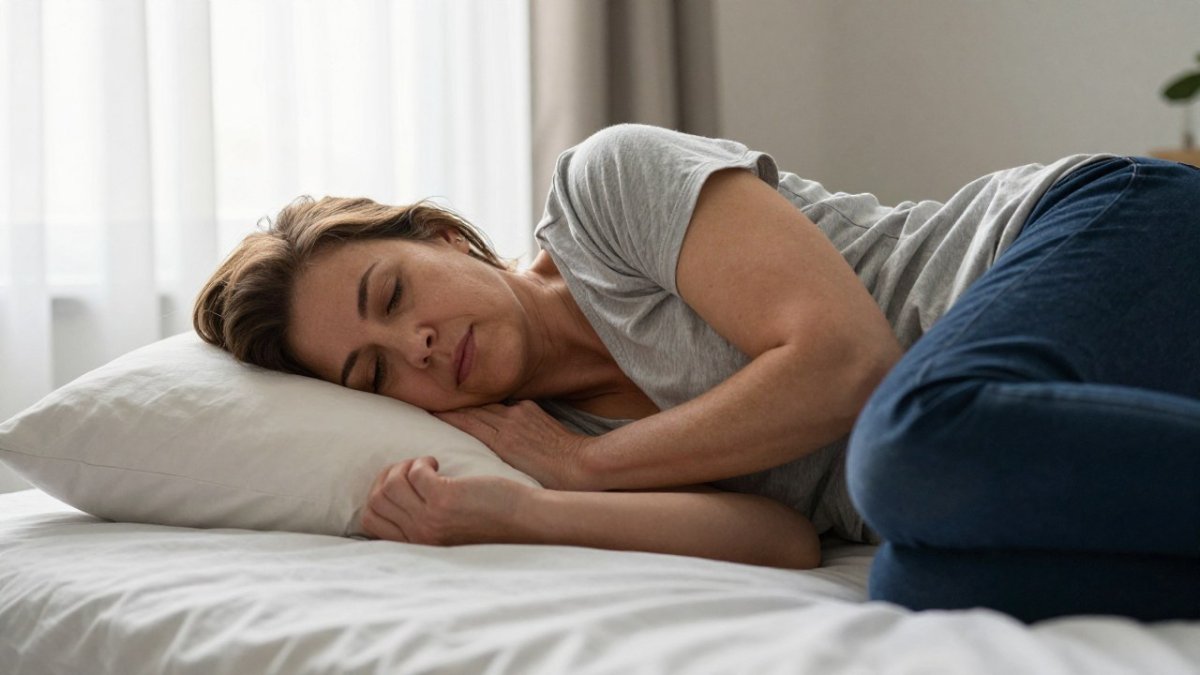
Side Sleeping With a Pillow Between the Knees
Side sleeping is the most popular choice for people with sciatica, and it is easy to set up. Draw your knees up slightly and slide a firm pillow between them. The pillow keeps your hips and pelvis aligned.
Which side to sleep on depends on your symptoms:
- If one leg hurts: sleep on the side that hurts less. Lying on the painful side can compress the hip and increase leg pain for some people.
- If lying on the affected side makes the leg throb: switch to the pain-free side and keep the pillow between the knees.
- If both sides hurt: alternate sides during the night. Changing positions is normal and often helps.
A few setup details matter:
- Use a pillow thick enough to fill the gap between your knees so the top hip does not drop.
- Keep your spine straight, not curled into a ball.
- Place a small pillow behind your back for extra support if you tend to roll onto your back.
- Keep the top shoulder from rolling forward, which twists the upper spine.
Watch out: if side sleeping sends pain shooting down the leg within a few minutes, the pillow may be too thin or too thick, or the position may be compressing the nerve. Try a different pillow height before giving up on the position.
Back Sleeping With a Pillow Under the Knees
Back sleeping works well if side sleeping irritates your hip. Lie flat and place a pillow under your knees.
Back sleeping tends to suit people whose pain is worse when they bend or twist, and it can be easier on the hips than side sleeping. It also makes it simpler to keep the pelvis square.
Adjustments to try:
- Use a pillow under the knees that is thick enough to create a gentle bend, not a sharp angle.
- Add a small rolled towel under the lower back if you feel a gap between your back and the mattress.
- Keep the head pillow low so the neck stays in line with the spine.
Watch out: if back sleeping makes the leg pain worse, stop. Some people with nerve irritation feel better on their side. A position that increases radiating pain is a signal to change, not to push through.
How to Choose Your Starting Position
Use your symptoms as a guide for the first night, then adjust:
- Pain worse when you bend forward or sit: back sleeping with a pillow under the knees is often a better starting point.
- Pain worse when you stand or walk, or pain that eases when you sit: side sleeping with a knee pillow may be more comfortable.
- Pain that shoots down the leg when you lie on one side: sleep on the opposite side.
- Pain that increases in any position: note which movement brings it on and bring that pattern to a clinician.
A useful test is whether a position can be held for a full sleep cycle without increasing leg pain. If a position only works for 20 minutes, it may not be the right one for the night.
Here is a quick comparison of the main sleeping positions and who each one suits.
| Position | Best for | Key setup | Watch out |
|---|---|---|---|
| Side sleeping with pillow between knees | Most people; pain worse when standing or walking | Firm pillow between slightly bent knees | Pillow too thin or thick can shoot pain down leg |
| Back sleeping with pillow under knees | Pain worse when bending forward or sitting | Pillow under knees for gentle bend; low head pillow | Stop if leg pain worsens |
| Side sleeping on less painful side | One leg hurts | Pillow between knees, spine straight | Lying on painful side can compress hip |
| Alternating sides | Both sides hurt | Knee pillow, switch during night | None stated |
| Stomach sleeping | Not recommended | Thin pillow under hips if unavoidable | Arches lower back, rotates neck, increases nerve pressure |
The Best Sleeping Position for Sciatica and Hip Pain
For sciatica combined with hip pain, many people find side sleeping with a pillow between the knees more comfortable, because it helps keep the hips and lower back aligned.
A few adjustments help:
- Sleep on the side that causes less pain
- Keep the knees bent at a gentle angle
- Add a pillow under the waist if you feel a gap
- Avoid twisting the top shoulder forward
If both hips hurt, alternate sides during the night. Changing positions is normal and often helps.
The Worst Sleeping Position for Sciatica
Stomach sleeping is the worst sleeping position for sciatica. It arches the lower back and rotates the neck, which can increase nerve pressure and morning leg pain.
If you cannot sleep any other way, place a thin pillow under your hips and keep your head turned to one side. Better still, train yourself to fall asleep on your side.
Watch out: sleeping on your stomach night after night can keep the lower back arched and make nerve irritation worse, so treat it as a position to move away from, not a habit to keep.
Sciatica Stretches You Can Do in Bed
Gentle stretching before bed can ease muscle tension around the sciatic nerve. Keep every stretch slow and stop if pain shoots down the leg.
Try these sciatica stretches you can do in bed:
- Knee to chest. Lie on your back and pull one knee toward your chest. Hold for a few seconds, then switch sides.
- Figure four. Cross one ankle over the opposite knee and gently press the crossed knee away.
- Pelvic tilt. Lie on your back with knees bent and flatten the lower back into the mattress.
- Gentle spinal twist. Lie on your back, bend the knees, and let them roll slowly to one side.
Two or three minutes is enough. If you want to know whether a daily stretching routine actually helps lumbar pain, our article on daily stretching for lumbar spine pain covers what to expect.
Sleeping With Sciatica Dos and Don'ts
Sleeping with sciatica comes down to a few habits that protect your spine. Small changes to your setup often make a real difference to sleep quality.
Do:
- Support the knees with a pillow in side or back positions
- Keep the hips and pelvis aligned
- Use a mattress that supports the lower back without sagging
- Get out of bed slowly, rolling to your side first
Don't:
- Sleep on your stomach if it increases leg pain
- Use a pillow that is too high or too flat
- Twist sharply when changing positions
- Ignore pain that keeps waking you at night
What to Do When Nighttime Pain Wakes You
Nighttime pain that wakes you is a sign to change position, not to push through.
Step 1: Change position slowly. Roll onto your side with a pillow between the knees, or onto your back with a pillow under the knees.
Step 2: Take slow breaths. Give the new position two or three minutes. Nerve pain often settles once pressure is off the nerve, but it rarely stops the instant you move.
A simple rule helps: if you can settle the pain in a few minutes with a position change, it is likely positional.
If nighttime pain keeps disrupting your sleep, keep a simple log of which position you were in, what time you woke, and what helped.
When to Get Sciatica Pain Evaluated
Get sciatica pain evaluated when it lasts more than a few weeks, keeps getting worse, or comes with weakness, numbness, or loss of bladder or bowel control. Those symptoms need prompt medical attention.
For most people, an evaluation means a physical exam and a review of nerve symptoms. Imaging is used when the cause is unclear.
If you are weighing non-surgical options, you can compare non-surgical sciatica treatments to see what each approach involves. If your pain may come from a pinched nerve, our guide to spinal decompression for a pinched nerve explains how that therapy works without surgery.
At Alternative Health & Healing Center, our team uses an integrative approach that combines chiropractic care with therapeutic modalities. This blend of hands-on and therapeutic methods can complement chiropractic care for sciatica by addressing discomfort from more than one angle.
Build a Sleep Setup That Supports Your Recovery
A supportive sleep setup starts with the mattress and pillow, then adds a calm bedtime routine. Together they help you fall asleep in a position that protects the lower back.
Set up your bed like this:
- Choose a medium-firm mattress that keeps the spine level
- Pick a pillow that fills the gap between your neck and the mattress
- Keep a knee pillow within reach for side sleeping
- Dim the lights an hour before bed
- Do your stretches, then get into position
For deeper guidance on sleeping with chronic back pain, our article on how to sleep with chronic back pain walks through the full routine. If you are also shopping for supports, you can compare back pain relief products such as pillows, braces, and heating pads.
One last note. Sleep position advice helps, but it does not treat the cause of nerve pain. If symptoms persist, a proper evaluation matters more than another pillow.
Sciatica that disrupts your sleep night after night deserves a closer look.
Frequently Asked Questions
Should you sleep on the painful side with sciatica?
Many people find relief sleeping on the side opposite the pain, because it takes pressure off the compressed nerve. If lying on the affected side feels better, use it, but place a pillow between your knees and another behind your back to keep your hips and spine aligned. The right side is the one that lets you sleep without waking in pain, so test both for a few nights and note which keeps leg pain lower.
Can a sleeping position make sciatica worse?
Yes. Stomach sleeping is the most common culprit because it arches the lower back and rotates the pelvis, which can increase nerve irritation. Sleeping on your back without knee support can also flatten the spine's natural curve. If you wake with sharper leg pain or numbness, change position and add a pillow under the knees or between the knees to restore neutral spinal alignment.
How do you stop sciatic nerve pain at night?
Set up your sleep position before you get into bed: side sleeping with a pillow between the knees or back sleeping with a pillow under the knees. Do a few gentle stretches, like a supine knee-to-chest hold or a figure-four stretch, 10 to 15 minutes before lying down. Keep the room dark and cool, and avoid screens for the last hour. If pain still wakes you regularly, a chiropractic evaluation can identify what is irritating the nerve.
When should nighttime sciatica pain be evaluated by a healthcare professional?
Seek evaluation if pain wakes you most nights for more than two weeks, if it spreads into both legs, or if you notice new weakness, foot drop, or numbness in the groin area. Those symptoms can point to more serious nerve pressure and need prompt attention. For persistent but stable nighttime pain, an integrative chiropractic assessment can review your sleep posture, spinal alignment, and nerve irritation together.